


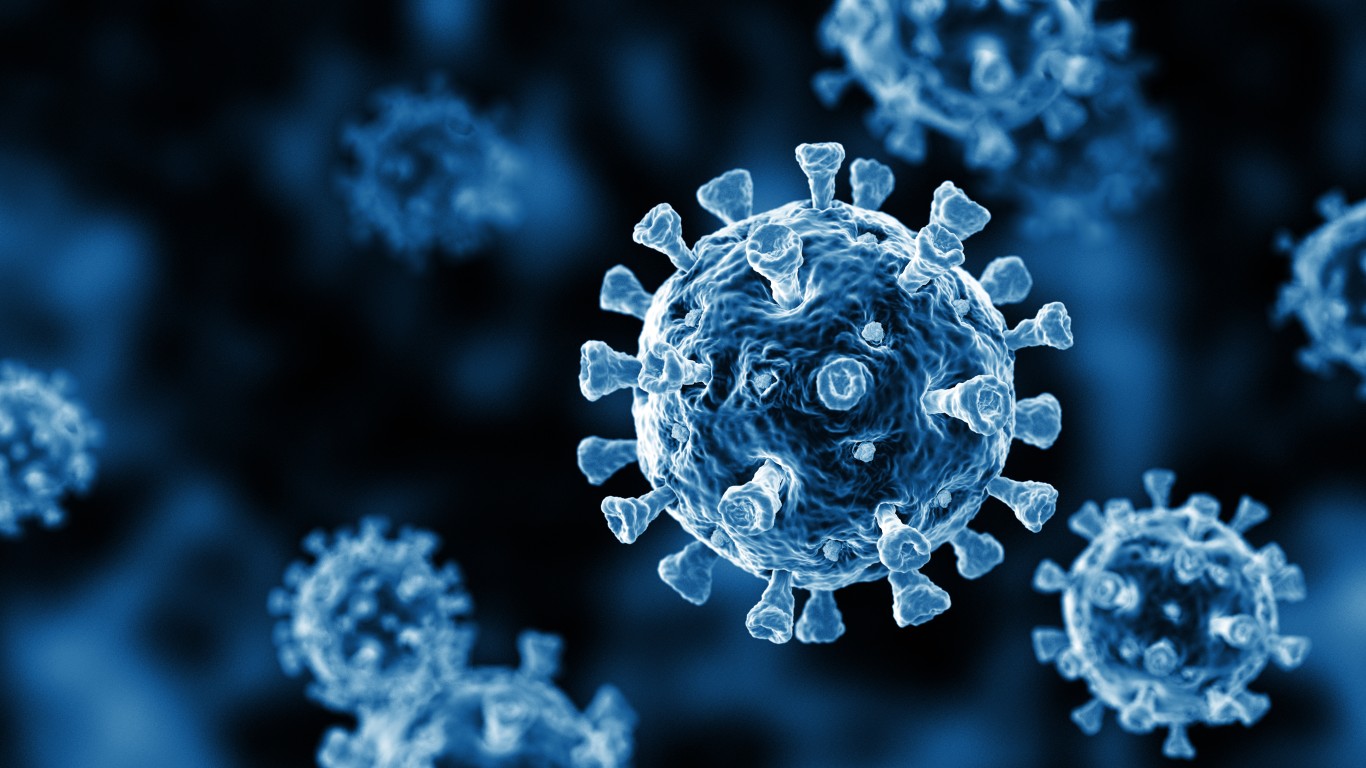
COVID-19, which was first diagnosed in America in January 2020, hit the country hard in March of the same year. In the first few months, over 2,000 people died on many days. Another wave of deaths, the largest, happened in the winter of 2021. So far, the disease has killed over 1.1 million Americans, although that death rate has slowed to well under 1,000 a day on average.
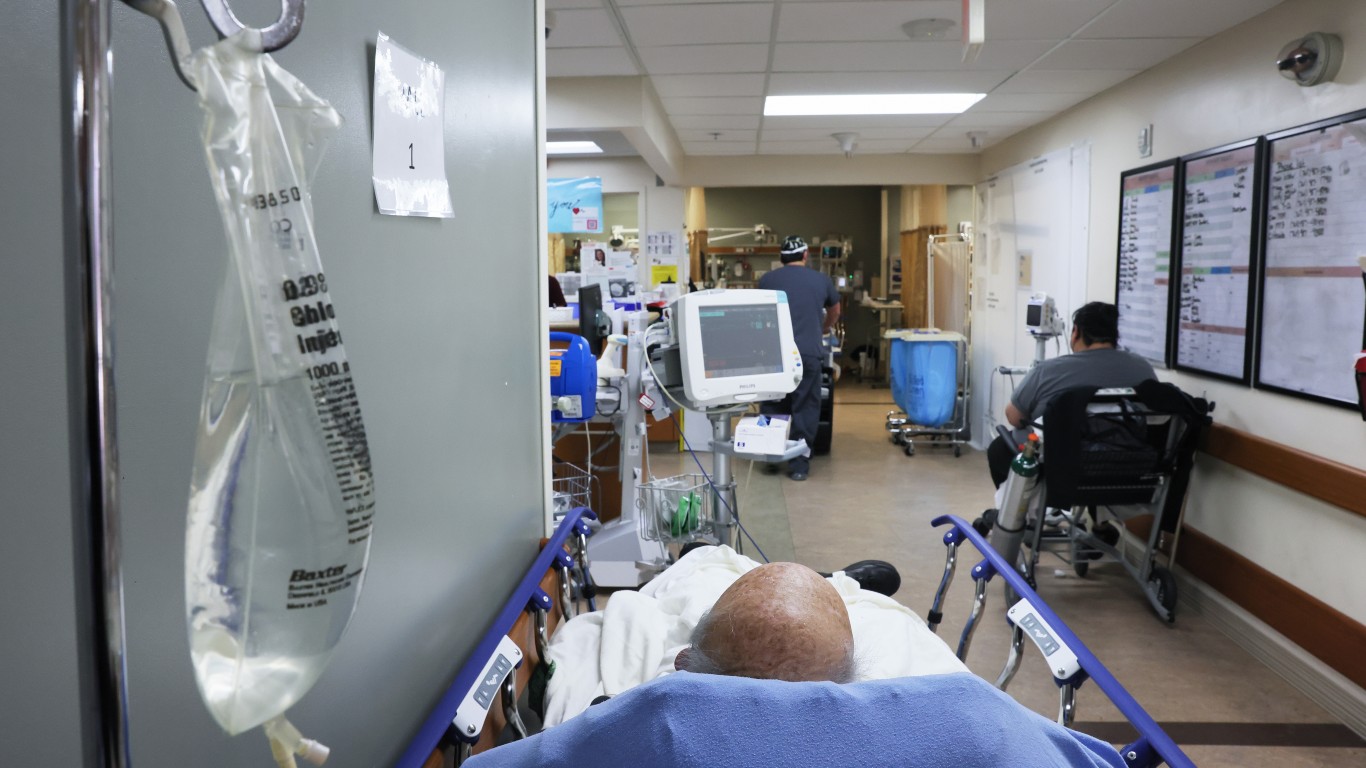
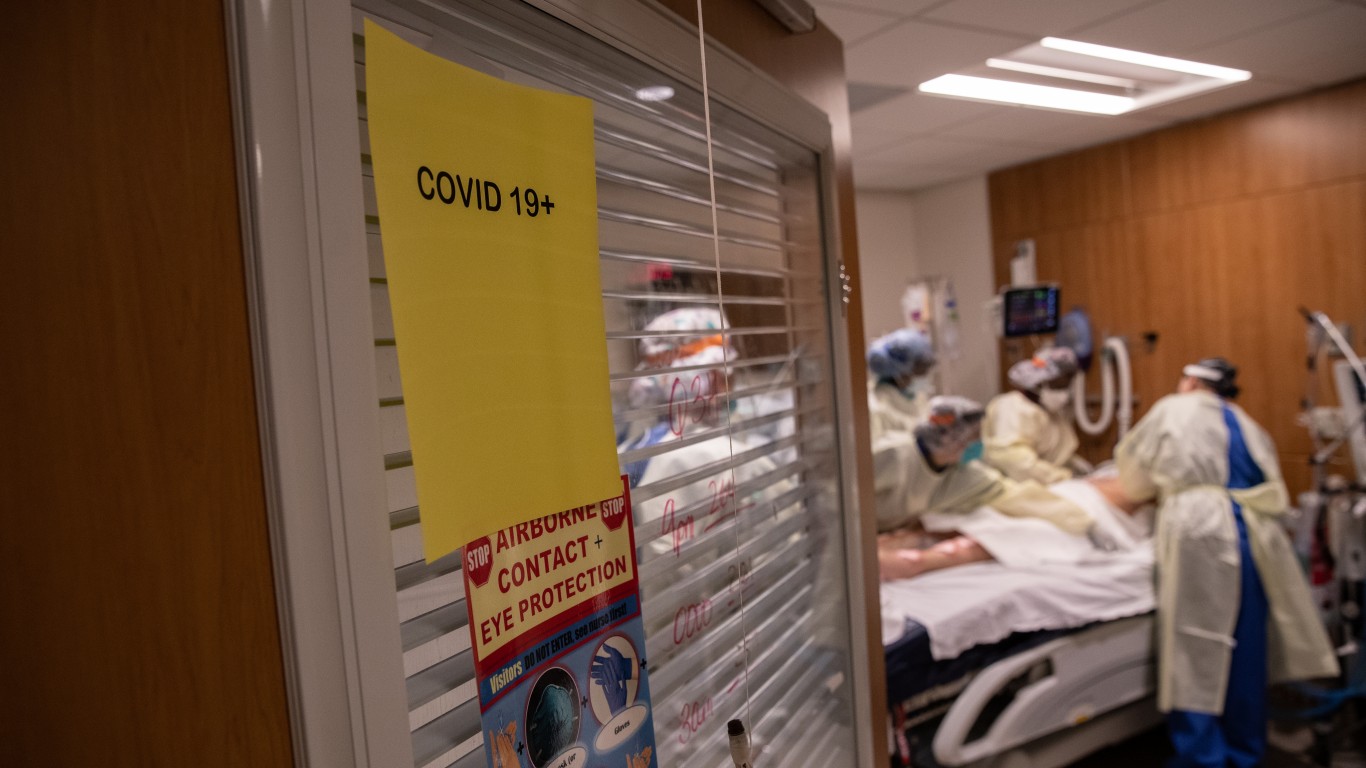
COVID-19 deaths, infections and hospitalizations are seasonal. They drop in warmer months, when many people can go outside, only to surge in the colder months. According to The New York Times COVID-19 Tracker, hospitalizations are up 17% over the past 14 days to a daily average of 5,261 per day. Most evidence shows these hospitalizations are among people considered vulnerable to the disease, which includes people over 75 years old and those with preexisting medical conditions. (These are the states where COVID-19 is worst now.)
There are several states where the growth in hospital admissions is much higher than the national figure. Those with the highest rates are in the Midwest. And, because some of these have small populations, the figures are low. The state with the largest jump is Iowa, with the 14-day change in hospitalization up 62% to a daily average of 52. Iowa is followed by Indiana, up 49% to a daily average of 106, and Kansas, with an increase of 43% to 44 people.
Hospitalizations are traditionally measured one other way. This is by hospitalizations per 100,000 people over the same period. Iowa’s number is 1.7, which puts it in the middle of all states. The national figure is 1.6. Indiana is also near the middle at 1.6, and the figure for Kansas is 1.5. The state with the highest number of people in hospital admissions on a daily average per 100,000 is Delaware at 8.2, which is flat on a 14-day change average. Its number is almost double that of any other state.
Public officials, doctors and epidemiologists cannot say what the future effect of COVID-19 will be on the U.S. population. New variants appear from time to time. The JN. 1 variant was less than 10% of cases in November. Today, it is the most common variant in the country. The World Health Organization (WHO) also listed JN.1 as a “variant of interest.” It does not appear more deadly than other variants that have been common in the past year.
COVID-19’s presence among diseases has changed from a pandemic to an epidemic. It will be part of several airborne transmitted viruses, including the flu and the common cold. And it will almost certainly continue to be one of the CDC’s 10 leading causes of death each year.












 Top Gaining Stocks
 Top Losing Stocks