


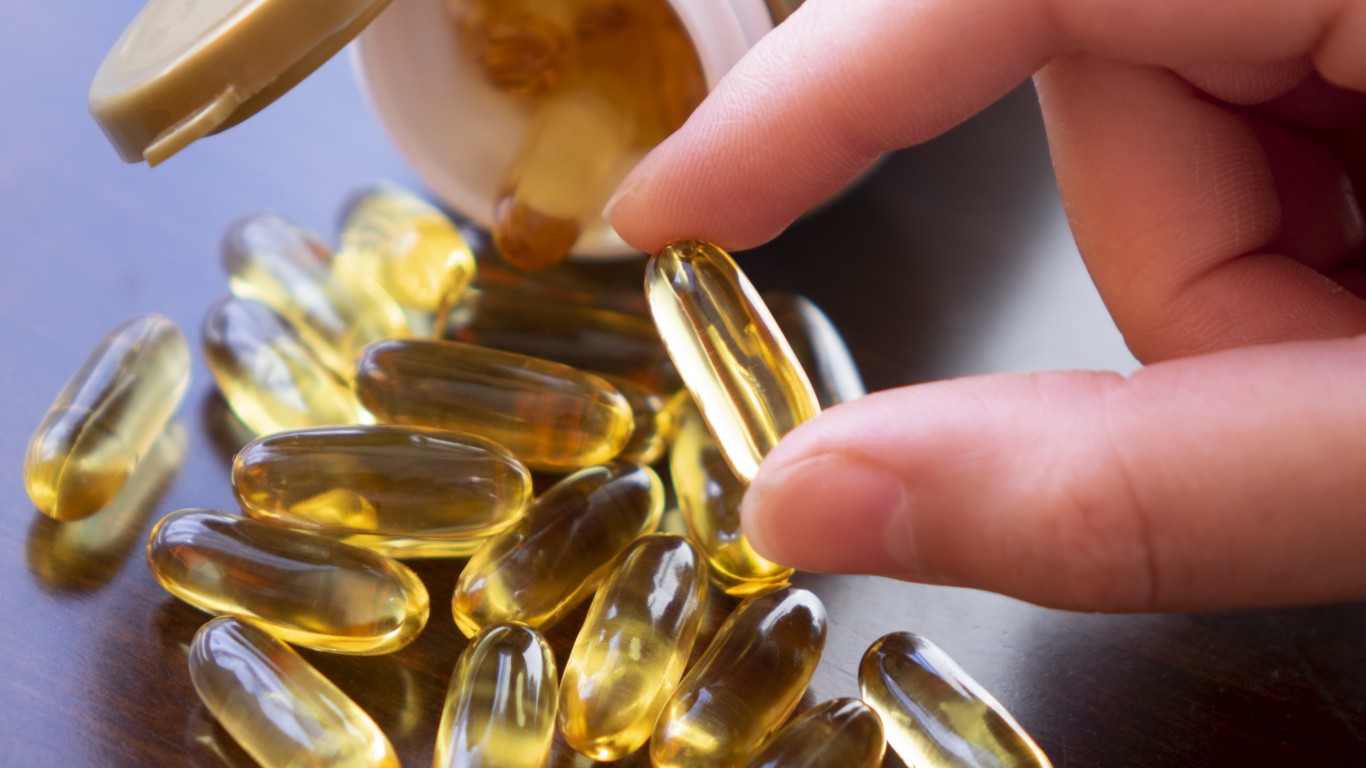
Talk about skepticism, and the effect on a company’s market capitalization and future valuation. Shares of Amarin Corporation PLC (NASDAQ: AMRN) have plunged 26% in three months. There appears to no catalyst to drive them higher. That means the stock likely will underperform the S&P 500, which is a core marker of performance.
The Dublin-based company is a classic biotechnology play. The company has lost money for the past four years, based on net income on rising but modest revenue. Wall Street wants to know when the lines will cross so that Amarin goes from being a cash burner to a company with an actual positive margin.
What Amarin Does
At the core of Amarin’s operations is research and development (R&D) for drugs that treat cardiovascular disease. Its flagship drug is called Vascepa and is available via prescription in the United States. It primarily treats cardiovascular disease (stroke, heart attack and other heart issues), which requires hospitalization. It also treats patients with Type 2 diabetes and two other risk factors, among which is fatty acid.
The company estimated that Vascepa could treat millions of Americans with these risk profiles. When the drug was launched, John F. Thero, president and chief executive officer of Amarin, commented: “We at Amarin are excited and gratified to now have the opportunity to introduce VASCEPA as a new FDA-approved treatment option to reduce the persistent cardiovascular risk that many patients face despite use of statins with other contemporary standard-of-care therapies.”
Like most drugs, Vascepa has side effects, and some of them are serious. They include muscle and joint pain; swelling of the hands, legs or feet; constipation; gout; atrial fibrillation; and serious bleeding.
[nativounit]
The company said it would double the size of its sales force to get a wide distribution for Vascepa. The reaction to the news was less than muted, based on the stock price.
Amarin also has several treatments in trial and study phases. The value of company shares relies on whether some, or any, of these treatments make it to market.
Are the Numbers What Trouble Investors?
Amarin released its full-year 2019 results recently. The figures were ugly, but not as ugly as those of a year earlier. In 2019, Amarin lost $22 million on revenue of $427 million. In 2018, it lost $116 million on revenue of $228 million, which should have made investors know that more losses were ahead.
The company had $645 million in cash on hand at the end of 2019. U.S. sales of Vascepa accounted for the year-over-year improvement.
Looking back two more years, Amarin lost $86 million on $130 million in revenue in 2016, which puts the losses over the period at several hundred million. It lost $68 million on $181 million in 2017, so the string is now four years.
Stock picker Jim Cramer recently looked at the shares and said, because it is hard to tell when the company might introduce a major drug, they will “continue to trade sideways.”
Who Runs Amarin?
The company is helmed by Thero, who has been chief executive officer since 2014. He joined the company in 2009 and has been president and chief financial officer at various stages of his career at the company.
[recirclink id=649548]
The second most important executive at Amarin is Steven Ketchum, senior vice president, president of R&D and chief scientist. He has held similar positions at two other companies. Ketchum has been with Amarin since 2012, and he holds a PhD.
The current chief financial officer of Amarin is Michael Kalb, who has held the job since 2016.
The board has seven directors. Lars G. Ekman, M.D., Ph.D., is Amarin’s nonexecutive chair of the board. He has been in pharmaceutical R&D for much of his career, which should give investors some level of comfort.
Thero is remarkably well paid for the CEO of a development-stage company. According to the Amarin proxy, he made $4.2 million in 2018, $3.4 million in 2017 and $2.2 million in 2016.
The company’s directors all made more than $240,000 in 2018. Ekman made $320,000, an impressive package for what is at most part-time work.
Amarin’s Future and Its Share Price
Investors in Amarin will continue to be plagued by a low and volatile stock price. In many ways, that makes it little different from other biotechs with development-stage products.
The final measure investors must take is that the company has a market cap of $5.7 billion. Based on sales and losses, that is rich and it is risky, and stockholders already have started to desert the company.
[wallst_email_signup]










 Top Gaining Stocks
 Top Losing Stocks