


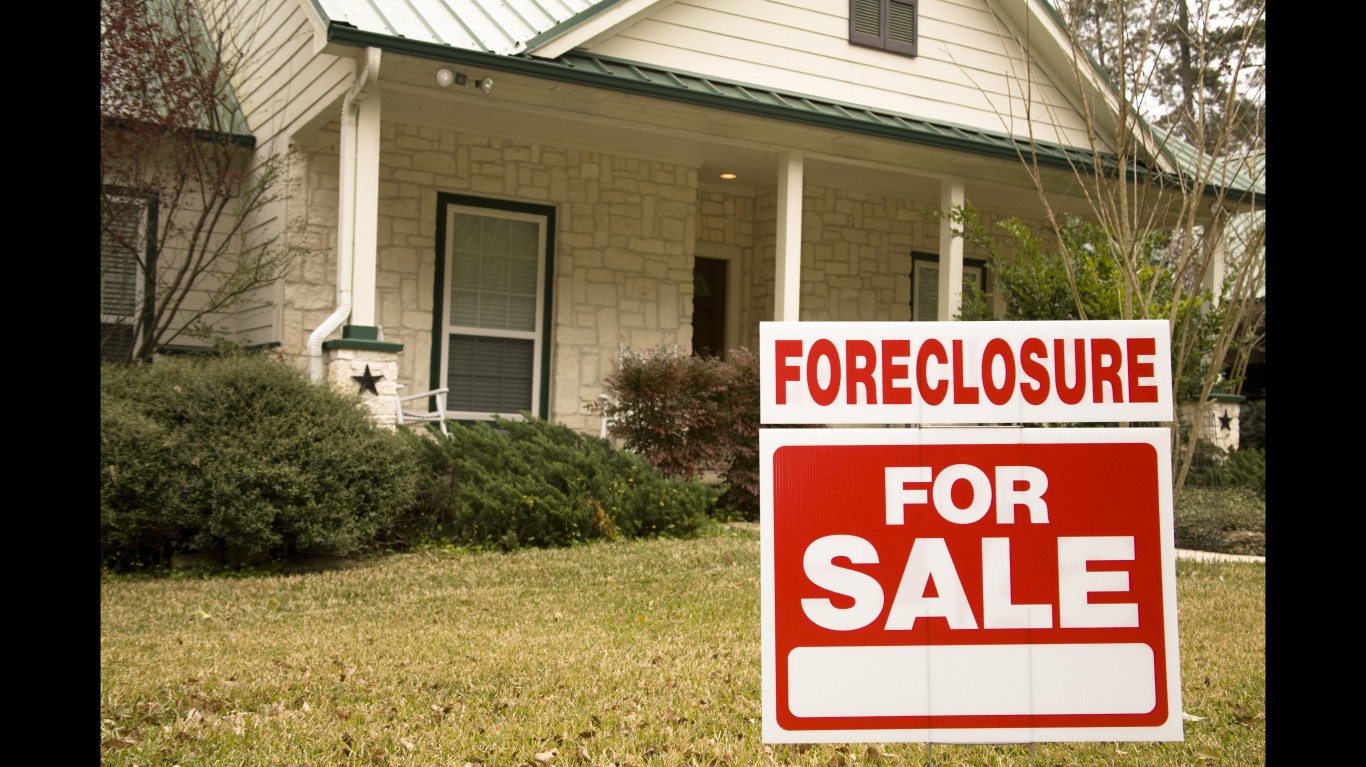
 The federal government is most likely to create a safety net for the falling housing market with a plan that will allow people to stay in their homes by reducing their monthly payments. The FDIC and some members of Congress assume that residential real estate prices will decline more slowly this way and eventually begin to increase if houses are kept out of foreclosure. That may be true, but the plan could be quickly flanked by rising unemployment and the realization by people who can stay in their homes with federal help that they will never have the equity to pay down their principle. The government will have pushed them into the equivalent of “interest only” loans.
The first economic reality which makes propping up the housing market untenable is that unemployment is likely to rise sharply between now and the end of the year. By some estimates it will go over 9% in early 2010. While the government helps some people stay in their homes, the overall housing market could be overrun by foreclosures driven by job losses. Under these circumstances the value of homes will continue to fall. And as prices decline, the homeowner rescue plan will keep people in their houses using mortgage assistance programs without helping them pay down the principle on their loans. These balances will get further out of touch with the overall market each day as the economy goes through a natural cycle. At least allowing them to go into foreclosure would permit the housing market to fall based on the fundamentals of supply and demand.
Although it is counterintuitive, the best approach to reversing the falling prices of homes may be to push the housing market to a deep trough as quickly as possible. This would mean that the government would not provide any assistance for current homeowners and give no financial aid to people who might buy a residence using tax credits. The idea of a benefit of up to $15,000 for those purchasing a home has already been floated in the debates over the stimulus package. Bringing housing back to a period of “affordable” prices means the government needs to stay out the business of keeping homes from being sold or foreclosed and helping buyers buy homes.
Slowing foreclosure rates by cutting the monthly interest rates of homeowners who could not otherwise afford their mortgages may actually string out the amount of time it takes for housing prices to reach a bottom and swing up again. A homeowner with a $300,000 mortgage on a house which is worth only $200,000 will keep that house off the market if at all possible, to avoid having to come up with $100,000 to subsidize a sale. That house sits in limbo while the government makes the monthly mortgage payment low enough to keep it in the hands of its owner. Excess home inventory growth is artificially arrested because residences which would normally be for sale are kept off the market.
It seems especially cruel to push foreclosures because no one wants people to lose their homes. But, at some point, the system must take into account the fact that many of these people cannot afford their houses. The irony of allowing current owners to stay where they are is that they will never really “own” a home. They will remain in houses where they are very unlikely to be able to pay off the principle. These residences will not be released into a market where prices continue to drop very rapidly because there are no government programs to keep the housing prices at or near current levels as people are pushed out of work. If enough people lose homes, some of them will at least have the opportunity to buy property that they can afford, property which has reached its economically “correct” level through the forces of the market and not through a system that manages prices.
The weakest part of the market has become gangrenous. Unless it is removed, this infection will continue to spread to the rest of the body. Housing prices have to get to the bottom as fast as possible in order for buyers to enter the market of their own accord. In a economically rational market, people can then have the opportunity to own homes that they can actually afford.
Douglas A. McIntyre






 Top Gaining Stocks
 Top Losing Stocks