


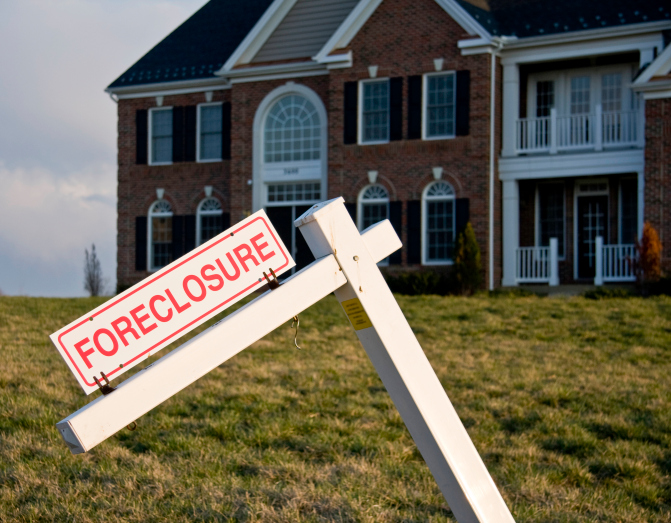
[A] total of 801,359 U.S. properties with foreclosure filings — default notices, scheduled auctions and bank repossessions — in the first half of 2013, a 19 percent decrease from the previous six months and down 23 percent from the first half of 2012. The report also shows that 0.61 percent of all U.S. housing units (one in 164) had at least one foreclosure filing in the first six months of the year.
Additionally:
A total of 127,790 U.S. properties had foreclosure filings in June, down 14 percent from the previous month and down 35 percent from a year ago to the lowest monthly level since December 2006 — a six and a half year low
U.S. foreclosure starts in June dropped 21 percent from the previous month and were down 45 percent from a year ago to the lowest monthly level since December 2005 — a seven and a half year low. Year to date through June, 409,491 foreclosure starts have been filed nationwide, on pace to reach more than 800,000 for the year, which would be down from 1.1 million foreclosure starts in 2012.
But it is worth recalling that some markets continue to be in deep distress, and may never recover to 2006 levels. While there is talk of new bubbles in some parts of the United States, these markets can be ruled as exempt:
Florida posted the nation’s highest state foreclosure rate in the first half of the year: 1.74 percent of housing units with a foreclosure filing (one in every 58) during the six-month period — nearly three times the national average. A total of 155,264 Florida properties had a foreclosure filing in the first six months of the year, the most of any state and up 12 percent from a year ago. In June Florida foreclosure starts (LIS) decreased 23 percent from a year ago but scheduled foreclosure auctions increased 100 percent and bank repossessions increased 14 percent during the same time period.
Despite a 58 percent month-over-month drop in foreclosure activity in June, Nevada posted the nation’s second highest foreclosure rate in the first half of 2013: 1.40 percent of housing units with a foreclosure filing (one in every 71) during the six-month period. A total of 16,291 Nevada properties had a foreclosure filing in the first half of 2013, up 12 percent from the previous six months but down 21 percent from a year ago. New state legislation (AB 300) that changes the foreclosure process in Nevada took effect in June.
Illinois foreclosure activity in the first half of 2013 decreased from the previous six months and a year ago, but the state still posted the nation’s third highest foreclosure rate: 1.20 percent of housing units with a foreclosure filing (one in 83) during the six-month period. In June Illinois foreclosure starts (LIS) decreased 68 percent from a year ago and bank repossessions were down 49 percent from a year ago, but scheduled foreclosure auctions increased 65 percent during the same time period to the highest monthly level since July 2010.
To call the recovery “uneven” is an understatement.






 Top Gaining Stocks
 Top Losing Stocks