


The change since the bottom of housing prices was tremendous:
RealtyTrac released its Midyear 2014 U.S. Foreclosure Market Report, which shows a total of 613,874 U.S. properties with foreclosure filings — default notices, scheduled auctions and bank repossessions — in the first half of 2014, a 19 percent decrease from the previous six months and down 23 percent from the first half of 2013. The report also shows that 0.47 percent of all U.S. housing units (one in 214) had at least one foreclosure filing in the first six months of the year.
Daren Blomquist, vice president at RealtyTrac, pointed out:
There continue to be concerning trends in some states and local markets that clearly indicate those markets are not completely out of the woods when it comes to the lingering foreclosure problem left over from the housing bust. While it’s important that any remaining foreclosure infection is addressed promptly to keep it from festering, foreclosures are no longer a widespread contagion threatening to derail the housing market’s return to full health.
ALSO READ: Cities With the Most Abandoned Homes
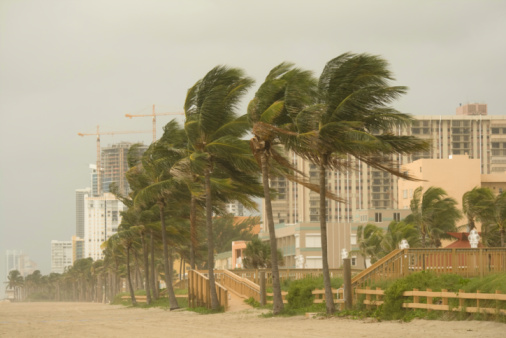
Atop of the list of markets “not completely out of the woods,” foreclosure starts in the first half of the year affected one in 74 housing units in Florida. The figure was three times the national average. The RealtyTrac report indicated “Florida scheduled foreclosure auctions have increased annually in 16 of the last 18 months.”
Additionally, most of the cities that suffer from high foreclosure rates are in Florida:
Despite the annual decrease, Miami posted the nation’s highest metro foreclosure rate: 1.65 percent of all housing units (one in 61) with a foreclosure filing during the first half of the year. Eight other Florida metro areas joined Miami among the top 10 metro foreclosure rates nationwide: Orlando at No. 2 (1.57 percent of all housing units with a foreclosure filing); Port St. Lucie at No. 3 (1.49 percent); Palm Bay-Melbourne-Titusville at No. 4 (1.49 percent); Tampa-St. Petersburg at No. 5 (1.41 percent); Lakeland at No. 6 (1.35 percent); Deltona-Daytona Beach-Ormond Beach at No. 7 (1.29 percent); Ocala at No. 8 (1.26 percent); and Jacksonville at No. 9 (1.24 percent).
Among a few states, the foreclosure situation is not much better. In Maryland the figure was 0.93% (one in 127 during the first half of this year), Illinois at 0.81% (one in 123), New Jersey at 0.74% (one in every 134) and Nevada at 0.73% (one in 138). Home prices in several of these states, particularly Florida and Nevada, were decimated during the housing catastrophe that was linked to much of the Great Recession. Those two markets, among others, may never recover entirely.
The RealtyTrac numbers are a reminder that the housing crisis was not primarily a national one. The American average foreclosure rates were driven to historic highs to some significant extent by a few regions.





 Top Gaining Stocks
 Top Losing Stocks