


 While there is little or no sign of the success of Detroit’s program to sell homes for as little as $1,000, the opportunity continues. The Detroit Land Bank Authority may claim the fact that it currently offers three houses a day as progress. But at that rate it would take years or even decades to eat through the likely inventory. Perhaps this is because the houses are not as easy to buy as simply providing a check or credit card.
Ironically, while these homes are for sale, Detroit plans to bull doze thousands upon thousand of homes. The process continues, but not without some problems:
According to the Detroit Free Press:
Since the city doesn’t allow occupied properties to be demolished, squatters who won’t leave voluntarily and who have no previous connection to the homes have to be removed by police for violating the city’s trespassing laws. That makes them a complication of sorts for the recovery of the city, which emerged in December from the largest municipal bankruptcy in U.S. history.
ALSO READ: States With the Worst Gun Violence
However, for those homes that are on the block, based on past auctions, some houses sell for more than $1,000. As a matter of fact, in the past month, at least three sold for over $30,000, but most fetched far less. While at current prices, these houses seem to be a bargain, the requirements for ownership often make them expensive, at least for people who think they can own a house for $1,000
The “rules” for what an owner has to do can increase the real cost of the house several times over:
Within 30 days after closing, you must provide the Land Bank an executed copy of a contract to rehab the home. If you can demonstrate to the Land Bank you have the skills to rehab the house yourself, within 30 days after closing you must provide the Land Bank with a plan of work and receipts showing you have purchased the materials necessary.
Many of these properties were originally built using lead-based paint, asbestos, or other hazardous materials. If available, environmental reports will be provided to winning bidders. It is recommended that homeowners seek professional advice on how to properly address hazardous materials.
Within 6 months after closing (9 months for homes located in a historic district), you must provide the Land Bank with a Certificate of Occupancy, or Certificate of Approval for the house and demonstrate that the house has an occupant.If you fail to meet these deadlines, you will forfeit both your purchase price and the property, and are forbidden to bid in all future auctions.
Very few people know enough about building costs to say for certain if they can afford the rehabilitations. Fewer know how to remove hazardous material, but ridding a house of lead-based paint and asbestos costs more than a few hundred dollars.
ALSO READ: 10 Cities With the Most Adultery
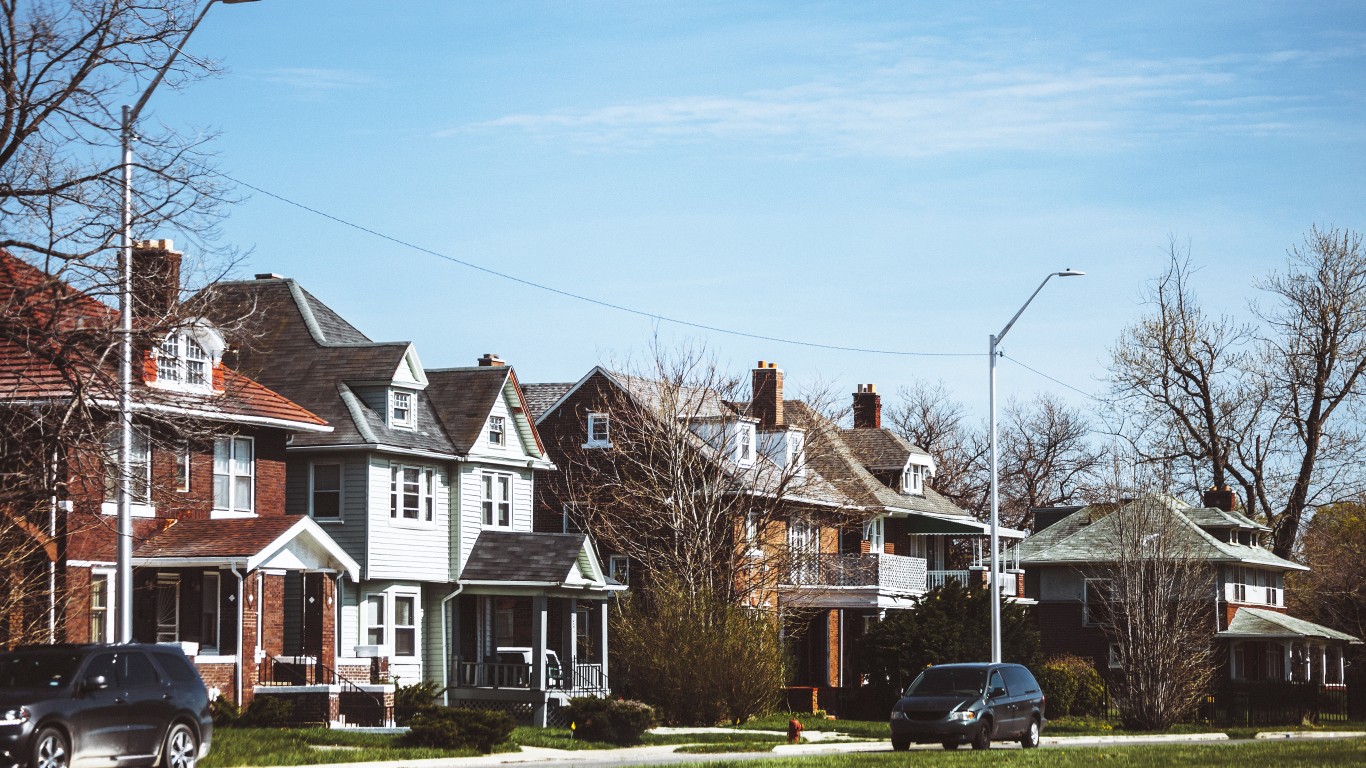
There are more than 15 houses for sale that were added to the “Building Detroit” website over the July 4 weekend. Each seems to be a good deal. Three have four bedrooms and several have three. Several sit near parks, but several sit near the busy John C Lodge Freeway. Each also sits in a rundown part of Detroit.
Even if “Building Detroit” can sell three homes a day, the program cannot be successful







 Top Gaining Stocks
 Top Losing Stocks