


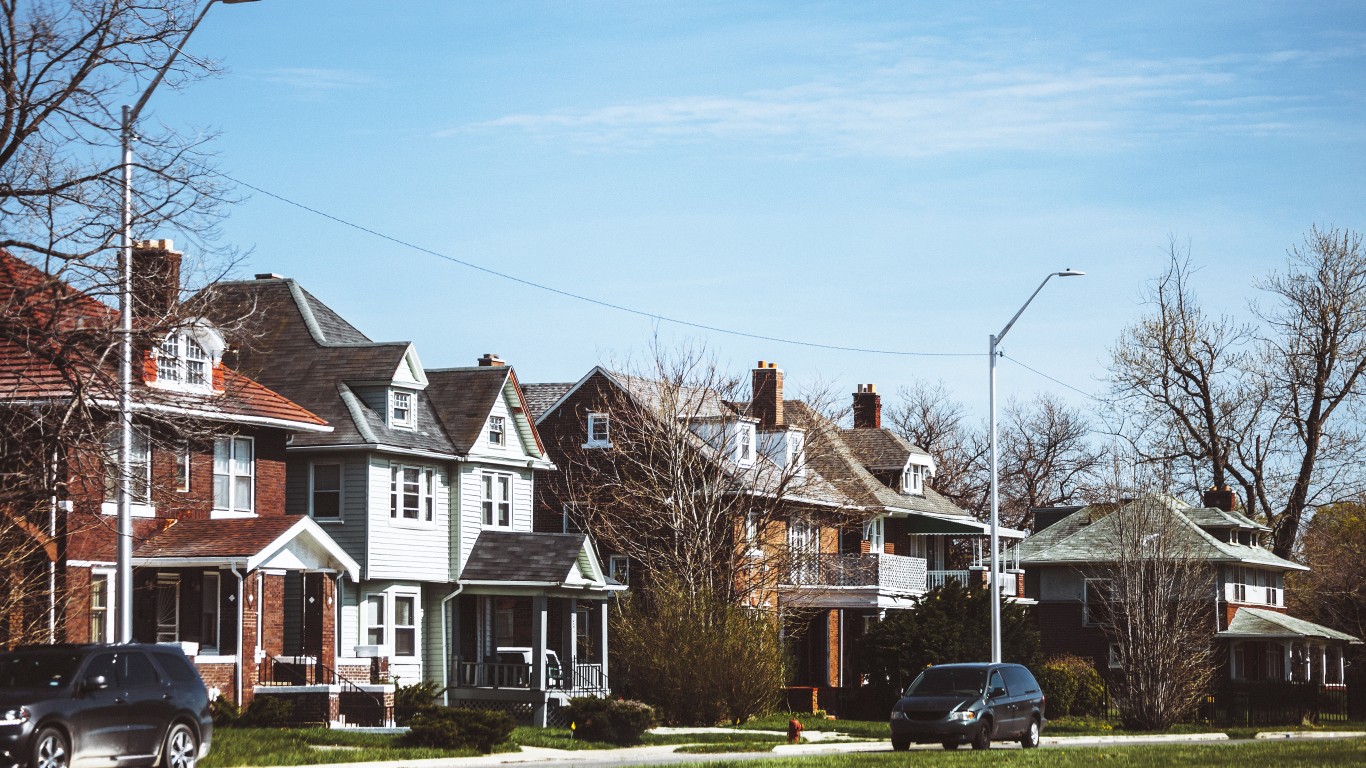
Detroit, many of its neighborhoods blighted by the flight of citizens, has come up with a program to sell many homes that it owns because of taxes which were in arrears and are unoccupied. The city has lost half its population since 1950, and according to the Census has dropped just above 670,000. Of Detroit’s residents, an astounding 35% live below the poverty line.
Part of the program for clearing abandoned neighborhoods was the federal $265 million investment in the “Hardest Hit Fund”. The process began in 2014. Over the course of the program, 15,084 houses were knocked down, only a portion of what was needed. According to The Detroit Free Press: “Detroit already has a vast amount of vacant land within its 139-square-mile area. Even the low estimates of vacancy start at about 23 square miles, and counting abandoned schoolyards and the like, the actual total may run much higher.”
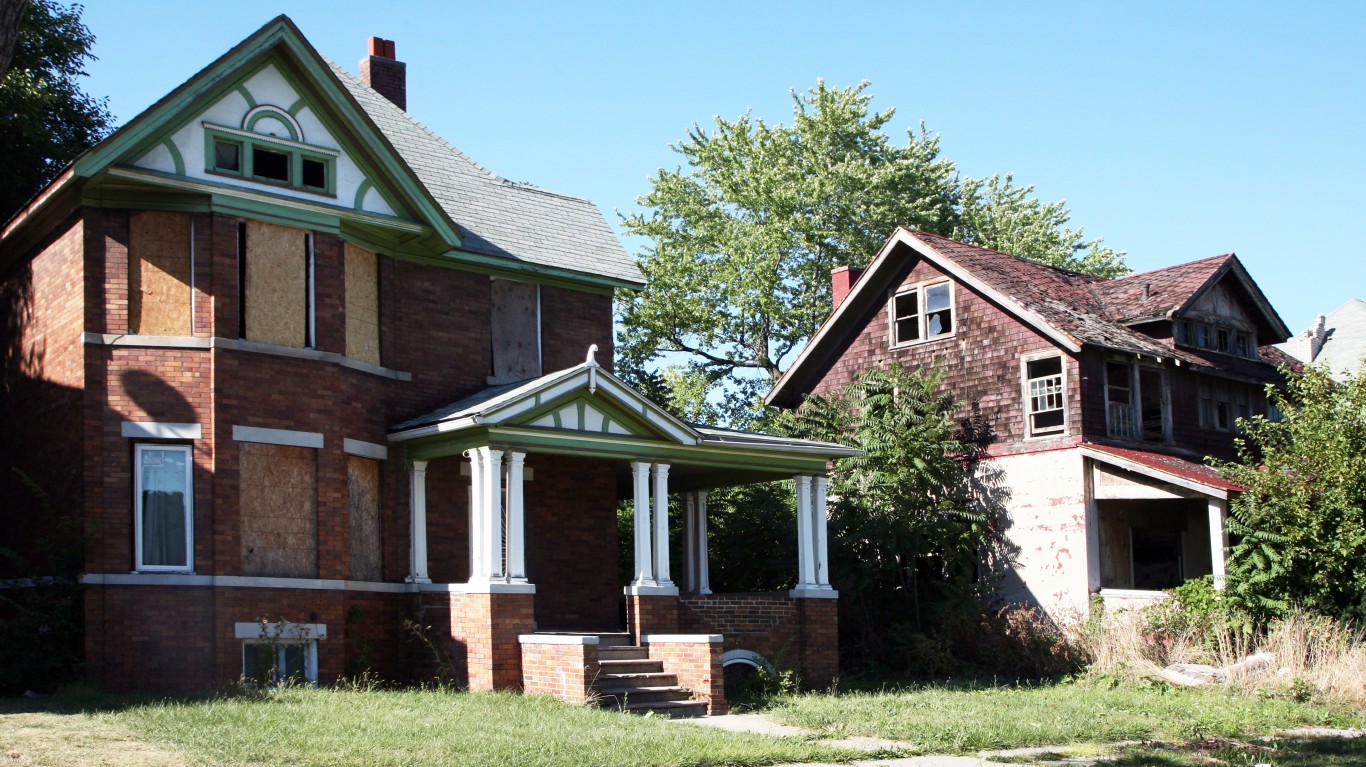
Another solution is a plan to auction off homes, and have the buyers improve them so they are at least habitable. Currently, the Detroit Land Bank Authority has 523 houses for sale. Recently, according to its officials, it has sold 2,417.
The Detroit Land Bank Authority was formed in 2008, in the heart of The Great Recession. It is Detroit’s largest landowner, covering about 10,000 “parcels”, some of which are only land, and others that have houses on them.
[nativounit]
Properties that are up for auction carry an initial price of $1,000. Each is available for bids for a fixed time. At the auction website, there is a countdown for the time each home is available. This “countdown clock” sits below each listing. The listings include the house’s square footage, number of bedrooms and bathrooms, and the name of the neighborhood where it is located. Potential buyers can schedule times to see the homes via an online process. Many of the listings acknowledge that water service to the houses may have been discounted and can cost as much as $10,000 to reconnect–ten times the base auction price of the house.
There are several modest fees that must be paid in addition to the $1,000. These include Closing/Title fees of $450, Recording fees of $30, Tax certification fees of $25, and Title Insurance which starts at $322.25.
The bidding process has several strict rules. An eligible bidder has to be a Michigan resident or “a non-Michigan resident who will live in the property after rehab, or company or organization authorized to do business in Michigan.” The buyer cannot have blight code violations in the city. The bidder cannot have back property taxes on any property in Wayne County, which is where Detroit is located. The buyer cannot be someone who has lost a home to foreclosure in Wayne County.
In addition to those rules, there are regulations regarding bidding and winning a bid. The winner has to provide photos of the house within 15 days that show debris has been removed and that the yard has been maintained. Within 30 days after purchase, or at intervals of 30 days up to 180 days, the owner has to show progress toward complete renovation. Within 150 days, the owner has to provide information about when the renovation will be finished. Within 180 days, the owner must provide “proofs of completion and occupancy.”
The program is ambitious. However, its goals are up against an inventory of blighted homes that stretch well into the thousands. And, buyers may worry that their homes will be rebuilt, but the homes in the neighborhoods around them will not be, leaving a largely blighted area where they will have to live.
Click here to see the 50 worst cities in America to live in.
[wallst_email_signup]






 Top Gaining Stocks
 Top Losing Stocks