


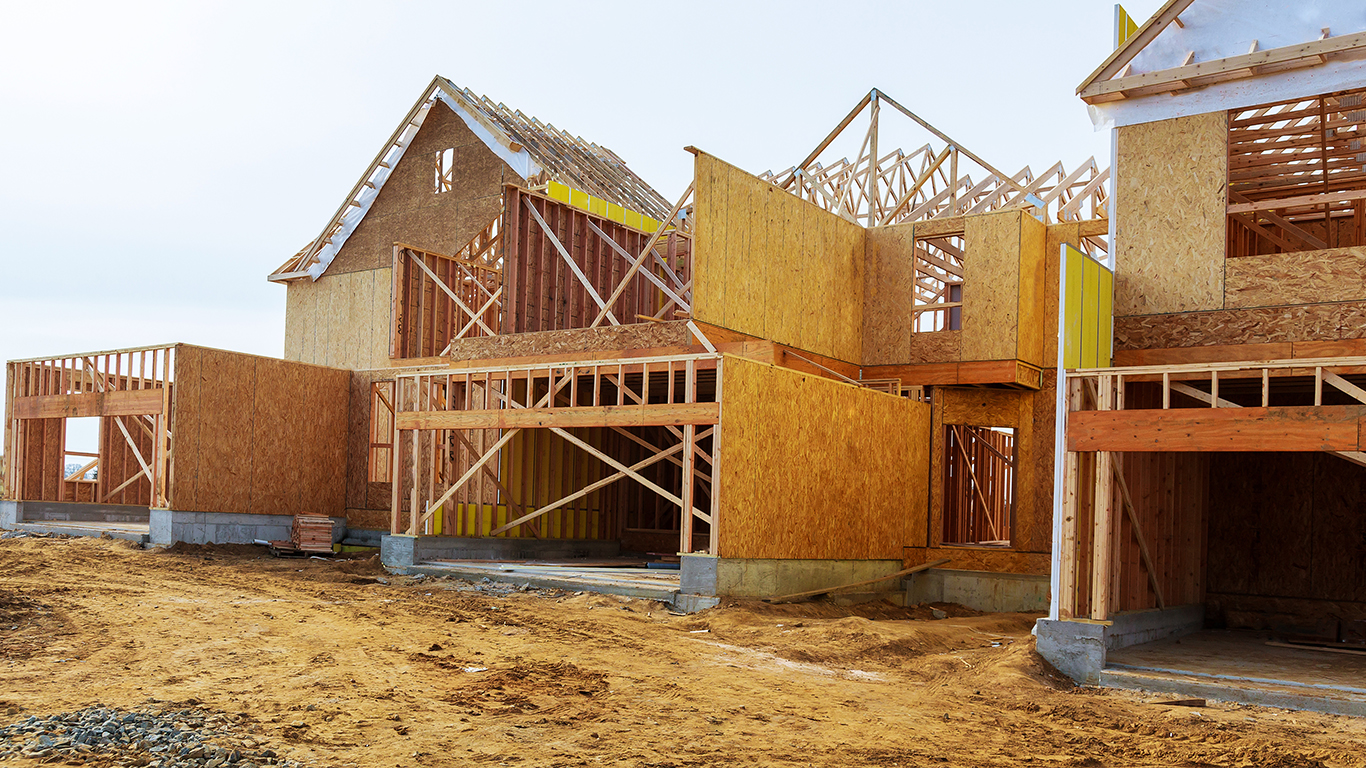
D.R. Horton Inc. (NYSE: DHI) reported fiscal fourth-quarter and full-year 2018 results before markets opened Thursday. The homebuilder reported quarterly diluted earnings per share (EPS) of $1.22 on revenues of $4.5 billion. In the same period a year ago, the company posted EPS of $0.82 on revenue of $4.2 billion. First-quarter results also compare to consensus estimates for EPS of $1.22 and $4.57 billion in revenue.
For the full year, D.R. Horton reported EPS of $3.81 and revenue of $16.1 billion, compared with year-ago EPS of $2.74 and revenue of $14.1 billion. Analysts had estimated EPS at $3.88 and revenue of $16.1 billion.
This has not been a good year for homebuilders. D.R. Horton, the largest measured by market cap, has seen its share price drop by more than 26% for the year to date. Of the six homebuilders we screened, none has lost less than 25% of its value this year, and the worst is down 47%.
[nativounit]
Builders also have focused construction on more expensive homes. A two-story house with 3,200 square feet does not cost twice as much to build as a single-story, 1,600-square foot house, and the builder earns a higher profit on the larger home.
D.R. Horton’s home sales revenue for the quarter totaled $4.38 billion. The company closed sales on 14,674 homes for an average sales price of about $298,500. In 2017, home sales revenue totaled $4.04 billion for 13,165 homes and an average price of nearly $306,900. According to the Census Bureau, the average sales price of a new home in September was $377,200. In December 2017, the average was $402,900, the highest average ever.
Chairman Donald Horton commented:
Sales prices for both new and existing homes have increased across most of our markets over the past several years, which coupled with rising interest rates has impacted affordability and resulted in some moderation of demand for homes, particularly at higher price points. However, we continue to see good demand and a limited supply of homes at affordable prices across our markets, and economic fundamentals and financing availability remain solid. We are pleased with our current product offerings and positioning to meet demand in the current market, and we will adjust to future changes in market conditions as necessary.
In other words, D.R. Horton is trying to build less expensive homes in an effort to address demand from first-time buyers. The other side of that coin is that in order to continue growing profits, the firm needs to wring out more costs, and that’s challenging with prices rising for both labor and materials.
The company did not offer guidance for the current quarter or for the 2019 fiscal year. Analysts are looking for fiscal first-quarter EPS of $0.86 and revenue of $3.66 billion. For the full year, estimates call for EPS of $4.59 and revenue of $17.92 billion.
D.R. Horton’s stock traded up about 0.3% in Thursday’s premarket session, at $37.70 in a 52-week range of $34.37 to $53.32. The 12-month consensus price target on the stock was $49.94 before this morning’s report.
[recirclink id=503807]
[wallst_email_signup]






 Top Gaining Stocks
 Top Losing Stocks