Your Bank Will Track You Down If You Don’t Pay Your Mortgage

Photo of Douglas A. McIntyre
By Douglas A. McIntyre Updated Published
This post may contain links from our sponsors and affiliates, and Flywheel Publishing may receive compensation for actions taken through them.
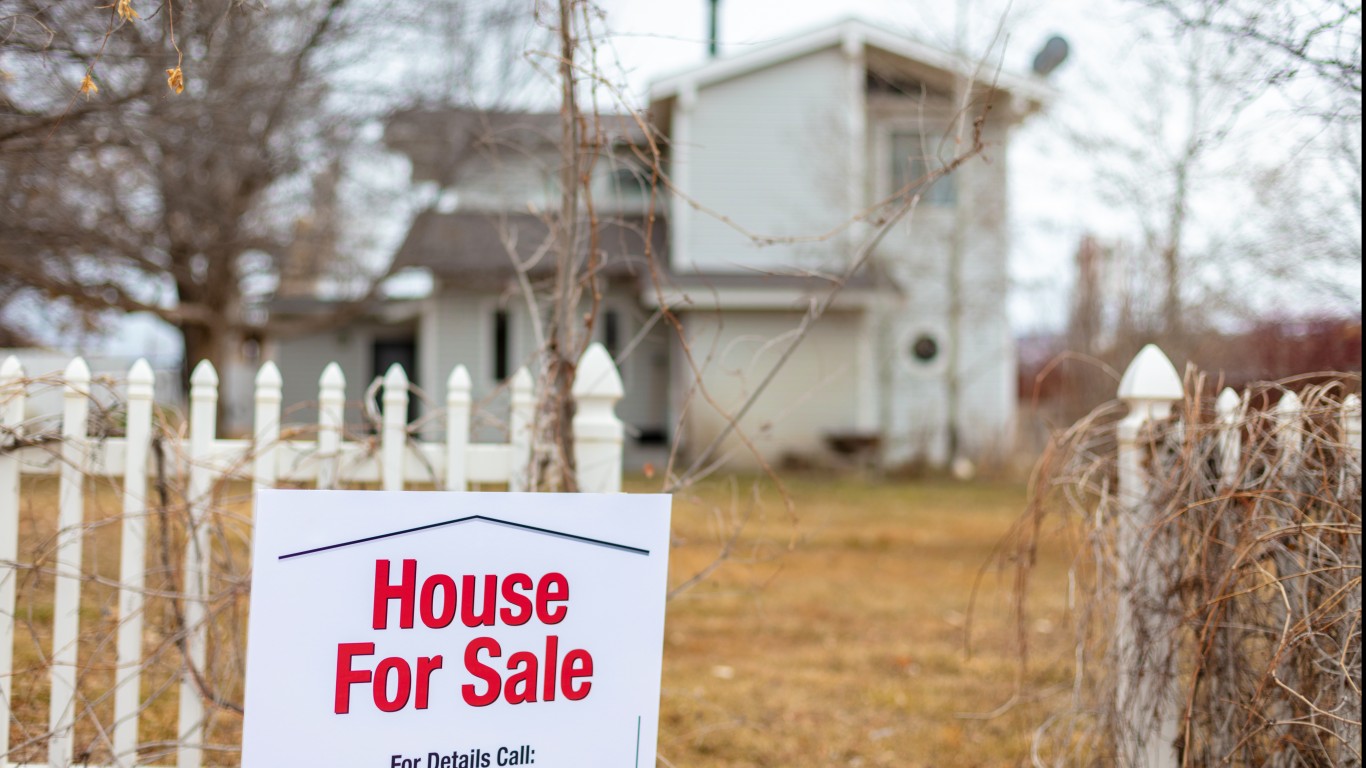
Your Bank Will Track You Down If You Don’t Pay Your Mortgage

© eyecrave / Getty Images

Mortgage lenders and banks may offer forbearance on mortgage payments for 90 days. The deals aren’t very good for many people who will be out of jobs for long periods. Most of these institutions want all of the money when that period is over. The banks will track down those who have late payments, and push them to make those larger payments immediately.

The pressure for payments in 90 days will likely trigger defaults for many people. An that can take homeowners on the path to foreclosures, much as it did during the Great Recession. That puts residents out of homes and drives a glut in unsold homes.

Realtor.com experts recently made a comment that “The widespread misery spread by COVID-19 has left many homeowners scrambling to figure out how to pay their mortgages. Homeowners with government-backed loans—and even many without—are being offered up to 12 months of forbearance, doled out in 90-day chunks. But this temporary fix could result in another wave of foreclosures if additional assistance isn’t provided.”

Mark Zandi, chief economist at Moody’s Analytics, is no more optimistic. About 15 million homeowners could rely on forbearance to get them through this crisis, or nearly a third of all single-family mortgages, he predicts. That could result in roughly 2 million foreclosures. To put that into perspective, there were around 7 million foreclosures as a result of the last housing bust.

If the spread of the virus goes on for a longer time than some experts expect, two million foreclosures would be the low end. And, foreclosures begin a series of falling dominos. In some markets, prices fell by 40% between 2007 and 2009. And, sellers with foreclosed homes in their neighborhoods found it was something of a blight. That, in turn, made their own homes harder to sell, at least at reasonable prices.

Banks will track down mortgage holders who are either late on payments or have unpaid forbearance deals. That will cause a housing crisis, perhaps not as bad as the last one, but still terrible.


 

Photo of Douglas A. McIntyre
About the Author Douglas A. McIntyre →

Douglas A. McIntyre is the co-founder, chief executive officer and editor in chief of 24/7 Wall St. and 24/7 Tempo. He has held these jobs since 2006.

McIntyre has written thousands of articles for 24/7 Wall St. He is an expert on corporate finance, the automotive industry, media companies and international finance. He has edited articles on national demographics, sports, personal income and travel.

His work has been quoted or mentioned in The New York Times, The Wall Street Journal, Los Angeles Times, The Washington Post, NBC News, Time, The New Yorker, HuffPost USA Today, Business Insider, Yahoo, AOL, MarketWatch, The Atlantic, Bloomberg, New York Post, Chicago Tribune, Forbes, The Guardian and many other major publications. McIntyre has been a guest on CNBC, the BBC and television and radio stations across the country.

A magna cum laude graduate of Harvard College, McIntyre also was president of The Harvard Advocate. Founded in 1866, the Advocate is the oldest college publication in the United States.

TheStreet.com, Comps.com and Edgar Online are some of the public companies for which McIntyre served on the board of directors. He was a Vicinity Corporation board member when the company was sold to Microsoft in 2002. He served on the audit committees of some of these companies.

McIntyre has been the CEO of FutureSource, a provider of trading terminals and news to commodities and futures traders. He was president of Switchboard, the online phone directory company. He served as chairman and CEO of On2 Technologies, the video compression company that provided video compression software for Adobe’s Flash. Google bought On2 in 2009.

Continue Reading

Top Gaining Stocks

CBOE Vol: 1,568,143
PSKY Vol: 12,285,993
STX Vol: 7,378,346
ORCL Vol: 26,317,675
DDOG Vol: 6,247,779

Top Losing Stocks

LKQ
LKQ Vol: 4,367,433
CLX Vol: 13,260,523
SYK Vol: 4,519,455
MHK Vol: 1,859,865
AMGN Vol: 3,818,618