


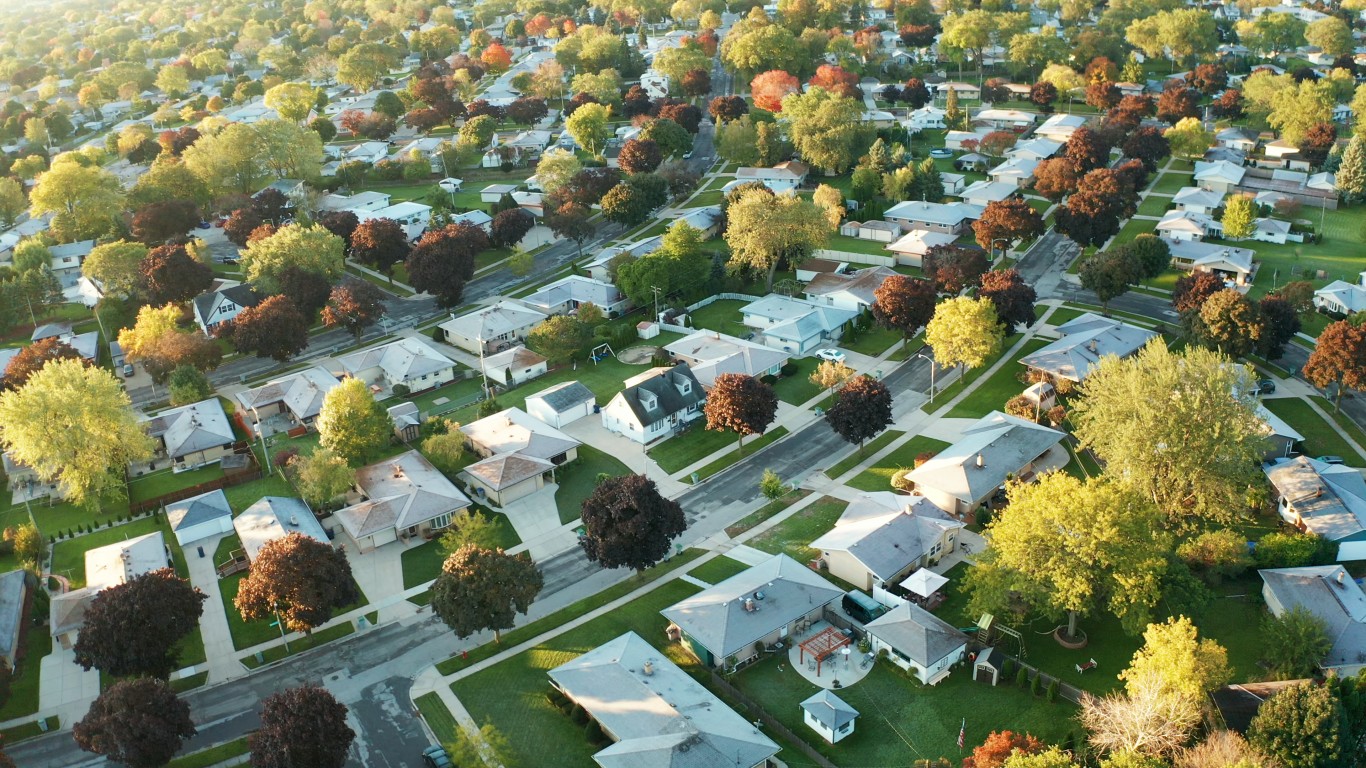
Although mortgage rates have slowed the activity in the residential housing market, during the summer, home prices continued to rise in almost every city in America. In 181 of the country’s 185 largest cities, prices were up during the third quarter. The median price of a single-family existing home hit $398,500, up by 8.6% from the same period a year ago. However, the price by market ranged by a huge amount, with Decatur, Illinois, at the bottom. The median home price there during the period was only $123,000, up by 4.3%.
[in-text-ad]
The move in home prices began three years ago. NAR Chief Economist Lawrence Yun said, “The median income needed to buy a typical home has risen to $88,300 – that’s almost $40,000 more than it was prior to the start of the pandemic, back in 2019.” This, combined with high mortgage rates, is what will cause an overheated market to cool.
[nativounit]
The market with the most expensive homes was San Jose at $1.688 million, according to the National Association of Realtors’ third-quarter report. Five of the top six markets based on median home prices are in California. They are clustered around San Francisco and Los Angeles: San Francisco ($1.3 million), Anaheim ($1.2 million), San Diego ($900,000) and Los Angeles ($893,000). The other market in the top six is Honolulu at $1.1 million.
[wallst_email_signup]
Almost all the markets with the lowest median home prices are in the industrial Midwest, which used to be among the most affluent cities in the country. As industries moved their manufacturing elsewhere, many of these metros lost population. Youngstown, Ohio, ($148,000) and Peoria ($148,000) and Rockford ($174,000) in Illinois are prime examples.
[recirclink id=1181217]
Decatur is among America’s poorest cities, according to the Census Bureau. It has a population of slightly less than 70,000 and an extremely low median income of $45,404. Just shy of 20% of people live below the poverty line.
Median home prices in Decatur rose 4.8% in the third quarter. As a recession hits, that figure is unlikely to go higher.










 Top Gaining Stocks
 Top Losing Stocks