The City Where Investors Stopped Buying Houses

Photo of Douglas A. McIntyre
By Douglas A. McIntyre Published
This post may contain links from our sponsors and affiliates, and Flywheel Publishing may receive compensation for actions taken through them.
The City Where Investors Stopped Buying Houses

© aiisha5 / iStock via Getty Images

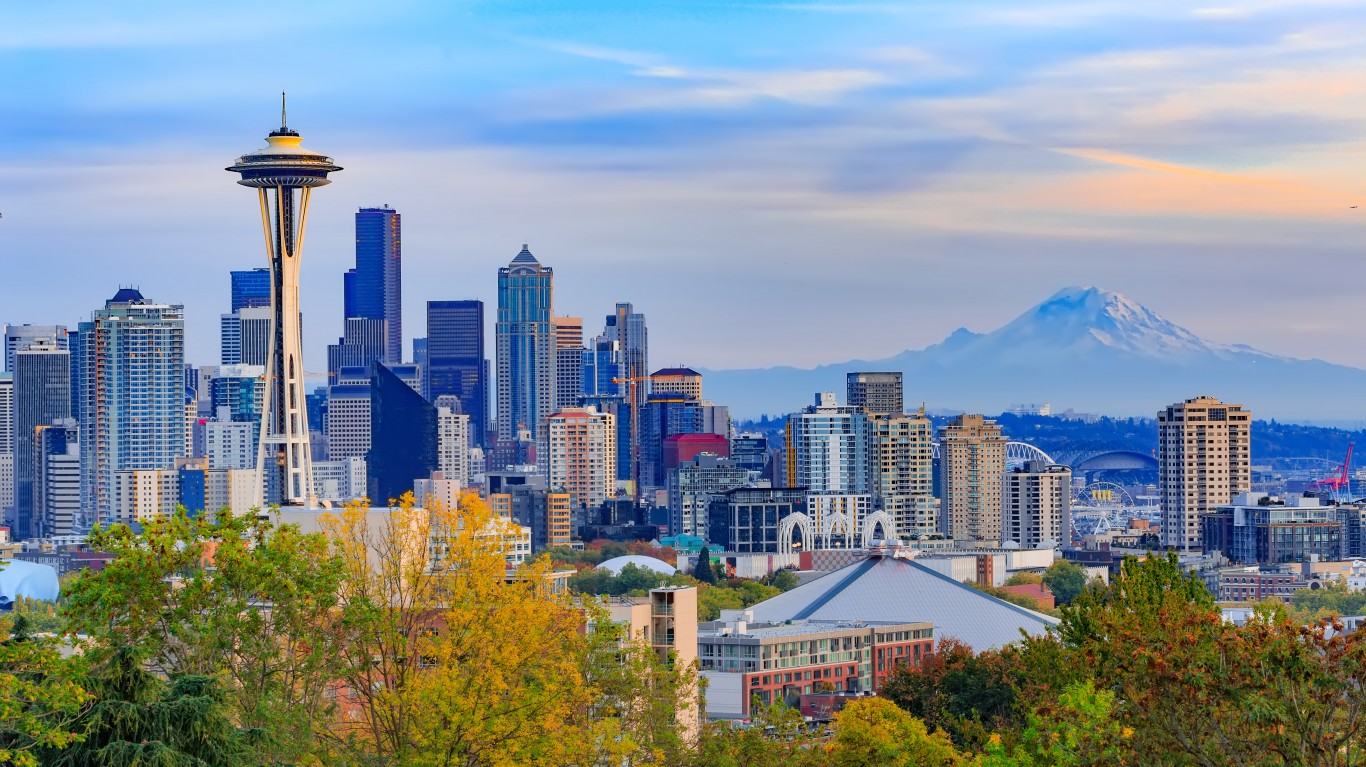
The residential real estate market posted two of its best years in decades in a period that began to end in the third quarter. Fueled by Americans who became free of working from offices and could move, and mortgage rates below 3%, demand for homes drove prices in many markets up by over 20% year over previous year. The upswing allowed some Americans to buy homes and resell them at large profits quickly. That activity has slowed in many cities as home prices drop. In Seattle, home investing has all but disappeared.

[nativounit]

A new research paper by Realtor.com titled “Mom-and-Pop Real Estate Investors Are Pulling Way Back. Here’s Where—and Why It Matters”. It separates these buyers from large institutions that make similar investments. The study’s author looked at homes that were bought using a mortgage and in a few markets, buyers who used cash. These homes were used as rental properties or flipped for a profit. One sign of the change in this activity was “Fewer than 1 in 17 mortgages is being used for an investment purchase, down from around 1 in 12 a little less than a year ago.”

Seattle was the city with the largest drop in homes bought for investments. A year ago, these were one in 20 purchases. That has dropped to one in 30. Home investors have been priced out of the market. Realtor.com Matthew Gardner, the chief economist for Seattle-based Windermere Real Estate., said, “In markets like Seattle, which have gotten so expensive, where buyers are paying $800,000 to $900,000, the rent required to cover that is going to be $6,000 or $7,000 per month”.

[wallst_email_signup]

As mortgage rates rise above 6%, and the U.S. economy slows and may move into recession, the risk for home investors will only grow. Seattle will go from being an exception to market trends to the rule.


Photo of Douglas A. McIntyre
About the Author Douglas A. McIntyre →

Douglas A. McIntyre is the co-founder, chief executive officer and editor in chief of 24/7 Wall St. and 24/7 Tempo. He has held these jobs since 2006.

McIntyre has written thousands of articles for 24/7 Wall St. He is an expert on corporate finance, the automotive industry, media companies and international finance. He has edited articles on national demographics, sports, personal income and travel.

His work has been quoted or mentioned in The New York Times, The Wall Street Journal, Los Angeles Times, The Washington Post, NBC News, Time, The New Yorker, HuffPost USA Today, Business Insider, Yahoo, AOL, MarketWatch, The Atlantic, Bloomberg, New York Post, Chicago Tribune, Forbes, The Guardian and many other major publications. McIntyre has been a guest on CNBC, the BBC and television and radio stations across the country.

A magna cum laude graduate of Harvard College, McIntyre also was president of The Harvard Advocate. Founded in 1866, the Advocate is the oldest college publication in the United States.

TheStreet.com, Comps.com and Edgar Online are some of the public companies for which McIntyre served on the board of directors. He was a Vicinity Corporation board member when the company was sold to Microsoft in 2002. He served on the audit committees of some of these companies.

McIntyre has been the CEO of FutureSource, a provider of trading terminals and news to commodities and futures traders. He was president of Switchboard, the online phone directory company. He served as chairman and CEO of On2 Technologies, the video compression company that provided video compression software for Adobe’s Flash. Google bought On2 in 2009.

Continue Reading

Top Gaining Stocks

CBOE Vol: 1,568,143
PSKY Vol: 12,285,993
STX Vol: 7,378,346
ORCL Vol: 26,317,675
DDOG Vol: 6,247,779

Top Losing Stocks

LKQ
LKQ Vol: 4,367,433
CLX Vol: 13,260,523
SYK Vol: 4,519,455
MHK Vol: 1,859,865
AMGN Vol: 3,818,618