


Real estate prices surged within months of the pandemic. According to the S&P Case-Shiller home price index, the increase was 20% year over year. That number has slowed to low double digits. Recently, month-over-month figures have fallen in many metros. (The income it takes to be middle class in America’s largest cities.)
[in-text-ad]
The price drop in some markets is enough to cause anxiety among homeowners. A new study from Black Knight examined the differences between when prices peaked and where they are today. Among the 50 largest metro areas, this figure dropped by 10%. In Austin, prices fell by 15.6%. In San Francisco, they dropped by 15.1%. In nearby San Jose, they fell 14.9%. San Francisco and San Jose are America’s two most expensive housing markets.
[nativounit]
The declines in San Francisco and San Jose are because people are leaving the cities. The situation in Austin is much different. It has been one of the fastest-growing housing markets in America, which has driven prices sharply higher for over two years. The market is overbought and homes are too expensive, particularly as interest rates have gone from 3% to 6%. As homeowners exit the market, the selling pressure drives prices even lower.
[wallst_email_signup]
Several other housing markets have the Austin problem. Sales and prices surged after the start of the COVID-19 pandemic. Now, homeowners are paying for what they spent for their homes as the market peaked. This is true in Las Vegas, where Black Knight shows a drop of 12.1% from its peak, and Phoenix, where the figure is 12.5%.
[recirclink id=1217807]
Other markets are likely to join these as home prices turn from steady growth to one in which inventory is too high along with “too high” prices. In a year, there will be more markets down more than 10% from their peaks.
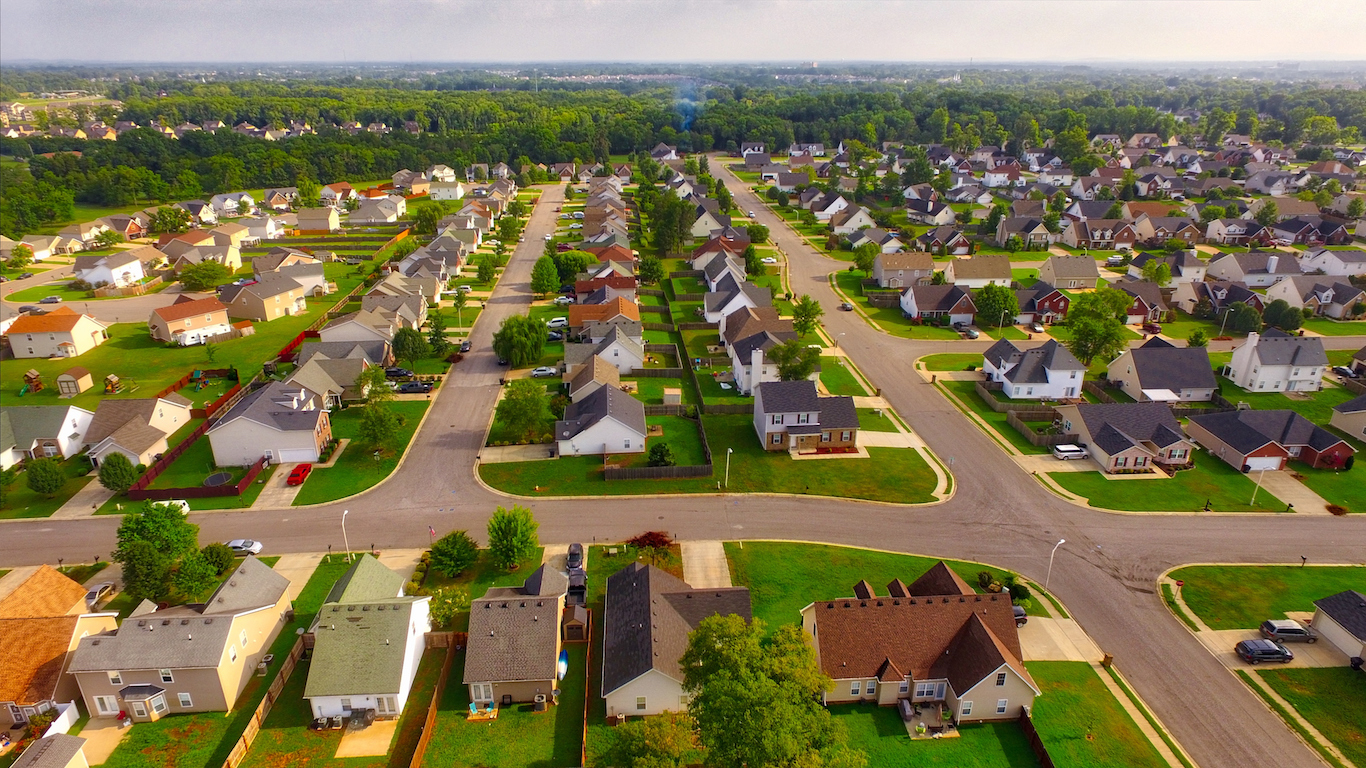
Home Prices Are Collapsing in This City


© RoschetzkyIstockPhoto / iStock via Getty Images

Douglas A. McIntyre is the co-founder, chief executive officer and editor in chief of 24/7 Wall St. and 24/7 Tempo. He has held these jobs since 2006.
McIntyre has written thousands of articles for 24/7 Wall St. He is an expert on corporate finance, the automotive industry, media companies and international finance. He has edited articles on national demographics, sports, personal income and travel.
His work has been quoted or mentioned in The New York Times, The Wall Street Journal, Los Angeles Times, The Washington Post, NBC News, Time, The New Yorker, HuffPost USA Today, Business Insider, Yahoo, AOL, MarketWatch, The Atlantic, Bloomberg, New York Post, Chicago Tribune, Forbes, The Guardian and many other major publications. McIntyre has been a guest on CNBC, the BBC and television and radio stations across the country.
A magna cum laude graduate of Harvard College, McIntyre also was president of The Harvard Advocate. Founded in 1866, the Advocate is the oldest college publication in the United States.
TheStreet.com, Comps.com and Edgar Online are some of the public companies for which McIntyre served on the board of directors. He was a Vicinity Corporation board member when the company was sold to Microsoft in 2002. He served on the audit committees of some of these companies.
McIntyre has been the CEO of FutureSource, a provider of trading terminals and news to commodities and futures traders. He was president of Switchboard, the online phone directory company. He served as chairman and CEO of On2 Technologies, the video compression company that provided video compression software for Adobe’s Flash. Google bought On2 in 2009.








 Top Gaining Stocks
 Top Losing Stocks