


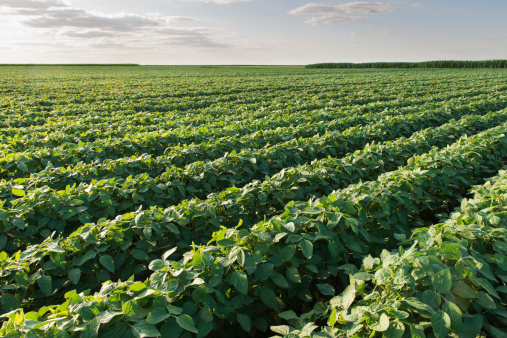
Glyphosate is the active ingredient in Roundup, the herbicide from Monsanto Co. (NYSE: MON) that was first used on U.S. soybean crops in 1996. Since then a total of 22 weeds worldwide have been found to be resistant to glyphosate.
Dow faced significant opposition to approval of this herbicide, not least because 2,4-D was one of two active ingredients in Agent Orange, a herbicide used in large quantities during the Vietnam War as a defoliant. Agent Orange was a 50-50 mix of 2,4-D and another chemical known as 2,4,5-T. One of the byproducts of the manufacture of 2,4,5-T is dioxin, a toxin that has been linked to cancers, diabetes, birth defects and other disabilities. Production of Agent Orange was stopped in the 1970s and all existing stocks were collected and incinerated. The compound is no longer used.
ALSO READ: The 10 States With the Worst Quality of Life
Despite the fact that the toxicity of Agent Orange was linked to the other chemical in the mix, 2,4-D has been found in at least some studies to be problematic. The National Pesticide Information Center at the University of Oregon notes:
Although the free acid form of 2,4-D did not damage chromosomes, there is limited evidence that commercial formulations may have the potential to do so. Overall, evidence for mutagenicity has been inconsistent.
That inconsistency did not stop the Natural Resources Defense Council from filing a lawsuit against the EPA for its failure to ban 2,4-D. The EPA noted in its approval notice that 26 members of the European Union and other countries including Canada, Mexico and Japan have approved both 2,4-D and glyphosate for use in controlling weeds.
For Dow, gaining approval for a new herbicide also allows the company to proceed with developing and selling corn and soybean seed that is resistant to 2,4-D. The new seeds will be resistant to both 2,4-D and glyphosate, among other herbicides.
Despite the EPA’s approval of its herbicide, Dow stock was trading down about 4% shortly after the noon hour on Wednesday, at $42.20 in a 52-week range of $38.16 to $54.97. Both the S&P 500 and the DJIA were down about 2% on another day of selling.










 Top Gaining Stocks
 Top Losing Stocks