


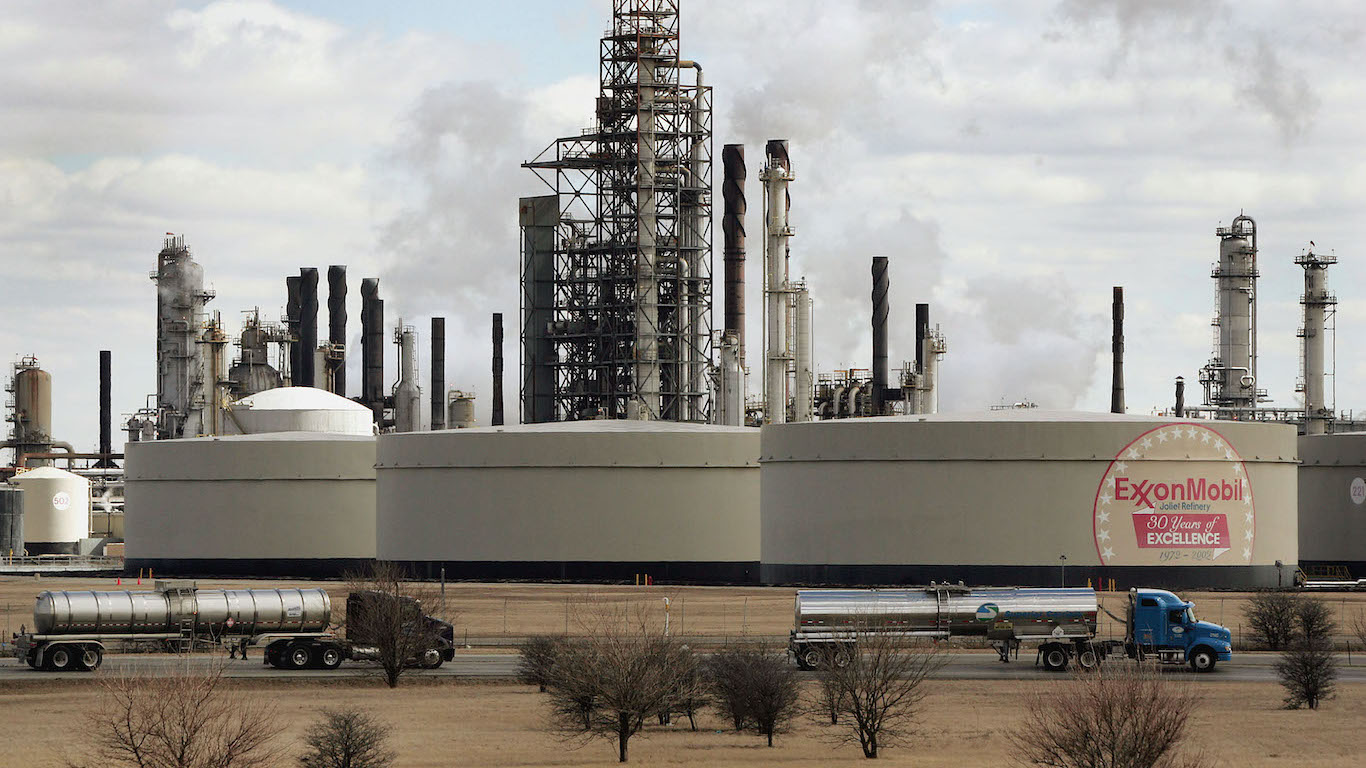
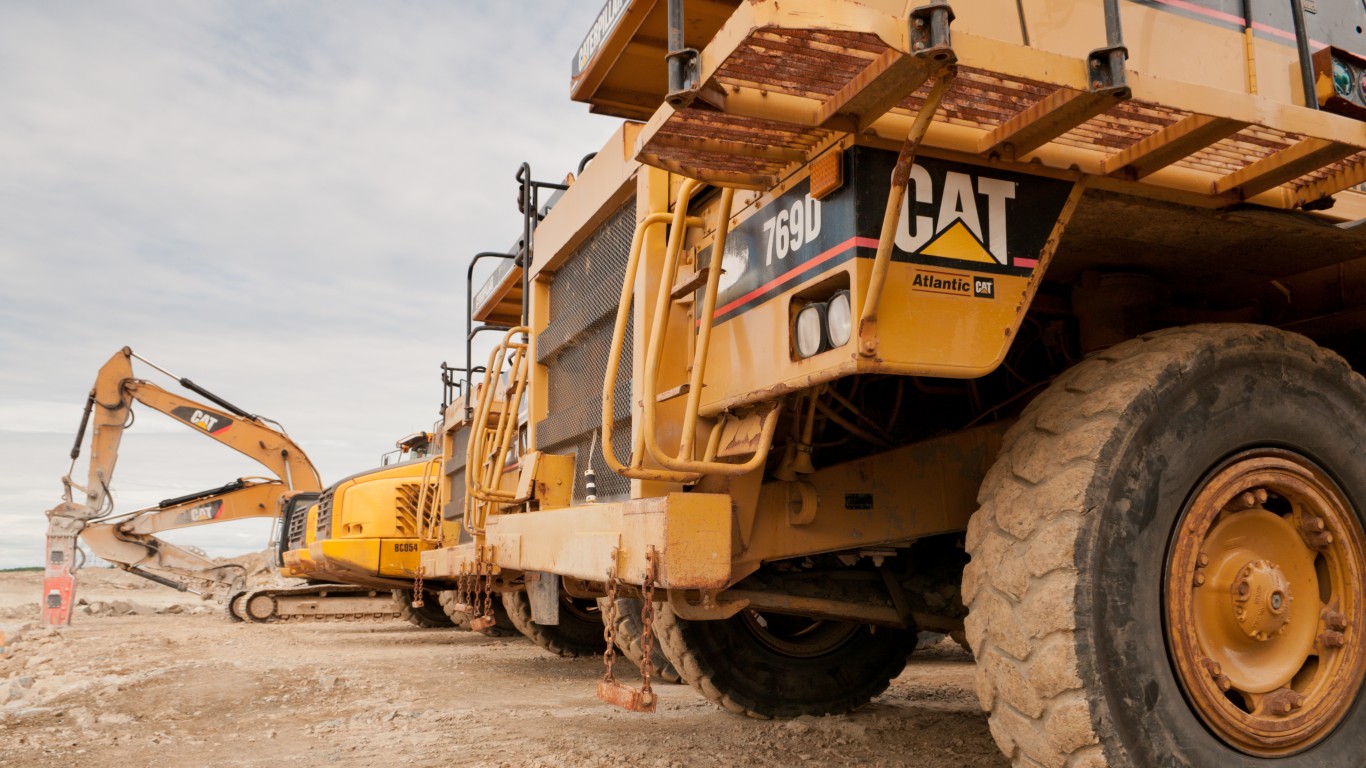
Usually when Caterpillar Inc. (NYSE: CAT) is mentioned, most people think of farm machinery and construction, associating the blue chip company with either agriculture or building. What some don’t realize is that in many ways, Caterpillar is actually an oil company, sensitive to oil price fluctuations in much the same ways as an Exxon Mobil Corp. (NYSE: XOM).
Look at the breakdown of Caterpillar’s fourth-quarter earnings and you’ll find that energy and transportation is actually the company’s top segment, accounting for 43% of all revenues last quarter. While Caterpillar of course does not sell oil directly, it does sell the machinery that drills for it, and capital for the natural gas industry as well. In that sense, Caterpillar is what economists would call higher up in the structure of production than straight-up oil companies. That makes the stock naturally leveraged against oil price fluctuations to a greater extent than oil stocks proper.
How so? When oil falls, oil companies tend to maintain core business and cut down on investment to compensate. The majors can keep making money (though not as much) on low oil prices so long as they cut back. But a company like Caterpillar will be more acutely affected because it sells the very goods that oil companies are cutting back on, rather than the oil itself. Those are your lower rig counts, production cuts and lower capital expenditures. While oil companies can keep coasting in their core markets without investing in more capital, Caterpillar is stuck biting the bullet with falling sales from its core markets.
We can see this in the numbers pretty clearly. Lower oil prices hit Caterpillar’s energy and transportation profits by 43% last quarter from a year ago. That’s a pretty big hit for the biggest segment of a big company. Sales for the same segment decreased 29% from the fourth quarter of 2014.
[recirclink id=321014]
And indeed, since December 2014 when oil really started to skid, Caterpillar is down 16%, while Exxon Mobil is down only 3%. The same thing goes for the way back up though. Since oil bottomed in February (for now), Exxon Mobil is up 5%, but Caterpillar is up almost 19%.
An added plus is that Caterpillar pays a higher dividend than Exxon Mobil, which may not last long if Caterpillar shares keep outpacing at this rate.
A good signal that bottom for Caterpillar is now in is the reaction to bad news. This past week saw some extreme examples of reaction to bad news, the prime example being Valeant Pharmaceuticals International Inc. (NASDAQ: VRX), which fell 57% this week on lowered guidance. Caterpillar on Thursday warned Wall Street that its first-quarter estimates were also far below Wall Street expectations. Shares nevertheless rose over 2% after an initial knee-jerk decline. If bad news like this cannot sink a stock, the chances are high that the decline is over.
If it is, then Caterpillar looks set to outperform the oil majors, and with a 4% dividend yield, it’s still a bargain.






 Top Gaining Stocks
 Top Losing Stocks