


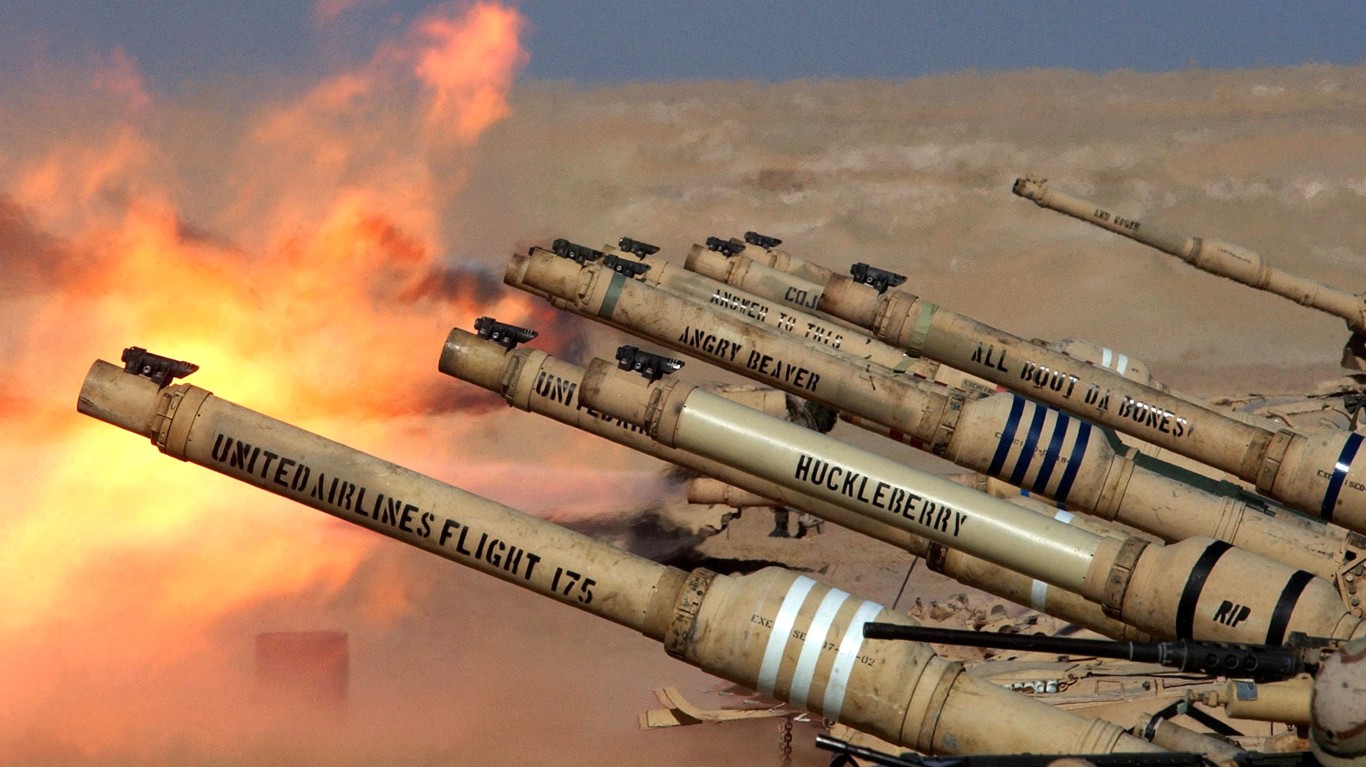
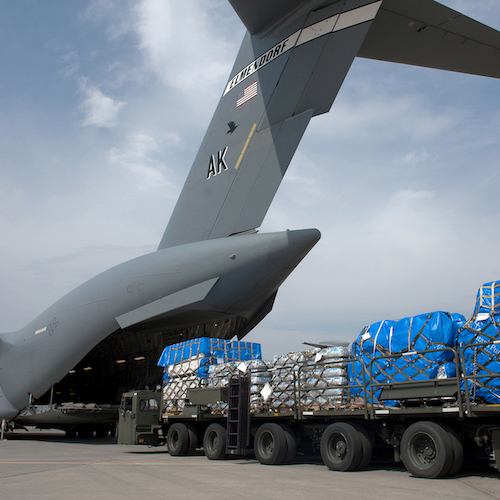
The annual Conventional Arms Transfers to Developing Nations report from the Congressional Research Service shows that the US is still by far the world’s leading arms merchant.
A summary of the document in The New York Times reports that weapons agreements with the US in 2008 totaled $37.8 billion, about 68% of the entire worldwide market in arms. It is too bad that America already has such a large share. Arms may be one of the few large businesses that the US could expand in a way that would help the trade balance, GDP, and employment. American sales were only $25.4 billion in 2007, so US arms revenue may be growing at a rate too quick to sustain.
The largest buyers of these weapons are, not surprisingly, in the Middle East. Large orders also came from South Korea and Brazil.
The American government, so interested in getting the economy back on track, could envision the defense industry as a major source of economic activity, particularly because there are a number of relatively rich nations in need of expanded military capability. The stimulus package currently targets electrical grid and broadband infrastructure, among other things. It might better be aimed at helping companies with weapons research and development and manufacturing to improve their sales. Traditionally, this has been done through Defense Department purchases, but pressures from the economic recession and budget constraints will probably hamper that process.
Arms sales from the US are obviously restrained by political, and perhaps moral, considerations. America is not going to supply guns and rockets to rebels in Nigeria, although they obviously get their weapons from somewhere. The American government is not going to supply arms to the Venezuelan government to fight the US-backed government in Columbia.
The conflicts between US political interests and those of American defense companies over where arms can be sold are heightened by the recession. Large firms such as Northrop Grumman (NOC) are suffering from flat sales. It fired workers in March, as did General Dynamics (GD) and Lockheed Martin (LM).
The global appetite for weapons is only going to grow as the harshness of the worldwide economy and political factors in nations like India, South Korea, the Middle East, and parts of Africa and South America become more unstable. The US philosophy for decades has been that the American armed forces should police regions in conflict that are “strategic” as a matter of political interest or in the name of spreading and defending the forces of democracy. That was, in part, the reason that the US entered wars in Vietnam, Croatia, Iraq, and Afghanistan. The economic, political, and ethical motivations for supporting arms sales as a part of US behavior is suddenly being affected by the growing deficit and the national conversation about this country’s responsibility in the new global military order. It is no longer clear that the ever-increasing sale of billions of dollars of weapons abroad, along with the payments from training and support for those weapons, is acceptable, but it may be desirable, at least economically.
The position about arms sales that the American defense Industry might finally publically take is that arms will always be sold overseas whether they are sold by US companies or not. There is no reason that the US economy should not add jobs by being the merchant of guns and ammunition to any and all parties unless it is not in our national interest. This means that combatants in wars in which America does not have a clear position to support should be allowed to buy their weapons from US companies.
This issue forces citizens and the government to address a long overdue moral question, now compounded by catastrophic and rising unemployment. It can be argued that, at least, the country deserves to know what choice it is making: unemployment or arms merchant to the world.
Douglas A. McIntyre







 Top Gaining Stocks
 Top Losing Stocks