


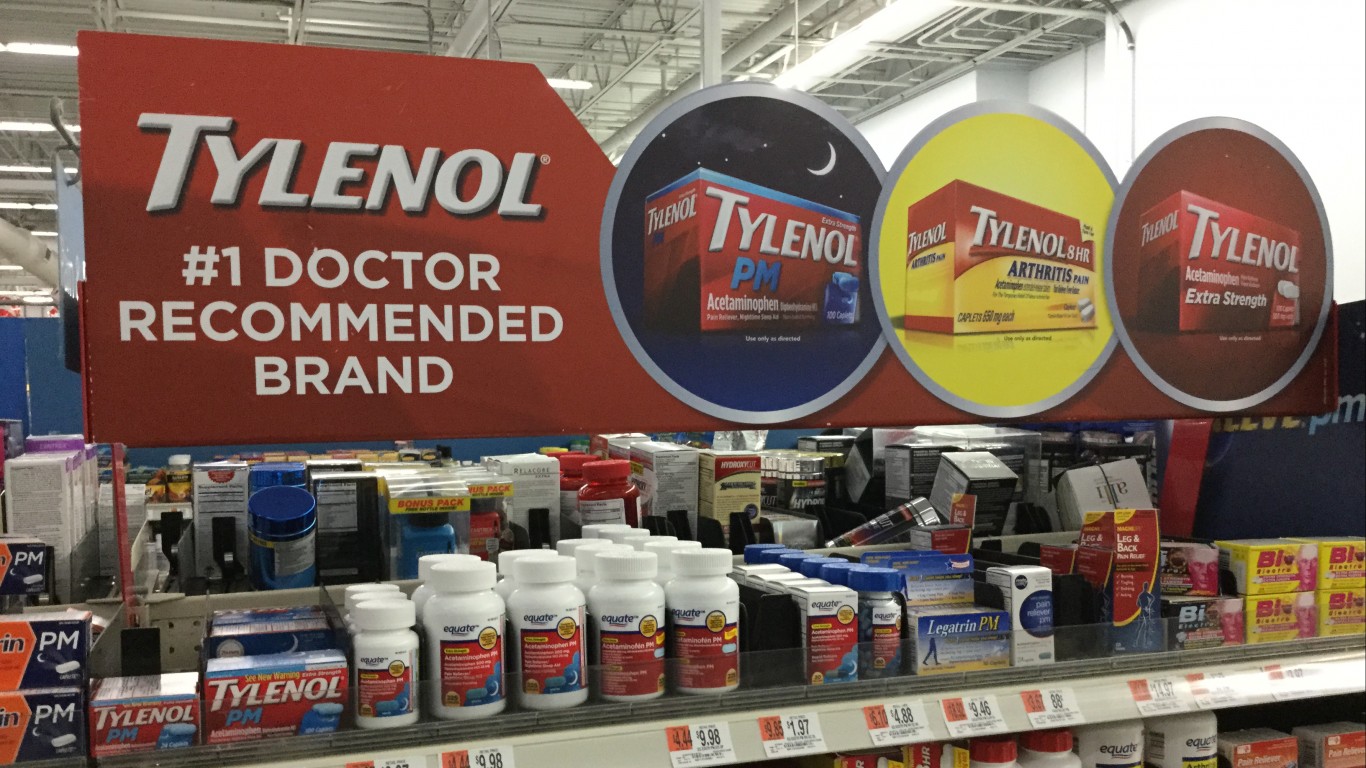
 Over the last eight months, Johnson & Johnson (NYSE: JNJ) has recalled four popular over-the-counter products. The latest recall was announced in April for Tylenol, Motrin, Benadryl, and Zyrtec made for infants and children.
The US House Committee on Oversight and Government Reform has held hearings on the recalls, and the Food and Drug Administration is considering criminal charges or other actions against McNeil Consumer Healthcare, the J&J unit that manufactures the drugs. The FDA is investigating McNeil for its “patterns of violations in manufacturing and quality control practices that have led to a number of recent recalls,” according to The New York Times.
The House committee is steamed that J&J is stonewalling requests for information and that, in a few instances, has provided incorrect information. The company denies the charges, saying that it has responded in a timely fashion and has provided 20,000 pages of documents plus access to executives for interviews.
The committee chairman noted that J&J told the committee it had recalled 6 million bottles of children’s medicine, but it had told the FDA that it had recalled more than 136 million. The company’s explanation is that the 6 million figure represented the number of bottles on store shelves while the 136 million number was the estimate of how many bottles are in the hands of consumers.
If any company should understand the value of a quick, clean, publicly acceptable course of action when confronted with a consumer threat, it’s J&J. Its handling of the 1982 tainted Tylenol cases is a textbook example of crisis communications.
But in case J&J simply forgot its history, it didn’t need to look back further than a week ago to get some guidance on how to behave. Faced with a PR disaster over glassware tainted with cadmium, McDonald’s Corp. (NYSE: MCD) immediately recalled the glasses and offered to pay purchasers $3 for each glass returned. The glasses cost $2 when they went on sale.
The McDonald’s glasses were a promotion for to get kids to drag their parents to McDonald’s for a meal and a cool glass. J&J’s recalled products were also aimed at kids.
If there’s one thing that unites every person in the US is a desire to protect kids from harm. McDonald’s knew the glasses it was selling were painted with cadmium, even though the amount used was not toxic and did not pose an acute risk to children. But the company also figured out that it’s not much of a leap for customers to associate unsafe glasses with unsafe food. How much would that cost McDonald’s? Rather than argue in the press, the company spent about $15 million to recall the glasses.
How much do you think J&J will spend trying to prove that it didn’t do anything wrong in making its drugs for kids or that it is fully cooperating with the FDA and the House investigations? It’s sure to be more than $15 million, and even if the company’s right, the loss of confidence in J&J could be far more costly.
Paul Ausick





 Top Gaining Stocks
 Top Losing Stocks