


 It’s no accident that the investing scene in renewable energy stocks resembles the boom-and-bust cycle familiar to hard-rock mining. When the stuff is scarce, a new discovery can get rich. When the stuff is plentiful, all there is to do is hang on and wait.
Think about ethanol. Five years ago ethanol stocks were everybody’s darlings. Then reality set it and effectively the last pure-play public stock left standing is Pacific Ethanol, Inc. (NASDAQ: PEIX). The reality that hit ethanol consisted of two parts. First, demand for ethanol drove feedstock prices to levels that made distilling ethanol un-economic. Second, the financial system disaster in 2008 poked a hole in gasoline prices, which fell too quickly for the ethanol producers, who were stuck with a lot of high-priced corn and a government mandate to produce a certain amount of ethanol.
There’s the wrinkle that now drives renewable energy stocks — government policy. Developing better solar and wind generation products is costly, and without a mandate from government to reduce pollution and emissions, a market for renewable energy would be a fraction of the size it is today. The irony is that as more governments impose tougher standards, more companies enter the fray, driving down prices and making it even tougher to make a profit.
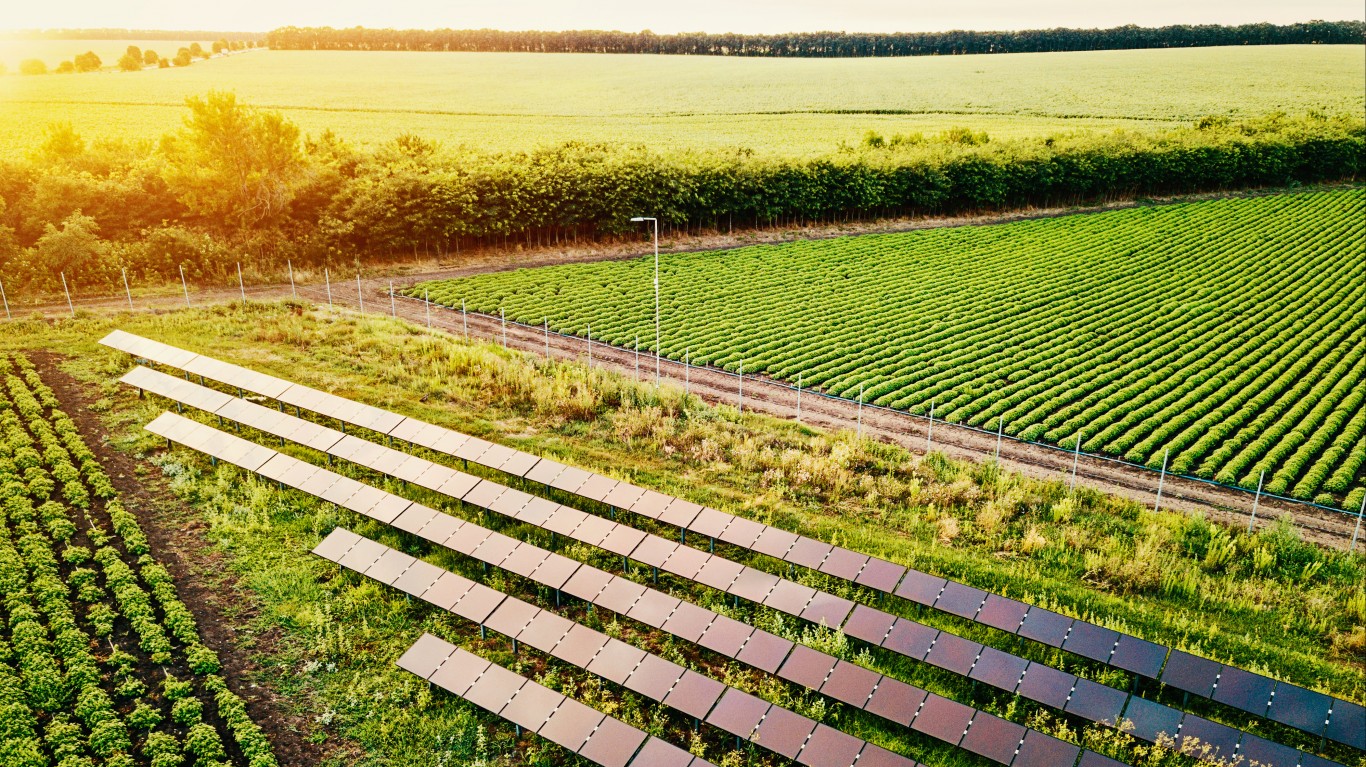
This is where solar PV makers find themselves today. Low-cost providers, mainly from China, are pushing down module prices at a phenomenal rate. According to Solarbuzz, the price for a 125-watt and larger solar module has fallen by more than 11% between January and December of 2010. That follows a 15% drop in 2009.
Falling prices for the technology, coupled with government failure to enact policies to prop up the renewable energy business get the blame for low stock valuations. MarketWatch noted in a story this morning that in mid-2008, First Solar Inc. (NASDAQ: FSLR) stock sold at nearly $300/share, compared with about $132/share today. SunPower Corp. (NASDAQ: SPWRA) has seen its share price fall from about $100 to $12 in 30 months. The world’s largest wind turbine maker, Vestas Wind Systems (OTC: VWSYF), has watched its shares fall from $140 in 2008 to below $30.
Because renewable technologies depend to a significant amount on government policy to drive sales, when the US government fails to enact a renewable portfolio standard or Germany cuts its feed-in tariff on renewably-generated electricity, the incentives evaporate for businesses and consumers to invest in renewable generation.
MarketWatch notes that investors are avoiding solar and wind investments, choosing instead to look at natural gas and energy efficiency companies instead. Energy efficiency, the low-hanging fruit of the energy sector, is perhaps the best short- to medium-term sector to look at.
LED lighting can dramatically reduce electricity consumption, as can technology that converts AC power to DC at large computer server operations. Greentech Media tells the story of SAP AG (NYSE: SAP) that expects to save $300,000 in one year by using video conferencing instead of airplanes. The company also expects to save $80,000 annually by installing LED lighting and up to 20% annually by using DC power in its Palo Alto data center.
Using energy more efficiently doesn’t require any government policy change. It is a simple matter of economics. If a company can reduce costs by adopting a more efficient technology, it will do so.
The role of government policy should be to encourage adoption of renewable and efficient energy technologies without picking winners. Given the sorry state of policy discussions in the US Congress, it’ll be a cold day in hell before that happens in the US.
Paul Ausick







 Top Gaining Stocks
 Top Losing Stocks