


 Some regions have more temperate climates than others, making them pleasant places to live. The same holds true for business innovation.
24/7 Wall St. wanted to identify the regions within Organization for Economic Co-Operation and Development countries–the world’s 34 most developed nations — which are in the forefront of developing new products and services. The OECD has a great deal of data to help determine these rankings. The most valuable comes from the “Regions and Innovation Policy” study done in 2011. Information from the study’s “Business Enterprise Research and Development (BERD) expenditure as a percent of GDP” database allows us to identify the most innovation-rich regions in each nation.
So, 24/7 Wall St. compared the BERD expenditures as a percent of GDP in the innovation-rich regions to that of the entire country where those regions are located. The “lift” between the country and region is one of the most relevant comparisons. Sweden’s R&D as a percent of GDP is 2.7%. In the South Sweden region, that figure is 3.9%. In the UK, the R&D ratio to GDP is 1.2%. The research rich Eastern Region’s ratio is 3.6%.. The distribution of R&D expenditures is much more evenly based in Sweden and nationally it is higher than in the UK
The 24/7 Wall St. survey of the “Most Innovative Places In The World” is ranked based on the highest R&D -to-GDP ratios among all states/provinces in the OECD nations. No nation can have more than one region on this list.
There are two lessons from this exercise. The first is that some regions are fortunate. Massachusetts has been home to large international universities for centuries. This probably caused companies that needed highly trained researchers to locate there as well. The second is that some regions are built to be R&D rich by their national governments. The Czech Republic offers incentives to companies to work within a predetermined region to develop R&D.. There is really no way to tell whether the free market selection of R&D location of Massachusetts is better or worse than the government-directed system of the Czechs.
These are the 24/7 Wall St. “Most Innovative Places In The World.”
 10. Southern Netherlands, Netherlands
> R&D expenditure as a % of GDP: 2.1%
> National R&D Expenditure as a % of GDP: 1%
> Major Contributing Industry: Electronics
The Netherlands has one of the most creative climates in Europe with regards to education, societal openness, R&D, and competitiveness in design, according to one study, entitled “Design, Creativity and Innovation: A Scoreboard Approach.” The country’s true R&D hotspot is South Netherlands, which invests more than double Netherlands’ average R&D amount. This is largely due to the city of Eindhoven, nicknamed “Brainport,” and its surrounding area. This region is among the most R&D-intensive areas in Europe, due in large part to the High Tech Campus Eindhoven, an open innovation facility for technology companies which began as a research branch for electronics company Philips.
 9. Central Bohemian Region, Czech Republic
> R&D expenditure as a % of GDP: 2.5%
> National R&D Expenditure as a % of GDP: 1%
> Major Contributing Industry: Automobile
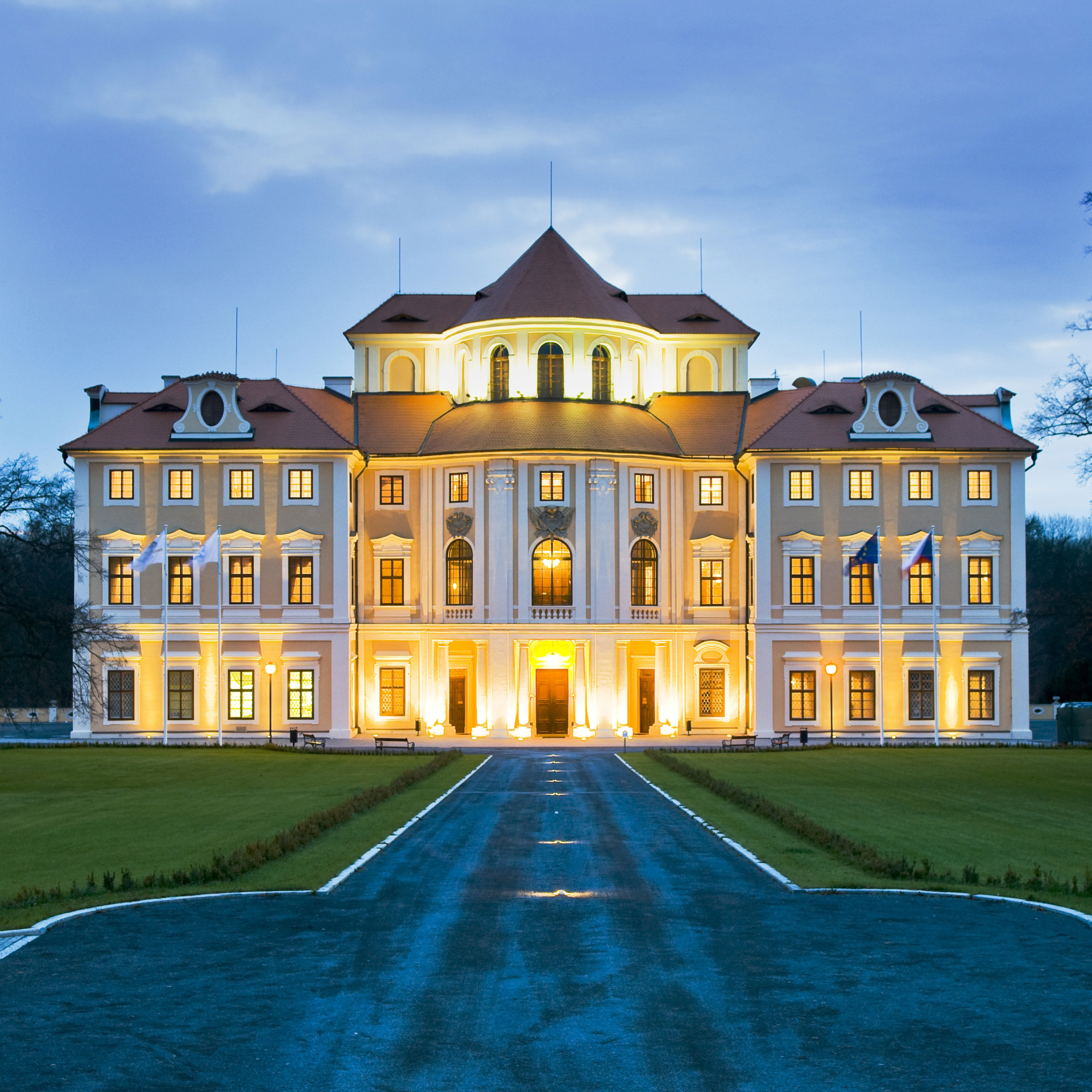
Innovation policy in the Czech Republic is largely promoted by CzechInvest, an agency of the Czech Republic’s Ministry of Industry and Trade. The region with the greatest R&D intensity, however, is the Central Bohemian Region, which surrounds, but does not include, the country’s capital, Prague. The area counts on R&D to fuel the growth of its Hyundai automobile plant, multiple breweries, and chemical, steel, and energy plants.
[wallst_email_signup]
 8. Midi-Pyrénées, France
> R&D expenditure as a % of GDP: 2.6%
> National R&D Expenditure as a % of GDP: 1.3%
> Major Contributing Industry: Aerospace, Mobile Technology
The Midi-Pyrénées, a region on the border of Spain, is the largest geographically in France. It is also the most R&D heavy in the country. The national average spent on research and development is less than 2%. This area spends roughly double that. The region is home to a dozen of the country’s most important science and technology corporations, including Airbus, Alcatel-Lucent, Siemens, and EADS. The Midi-Pyrénées is considered one of the European hubs for aerospace technology research and development.
 7. Styria, Austria
> R&D expenditure as a % of GDP: 2.6%
> National R&D Expenditure as a % of GDP: 1.7%
> Major Contributing Industry: Cleantech
The state of Styria is the second-largest region in Austria and has the highest rate of expenditure on R&D as a percentage of GDP. Styria is home to a variety of technology development industries including the automotive and nanotechnology. By far the most important sector in the country is the cluster of cleantech technology companies, rated by Cleantech Group as the most productive in the world. Cleantech alone represents more than 8% of the region’s total GDP.
 6.Baden-Württemberg, Germany
> R&D expenditure as a % of GDP: 3.5%
> National R&D Expenditure as a % of GDP: 1.7%
> Major Contributing Industry: Automobile, Electronics
Baden-Württemberg, which includes Stuttgart, features 18% of Germany’s high- and medium-high-tech manufacturing employment. Many major companies are headquartered in the area, such as Porsche, Daimler, Bosch, Carl Zeiss, and SAP, the largest software company in Europe. The state government also funds research in the area’s numerous universities and research institutions.
 5. Capital Region, Korea
> R&D expenditure as a % of GDP: 3.6%
> National R&D Expenditure as a % of GDP: 2.5%
> Major Contributing Industry: Automobile
The Capital Region in Korea is where Seoul, one of Southeast Asia’s business and technology centers, is located. The OECD refers to the Korea Capital Region as a “capital region knowledge hub,” which are usually very high in GDP and patent production. While the capital region accounts for only 0.6% of the country’s total land mass, it produces more than 20% of the national GDP. Seoul is home to, among others, major companies like Kia, Samsung, and Hyundai.
 4. Eastern Region, United Kingdom
> R&D expenditure as a % of GDP: 3.6%
> National R&D Expenditure as a % of GDP: 1.2%
> Major Contributing Industry: Electronics, Biochemistry
The United Kingdom has the most technology-based innovation firms among the world’s developed nations. The UK’s eastern region, which has R&D-based technology of over 4% of total regional GDP, is home to several major universities, including Cambridge and Norwich, which have technology sectors built around them. The Eastern region is home to the headquarters of Kenwood, Xerox UK, chip maker ARM Holdings, Monsanto UK, and Adder Technology.
Also Read: No Relief In Global Food Prices
 3. South Sweden, Sweden
> R&D expenditure as a % of GDP: 3.9%
> National R&D Expenditure as a % of GDP: 2.6%
> Major Contributing Industry: Electronics
Because Sweden follows a highly centralized innovation policy, all regions are affected. The role of all regions is not equal, however, “as some regions are more active than others in developing innovation strategies within the same national frameworks,” according to the OECD. Investments in assets such as software and human capital have become more popular in Sweden than investments in machinery and equipment. South Sweden is home to the University of Lund, which is the largest institution for research and higher education in Scandinavia, the Lund Institute of Technology, and six colleges. The area features R&D branches of companies such as Sony Ericsson, AstraZeneca, and Gambro.
 2. Northern Finland, Finland
> R&D expenditure as a % of GDP: 4.3%
> National R&D Expenditure as a % of GDP: 2.5%
> Major Contributing Industry: Technology
The Northern region of Finland invests more than 5% of its regional GDP into research and development, well more than any other area in the country. With the exception of a few areas in the United States, this is a higher percentage than anywhere in the world. According to European Union-funded organization E-teams, “Oulu, the urban centre of Northern Ostrobothnia, is also called the second capital of Finland. It is an internationally known and renowned centre of high technology expertise.”
 1. Massachusetts, United States
> R&D expenditure as a % of GDP: 5.5%
> National R&D Expenditure as a % of GDP: 2%
> Major Contributing Industry: Biotechnology, Health Care
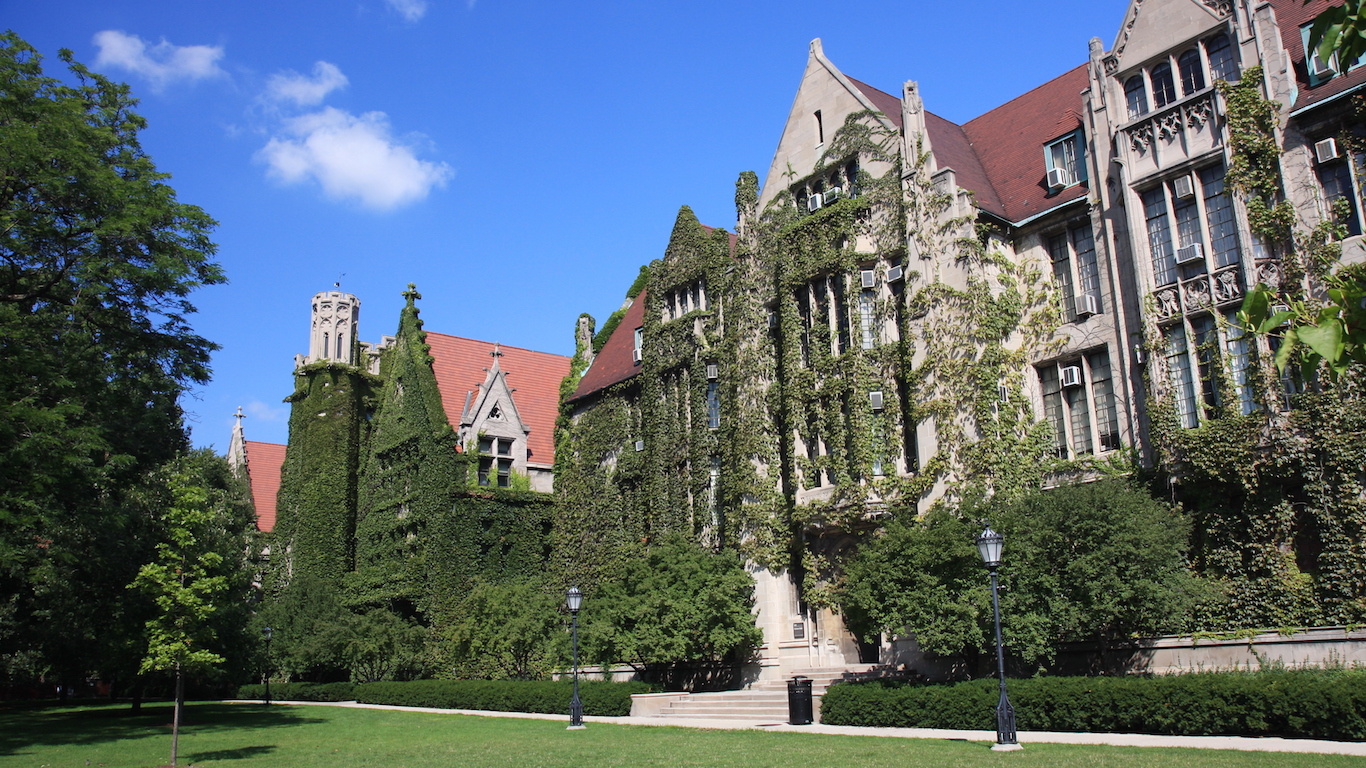
Massachusetts is the top R&D-intensive region among all OECD regions, investing 5.5% of its GDP in R&D. The national average is closer to 2%. The state is home to many prominent academic institutions, including Harvard University, the Massachusetts Institute of Technology, and University of Massachusetts. Massachusetts is also a major center for biotechnology, health care, and high technology companies, all of which rely on research for success.
Douglas A. McIntyre, Charles B. Stockdale & Michael B. Sauter










 Top Gaining Stocks
 Top Losing Stocks