


 Former President Bill Clinton got in hot water yesterday for arguing that a default on the U.S. might not be as calamitous as some have suggested. The “Comeback Kid” quickly apologized, which is a pity because he had a valid point.
To be sure, a default on the U.S. debt would be awful as are the politics surrounding the Debt Ceiling. Wall Street has begged members of Congress to extend the nation’s credit limit as have officials such as Federal Reserve Chairman Ben Bernanke. Even Republicans, who are demanding trillions of dollars in spending cuts to support what should be routine legislation, have conceded that the Debt Ceiling will be raised — eventually.
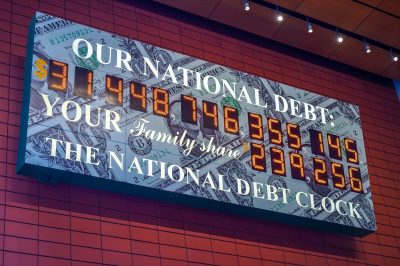
The $14.3 trillion question is what happens if the Debt Ceiling is breached. No one knows for sure because such an event has never happened in the 234 year history of the Republic. That means that Clinton’s statement that “If we defaulted on the debt once for a few days, it might not be calamitous. But if people thought we were literally not going to pay our bills anymore, then they would stop buying our debt” may be correct.
Much will depend on how the default happens. Investors may not hit the panic button if they think that an agreement on the Debt Ceiling is near. It will also depend on how the default occurs. Obama could decide to pay the interest on the debt and default on the principle, which would be dreadful but not nearly as bad as if the government quits paying its bills entirely. The more draconian option seems less likely in the short-term.
The bigger question to ask is what would investors do. Sure, some would flee from Treasuries but many will not. The U.S. government — even in default — is still a safer bet than many other investments. Investors may even look at the default as a “buying opportunity.” The U.S. government would have to offer a much higher yield than the 3.13% recently offered on the benchmark 10-year note. How high? No one knows for sure because something like this has never happened before. Taxpayers, though, would the the ultimate losers as the government’s borrowing costs soar.
Clinton attempted to clarify his remarks. His spokesman told the Wall Street Journal that did not “in any way mean to suggest that a default would not be highly damaging for the economy even for a very short period of time.” He attempted to elaborate further.
What he meant to say was that if a vote to extend the debt limit failed in advance of a default, that might not be harmful for a couple of days, but that if people thought that we might actually default, that in his words ‘we were literally not going to pay our bills anymore,’ then they would stop [people from] buying our debt.
Failing to extend the debt ceiling may not cause the universe to implode, particularly if it doesn’t last too long, but it still would be awful. The political theater around the issue has gone on so long, however, that investors have to contemplate what was once too awful to consider.
–Jonathan Berr






 Top Gaining Stocks
 Top Losing Stocks