



This time is different, though — really. There is serious talk about a silly idea — the U.S. Treasury could mint a $1 trillion platinum coin, deposit the coin in the Federal Reserve bank, and thus continue to spend the money that Congress has already appropriated. Sure, it is silly, but it has the advantage of being a clean and simple solution to another acrimonious fight and possibly another damaging hit to the U.S. debt rating.
A loophole in U.S. law allows the Treasury Secretary to mint platinum coins in any denomination he or she chooses. The spirit of the law was intended to permit the Treasury to create commemorative coins. But the letter of the law says any denomination.
A $1 trillion coin would simply monetize U.S. debt and put the President in control of the country’s currency. Because the coin would not inject any money into circulation, inflation is not an issue. And the size of the coin doesn’t matter either — it could just as easily be declared to be worth $10 trillion or $100 trillion because the issue is not money but law.
The debt ceiling legislation is dubious at best, given that when Congress approves a budget, it also approves any deficit spending that might be necessary to pay for the budgeted items. The debt ceiling requirement is simply a grandstanding play, which the party out of the White House uses to establish its deficit hawk bona fides. As a senator, President Obama voted against raising the debt ceiling. But there was never a chance that the ceiling wouldn’t be raised.
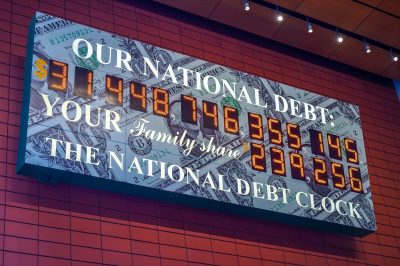
The difference now is that absent an agreement to raise the ceiling, the U.S. could default on its debt, and that’s not silly. The President has said much one way or another on the issue, but he has demonstrated that he does not relish confrontation with Congress and the chances that he would order the Treasury to mint a $1 trillion coin are well below 50% at this point. But we still have about six weeks or so before default stares the U.S. in the face again. Anything can happen.







 Top Gaining Stocks
 Top Losing Stocks