Saving Europe One Country at a Time

Photo of Douglas A. McIntyre
By Douglas A. McIntyre Published
This post may contain links from our sponsors and affiliates, and Flywheel Publishing may receive compensation for actions taken through them.

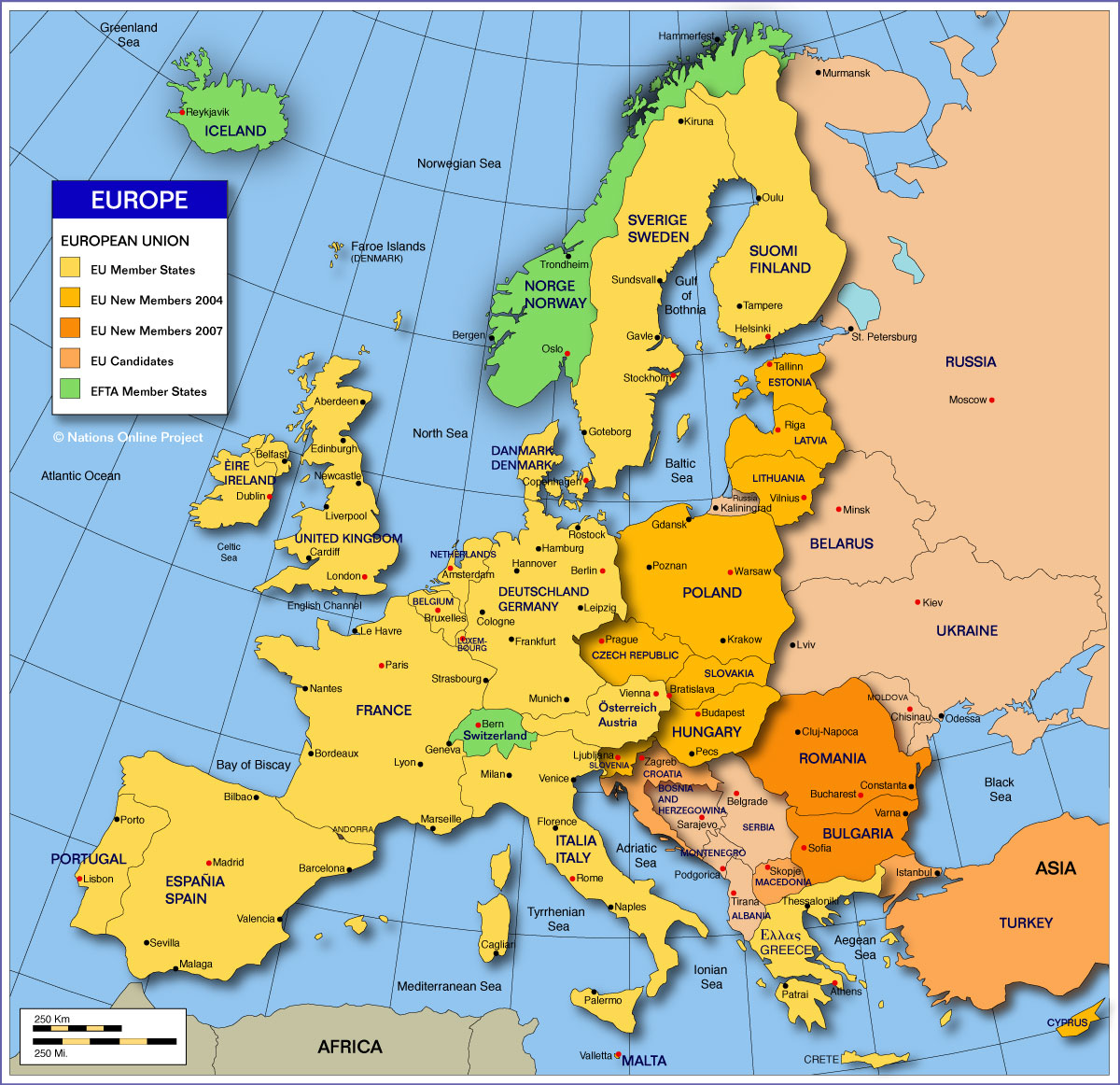
The worst alternative in the effort to bailout the weak nations of the EU would be to do it one country at a time. However, that may be the only avenue available to all the parties who need to find a way to restructure the finances of nations like Greece and Spain, unfortunately.

The sovereign debt of Greece will be restructured. The region’s nations and IMF have made that clear. It appeared for a time that these parties might let Greece default. But the parliament of the troubled southern European nation has set severe austerity measures. A deficit that is worse than expected may offset the austerity savings, but a rescue plan is well underway.

One of the reasons the bailout of Greece may happen without a complete plan for the rest of the region is that financial firms that hold some of the nation’s bonds will be asked to take write-downs of as much as 60%. This could cost banks as much as 38 billion euros. The region’s largest banks may be able to survive that. Additional write-downs of the sovereign debt of Spain or Italy might crush these banks. It will take time for them to be recapitalized after a Greek deal is finished. Germany and France can afford to do that. But they may not be able to again, either politically or financially.

Another reason that Greek’s restructuring may have to happen alone is that EU nations have been unable to agree on the future of the European Financial Stability Facility. Almost all parties involved in talks about an increase to its size say that its current balance is not great enough to address the region’s sovereign and bank debt crisis. That does not mean everyone in the talks to recapitalize it will agree on how the process to increase the fund will be completed. Germany’s parliament has approved plans for Angela Merkel to participate in talks, but she is only one party, albeit an important one.

The single most persuasive argument about a “universal solution” to prevent capital market investors from a mass retreat from ownership of the sovereign debt of Portugal and Italy is contagion. The race to create a larger bailout facility is based on the formation of a facility so large that investments in Portugal and Italy become safe because they are backstopped by their neighbors.

The move toward that safety may be too much to ask. The parties at war with one another over how debt in the region can be restructured may be too contentious. Like it or not, the bailout of Europe may happen one nation at a time and only as it becomes apparent that a country’s finances are about to collapse.

Douglas A. McIntyre

Photo of Douglas A. McIntyre
About the Author Douglas A. McIntyre →

Douglas A. McIntyre is the co-founder, chief executive officer and editor in chief of 24/7 Wall St. and 24/7 Tempo. He has held these jobs since 2006.

McIntyre has written thousands of articles for 24/7 Wall St. He is an expert on corporate finance, the automotive industry, media companies and international finance. He has edited articles on national demographics, sports, personal income and travel.

His work has been quoted or mentioned in The New York Times, The Wall Street Journal, Los Angeles Times, The Washington Post, NBC News, Time, The New Yorker, HuffPost USA Today, Business Insider, Yahoo, AOL, MarketWatch, The Atlantic, Bloomberg, New York Post, Chicago Tribune, Forbes, The Guardian and many other major publications. McIntyre has been a guest on CNBC, the BBC and television and radio stations across the country.

A magna cum laude graduate of Harvard College, McIntyre also was president of The Harvard Advocate. Founded in 1866, the Advocate is the oldest college publication in the United States.

TheStreet.com, Comps.com and Edgar Online are some of the public companies for which McIntyre served on the board of directors. He was a Vicinity Corporation board member when the company was sold to Microsoft in 2002. He served on the audit committees of some of these companies.

McIntyre has been the CEO of FutureSource, a provider of trading terminals and news to commodities and futures traders. He was president of Switchboard, the online phone directory company. He served as chairman and CEO of On2 Technologies, the video compression company that provided video compression software for Adobe’s Flash. Google bought On2 in 2009.

Featured Reads

Our top personal finance-related articles today. Your wallet will thank you later.

Continue Reading

Top Gaining Stocks

CBOE Vol: 1,568,143
PSKY Vol: 12,285,993
STX Vol: 7,378,346
ORCL Vol: 26,317,675
DDOG Vol: 6,247,779

Top Losing Stocks

LKQ
LKQ Vol: 4,367,433
CLX Vol: 13,260,523
SYK Vol: 4,519,455
MHK Vol: 1,859,865
AMGN Vol: 3,818,618