


A barrel of Canadian crude from the oil sands of Alberta now fetches about $63/barrel while a barrel of WTI crude goes for around $100/barrel and a barrel of Brent crude costs almost $117/barrel. The Canadian crude is, essentially, stranded.
Transportation out of Alberta is limited and production outstrips the capacity of pipelines. Some US refineries in the Midwest, where most of the imported Canadian crude goes, are being repaired, so they are taking less of the Canadian crude as well. If refiners could get the Canadian crude, they would use it because the gasoline produced from it sells for the same price as gasoline made from WTI or Brent.
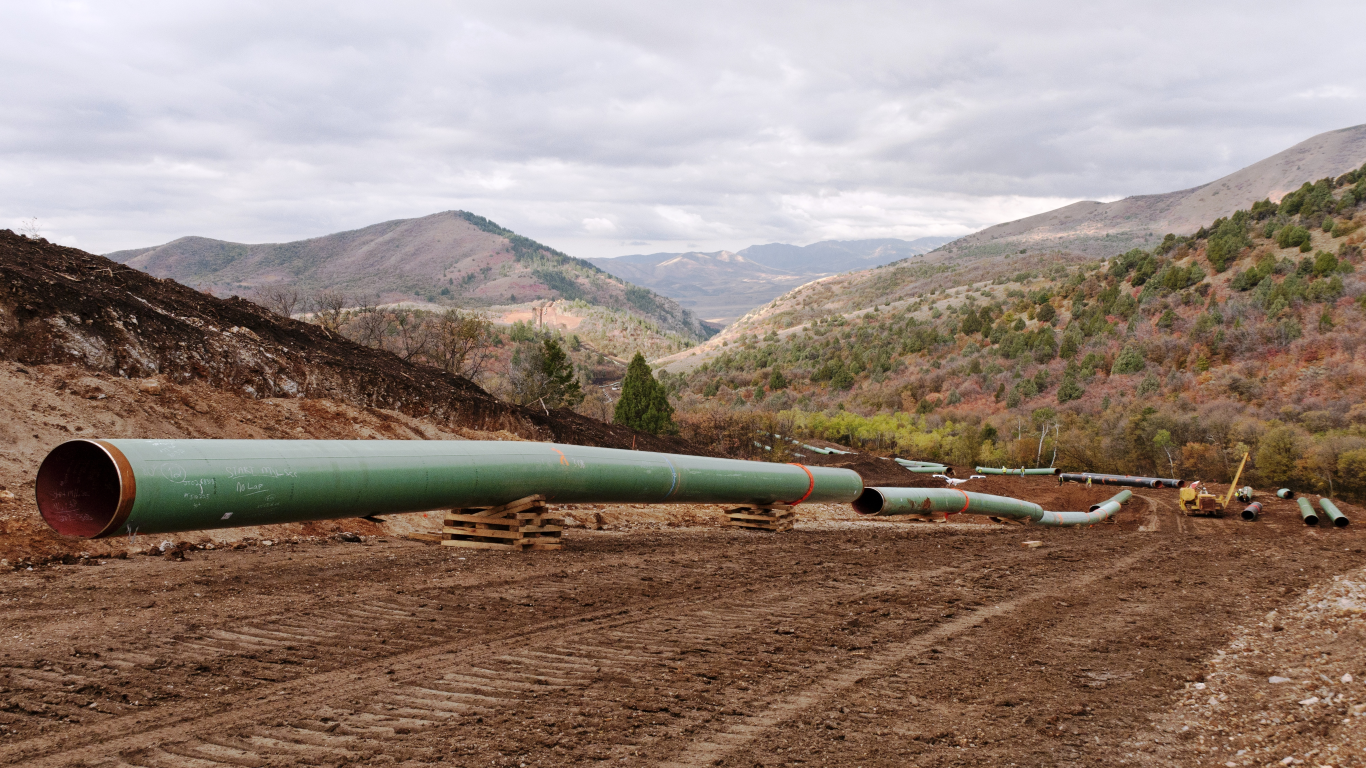
From the producers’ point of view, these problems were going to be solved by the Keystone XL pipeline from Alberta to the US Gulf Coast. Once the crude gets to Texas, it’s value rises. It won’t ever by equal to Brent or WTI because it is heavy and sour, not light and sweet. But the discount will close, probably to less than $20/barrel and maybe even down to $10/barrel.





 Top Gaining Stocks
 Top Losing Stocks