


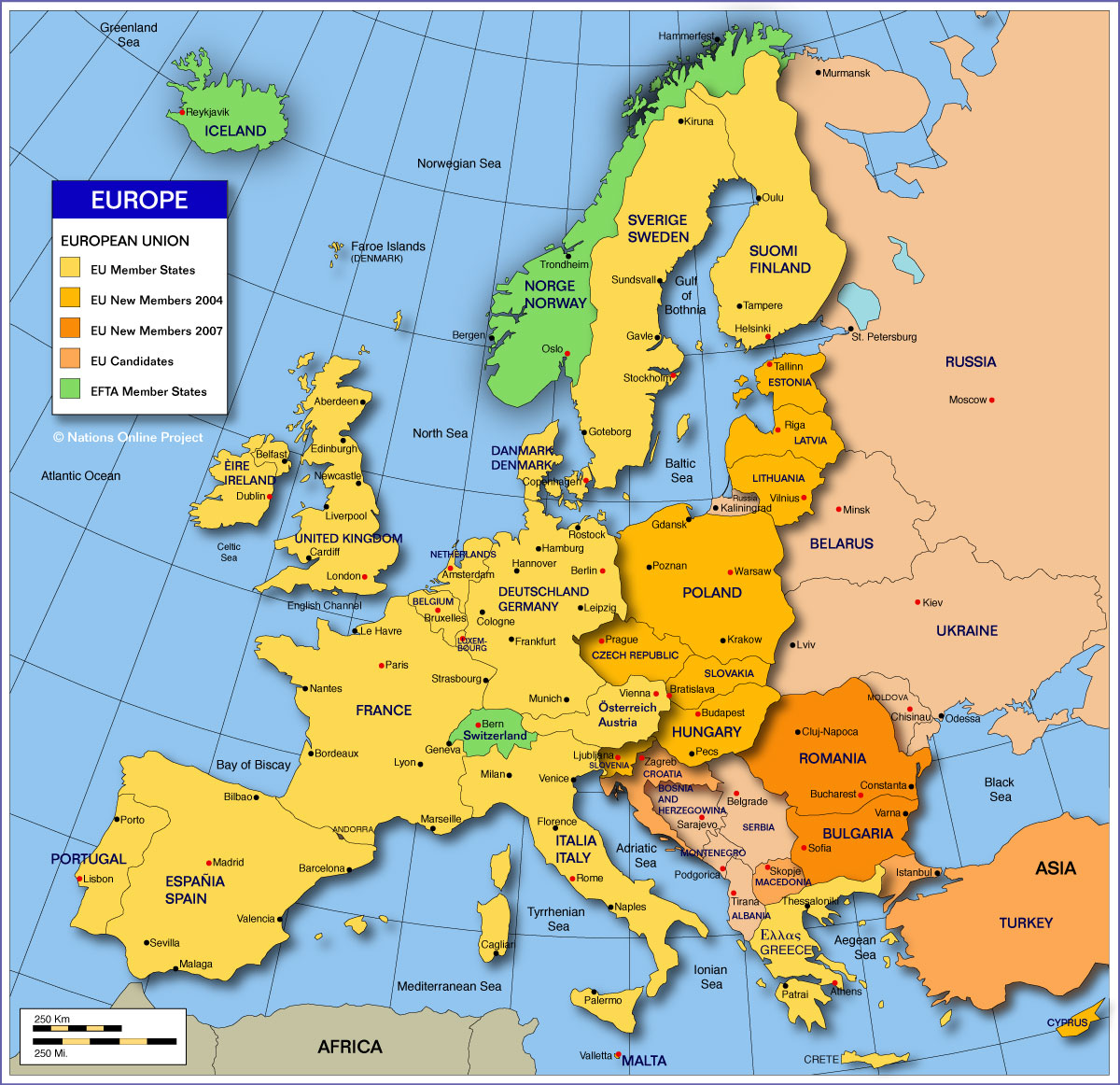
Risks that would negatively affect the creditworthiness of the EFSF programme, leading to a downgrade of the EFSF’s rating, would include a deterioration in the creditworthiness of the participating euro area member states (as would be reflected by a change in Moody’s ratings for these states). In this context, the EFSF’s rating is sensitive to changes in the ratings of Aaa countries with large EFSF contribution keys, i.e. Germany, France and the Netherlands. Moreover, a weakening of the commitment among euro area member states to the EFSF could also have negative rating implications.
At the core of both “creditworthiness” and “commitment” is Germany, which now faces a slowing economy. This slowdown has not hurt employment yet, which could be one of the keys to the nation’s positive commitment. But the heart of the matter is the health of Germany’s huge banks and its exports. A collapse of the region’s alliance would decimate the balance sheets of German financial institutions that hold so much sovereign debt from countries in the region. That might necessitate a program akin to the TARP set up to salvage U.S. banks in 2009. And Germany is less able to rely on exports to major economies like America and Europe. Although the EU market is weak, the euro makes its members ready trade partners, albeit at a level that will harm Germany’s gross domestic product.
A downgrade of the outlook of the EFSF will be trumped by the needs of the region to stay or band together.
Douglas A. McIntyre






 Top Gaining Stocks
 Top Losing Stocks