One in Eight Worldwide Undernourished — Another Problem with No Solution

Photo of Douglas A. McIntyre
By Douglas A. McIntyre Published
This post may contain links from our sponsors and affiliates, and Flywheel Publishing may receive compensation for actions taken through them.

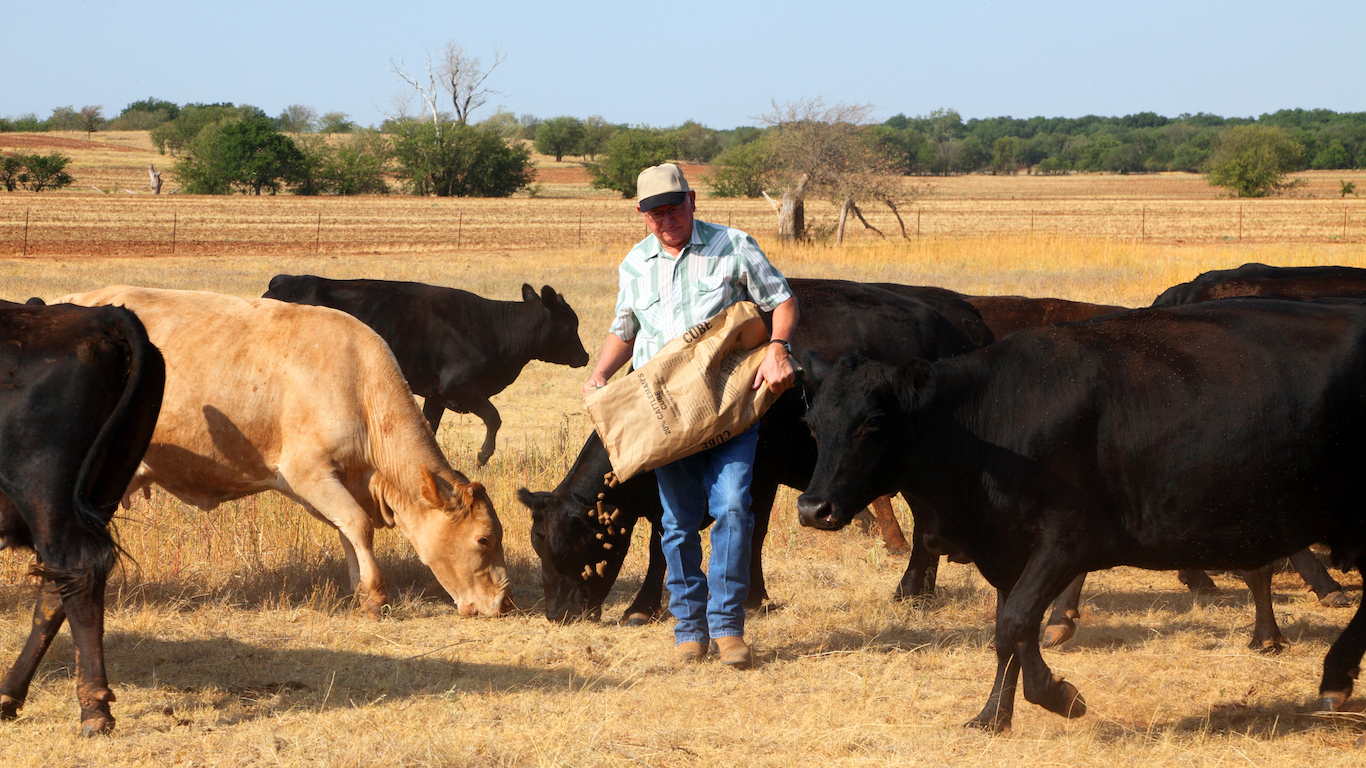
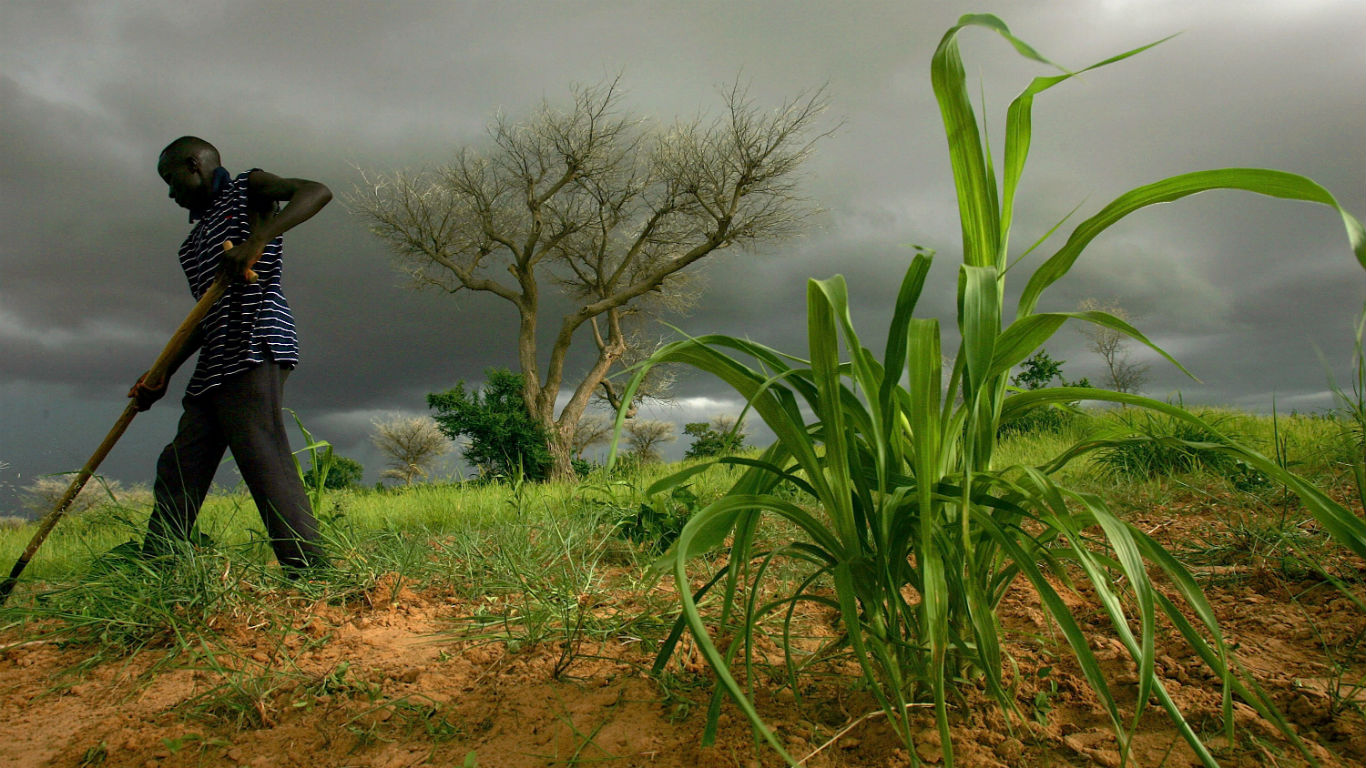
The Food and Agriculture Organization of the United Nations, along with the International Fund for Agricultural Development (IFAD) and the World Food Programme (WFP), issued the State of Food Insecurity in the World 2012 (SOFI) report. This data showed a grim situation, and one that cannot be solved because of poverty, climate and land availability, and lack of aid from rich nations.

In the report, the authors write:

Nearly 870 million people (worldwide), or one in eight, were suffering from chronic undernourishment in 2010-2012.

And, in some part because of the global recession:

The number of hungry declined more sharply between 1990 and 2007 than previously believed. Since 2007-2008, however, global progress in reducing hunger has slowed and leveled off.

At some point, federal budget cuts in places like the United States that include foreign aid began to ripple out to other parts of the world, and they probably will continue to do so.

The report’s suggested solutions are unlikely to work well:

Agricultural growth is particularly effective in reducing hunger and malnutrition in poor countries since most of the poor depend on agriculture and related activities for at least part of their livelihoods. Agricultural growth involving smallholders, especially women, will be most effective in reducing extreme poverty and hunger when it generates employment for the poor.

That presupposes a lack of political conflict that drives people off of their land, a moderately cooperative climate, the availability of farmland and seeds to plant on it, and a way to train people to farm.

The other main suggestion is that:

Growth is clearly important, but it is not always sufficient, or rapid enough. Hence, social protection systems are needed to ensure that the most vulnerable are not left behind and can also participate in, contribute to and benefit from growth.

In the poorest nations, where economic order is in disarray or poverty is extremely widespread, it is hard to believe that there is any way to set “social protection systems.” And the same is true of almost every area outside the developed world. Even those in nations like the U.S. are only partially effective in terms of social protection. The Agriculture Department reported last year that 50 million Americans, according to a summary by the Guardian:

were unable to afford to buy sufficient food to stay healthy at some point last year, in large part because of escalating unemployment or poorly paid jobs. That is a rise of more than one-third on the year before and the highest number since the survey began in 1995.

The State of Food Insecurity in the World 2012 sets out another global problem that hardly can be solved.

Douglas A. McIntyre

Photo of Douglas A. McIntyre
About the Author Douglas A. McIntyre →

Douglas A. McIntyre is the co-founder, chief executive officer and editor in chief of 24/7 Wall St. and 24/7 Tempo. He has held these jobs since 2006.

McIntyre has written thousands of articles for 24/7 Wall St. He is an expert on corporate finance, the automotive industry, media companies and international finance. He has edited articles on national demographics, sports, personal income and travel.

His work has been quoted or mentioned in The New York Times, The Wall Street Journal, Los Angeles Times, The Washington Post, NBC News, Time, The New Yorker, HuffPost USA Today, Business Insider, Yahoo, AOL, MarketWatch, The Atlantic, Bloomberg, New York Post, Chicago Tribune, Forbes, The Guardian and many other major publications. McIntyre has been a guest on CNBC, the BBC and television and radio stations across the country.

A magna cum laude graduate of Harvard College, McIntyre also was president of The Harvard Advocate. Founded in 1866, the Advocate is the oldest college publication in the United States.

TheStreet.com, Comps.com and Edgar Online are some of the public companies for which McIntyre served on the board of directors. He was a Vicinity Corporation board member when the company was sold to Microsoft in 2002. He served on the audit committees of some of these companies.

McIntyre has been the CEO of FutureSource, a provider of trading terminals and news to commodities and futures traders. He was president of Switchboard, the online phone directory company. He served as chairman and CEO of On2 Technologies, the video compression company that provided video compression software for Adobe’s Flash. Google bought On2 in 2009.

Continue Reading

Top Gaining Stocks

CBOE Vol: 1,568,143
PSKY Vol: 12,285,993
STX Vol: 7,378,346
ORCL Vol: 26,317,675
DDOG Vol: 6,247,779

Top Losing Stocks

LKQ
LKQ Vol: 4,367,433
CLX Vol: 13,260,523
SYK Vol: 4,519,455
MHK Vol: 1,859,865
AMGN Vol: 3,818,618