Dell and Best Buy Similarity — Hubris

Photo of Douglas A. McIntyre
By Douglas A. McIntyre Published
This post may contain links from our sponsors and affiliates, and Flywheel Publishing may receive compensation for actions taken through them.

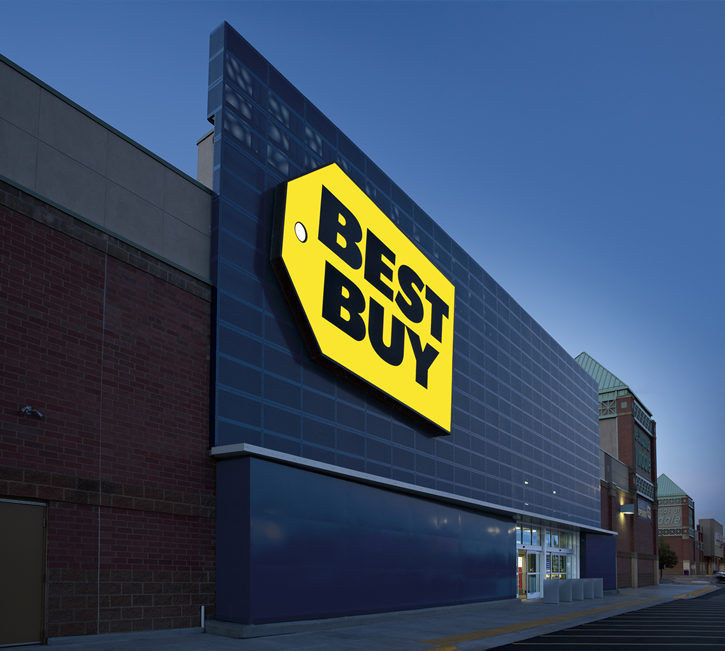
Dell Inc. (NASDAQ: DELL) and Best Buy Co. Inc. (NYSE: BBY) are each in trouble as the business environments they helped to create become passe and investors wonder if either can regain any measure of relevance. In the face of those problems, each may be taken private by its founder and private equity interests. In the case of Dell, it is Michael Dell who will head a buyout. For Best Buy, it is Richard Schulze.

Investors have wondered about conflicts of interest and why two wealthy men would want to risk long shots on their ability to rebuild broken companies. Hubris seems the only logical explanation. If each man changed his industry for the better once, why shouldn’t he be able to do it again?

Several media outlets already have commented on the ways that anticipated private equity deals for the two companies are similar. Schulze and Dell have been savaged for not finding new strategies. The Internet has deeply wounded both. People often buy consumer electronics online. Amazon.com Inc. (NASDAQ: AMZN) has taken a bite out of each. It is hard to see how either company could reverse this.

Investors worry that Dell and Schulze could buy their companies inexpensively. Each man owns enough of his firm to influence the vote for a new ownership structure. The stock prices of both companies are very low, historically. That the founders did not use their wisdom to fix problems before a buyout implies that they can be fixed in the future to pay off the leverage that goes with most PE deals.

Quite simply, neither Dell nor Best Buy can be fixed, at least not more than temporarily. Best Buy could close underperforming stores — a one-time trick. But it has been unable to find success online, which will not change. Dell could shrink its PC business and rely more on consulting and software sales. It already has been crushed in those businesses by the likes of International Business Machines Corp. (NYSE: IBM) and Oracle Corp. (NASDAQ: ORCL). Why Dell would be able to build a real rivalry with those companies is difficult to tell.

Dell and Schulze no longer completely control their companies, and that may be the heart of the matter for both. Each has been burdened by pressure from public shareholders and boards of directors over quarterly earnings. But each of these will revert to related problems if PE firms and banks become major holders. The notion that a private company has more independence to pursue new strategies is false. Earnings are earnings, whether their purpose is to fund operations, pay dividends or fatten balance sheets.

If either company or both go private, Dell and Schulze must have the confidence to believe that the magic that they made once, they can make again. But each company has an ancient model now. Whatever Dell and Schulze think about their brilliance, it will not overcome the reality that neither company can be fixed and both are doomed.


Photo of Douglas A. McIntyre
About the Author Douglas A. McIntyre →

Douglas A. McIntyre is the co-founder, chief executive officer and editor in chief of 24/7 Wall St. and 24/7 Tempo. He has held these jobs since 2006.

McIntyre has written thousands of articles for 24/7 Wall St. He is an expert on corporate finance, the automotive industry, media companies and international finance. He has edited articles on national demographics, sports, personal income and travel.

His work has been quoted or mentioned in The New York Times, The Wall Street Journal, Los Angeles Times, The Washington Post, NBC News, Time, The New Yorker, HuffPost USA Today, Business Insider, Yahoo, AOL, MarketWatch, The Atlantic, Bloomberg, New York Post, Chicago Tribune, Forbes, The Guardian and many other major publications. McIntyre has been a guest on CNBC, the BBC and television and radio stations across the country.

A magna cum laude graduate of Harvard College, McIntyre also was president of The Harvard Advocate. Founded in 1866, the Advocate is the oldest college publication in the United States.

TheStreet.com, Comps.com and Edgar Online are some of the public companies for which McIntyre served on the board of directors. He was a Vicinity Corporation board member when the company was sold to Microsoft in 2002. He served on the audit committees of some of these companies.

McIntyre has been the CEO of FutureSource, a provider of trading terminals and news to commodities and futures traders. He was president of Switchboard, the online phone directory company. He served as chairman and CEO of On2 Technologies, the video compression company that provided video compression software for Adobe’s Flash. Google bought On2 in 2009.

Featured Reads

Our top personal finance-related articles today. Your wallet will thank you later.

Continue Reading

Top Gaining Stocks

CBOE Vol: 1,568,143
PSKY Vol: 12,285,993
STX Vol: 7,378,346
ORCL Vol: 26,317,675
DDOG Vol: 6,247,779

Top Losing Stocks

LKQ
LKQ Vol: 4,367,433
CLX Vol: 13,260,523
SYK Vol: 4,519,455
MHK Vol: 1,859,865
AMGN Vol: 3,818,618


