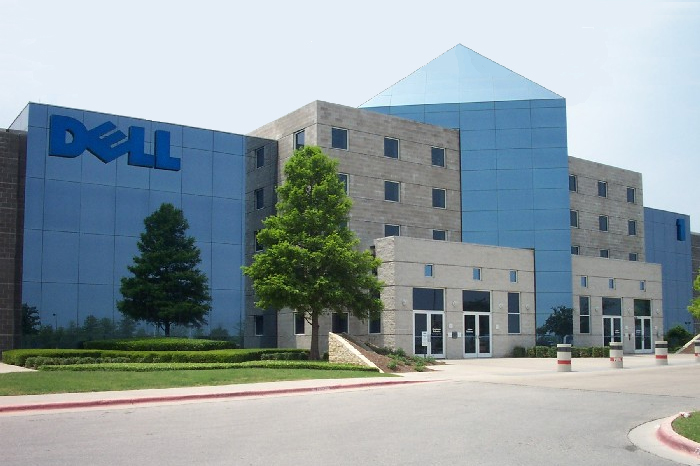
Dell’s Future: A Sell-Off of Its Parts

Photo of Douglas A. McIntyre
By Douglas A. McIntyre Published
This post may contain links from our sponsors and affiliates, and Flywheel Publishing may receive compensation for actions taken through them.

Dell Inc. (NASDAQ: DELL) is besieged by investors who want an alternative future to Michael Dell’s plans to take the company private. Although Dell’s board recently issued a report in support of the deal, the resistance of several investors has grown. And now, apparently raider Carl Icahn has invested in Dell, which means he thinks the leveraged buyout (LBO) is in trouble, at least at the price Michael Dell’s group has offered. The only solution to the battle over Dell is to do what the company should have done years ago — break itself into pieces that include the Dell personal computer (PC) business on the one hand and its enterprise computing and consulting business on the other.

Dell’s board claims it considered a breakup that might have satisfied large shareholders, led by Southeastern Asset Management and T. Rowe Price Group, who are against an LBO. The board may have figured that investors in revolt would realize that the board’s belief is true. Dell is worth no more than the LBO group offered. All of the chatter over whether Dell should be public or private has not moved shares above $14 or so, well below its 52-week high of $17.46 and its five-year high of almost $26. No matter who has made an offer, Dell’s value has not recovered from its drop over the past few years.

What did the board see when it looked at Dell’s parts? Most basically, a company that earned only $475 million on revenue of $13.7 billion last quarter. Both the top and bottom lines are falling. However, Dell has changed considerable in a year, even if Wall St. believes it is poorly managed. The company diversified further into businesses outside its core server and PC ones. In the past year, Dell bought IT management firms Quest Software, AppAssure Software, Clerity Solutions, SonicWALL, Wyse Technology and Make Technologies. Altogether, these buyouts raised Dell’s profile as a provider of sophisticated software.

All of its M&A activity and legacy operations essentially constitute at least two businesses. The first is its large enterprise and public units, and the second is its mid-size company and consumer operations. The first had revenue of nearly $8 billion last quarter and the second about $5.7 billion. The businesses operation under one roof masks the fact that the enterprise and public units together earned almost $700 million in the most recent quarter. The mid-sized and consumer businesses together made only $275 million.

Although in the world of valuations nothing is a sure thing, the Dell businesses that cater to larger clients are more attractive, financially, than those that cater to the lower end of the market. Wall St. likely would see them as such and put appropriate valuations on each. The large company business should have a value based on multiples at comparable companies like International Business Machines Corp. (NYSE: IBM) and Oracle Corp. (NASDAQ: ORCL). The small company business segment has a value closer to that of Hewlett-Packard Co. (NYSE: HPQ). Investors would get a chance to pick between the two in a breakup. That, at least, would cut through the fog of what Dell is worth when all of its unrelated segments are mashed together.


Photo of Douglas A. McIntyre
About the Author Douglas A. McIntyre →

Douglas A. McIntyre is the co-founder, chief executive officer and editor in chief of 24/7 Wall St. and 24/7 Tempo. He has held these jobs since 2006.

McIntyre has written thousands of articles for 24/7 Wall St. He is an expert on corporate finance, the automotive industry, media companies and international finance. He has edited articles on national demographics, sports, personal income and travel.

His work has been quoted or mentioned in The New York Times, The Wall Street Journal, Los Angeles Times, The Washington Post, NBC News, Time, The New Yorker, HuffPost USA Today, Business Insider, Yahoo, AOL, MarketWatch, The Atlantic, Bloomberg, New York Post, Chicago Tribune, Forbes, The Guardian and many other major publications. McIntyre has been a guest on CNBC, the BBC and television and radio stations across the country.

A magna cum laude graduate of Harvard College, McIntyre also was president of The Harvard Advocate. Founded in 1866, the Advocate is the oldest college publication in the United States.

TheStreet.com, Comps.com and Edgar Online are some of the public companies for which McIntyre served on the board of directors. He was a Vicinity Corporation board member when the company was sold to Microsoft in 2002. He served on the audit committees of some of these companies.

McIntyre has been the CEO of FutureSource, a provider of trading terminals and news to commodities and futures traders. He was president of Switchboard, the online phone directory company. He served as chairman and CEO of On2 Technologies, the video compression company that provided video compression software for Adobe’s Flash. Google bought On2 in 2009.

Featured Reads

Our top personal finance-related articles today. Your wallet will thank you later.

Continue Reading

Top Gaining Stocks

CBOE Vol: 1,568,143
PSKY Vol: 12,285,993
STX Vol: 7,378,346
ORCL Vol: 26,317,675
DDOG Vol: 6,247,779

Top Losing Stocks

LKQ
LKQ Vol: 4,367,433
CLX Vol: 13,260,523
SYK Vol: 4,519,455
MHK Vol: 1,859,865
AMGN Vol: 3,818,618