Who Will Buy IBM?

Photo of Douglas A. McIntyre
By Douglas A. McIntyre Published
This post may contain links from our sponsors and affiliates, and Flywheel Publishing may receive compensation for actions taken through them.

Now that EMC Corp. (NYSE: EMC) effectively has been taken over by Dell, and Nelson Peltz has run E.I. du Pont de Nemours and Company (NYSE: DD), or DuPont, CEO Ellen Kullman out of her job and has set his formidable abilities to force a breakup of General Electric Co. (NYSE: GE), no large underperforming public corporation is exempt from similar efforts. This means one of the next targets of activists will be stumbling International Business Machines Corp. (NYSE: IBM), the value of which could be “unlocked” if its divisions where not tethered to one another.

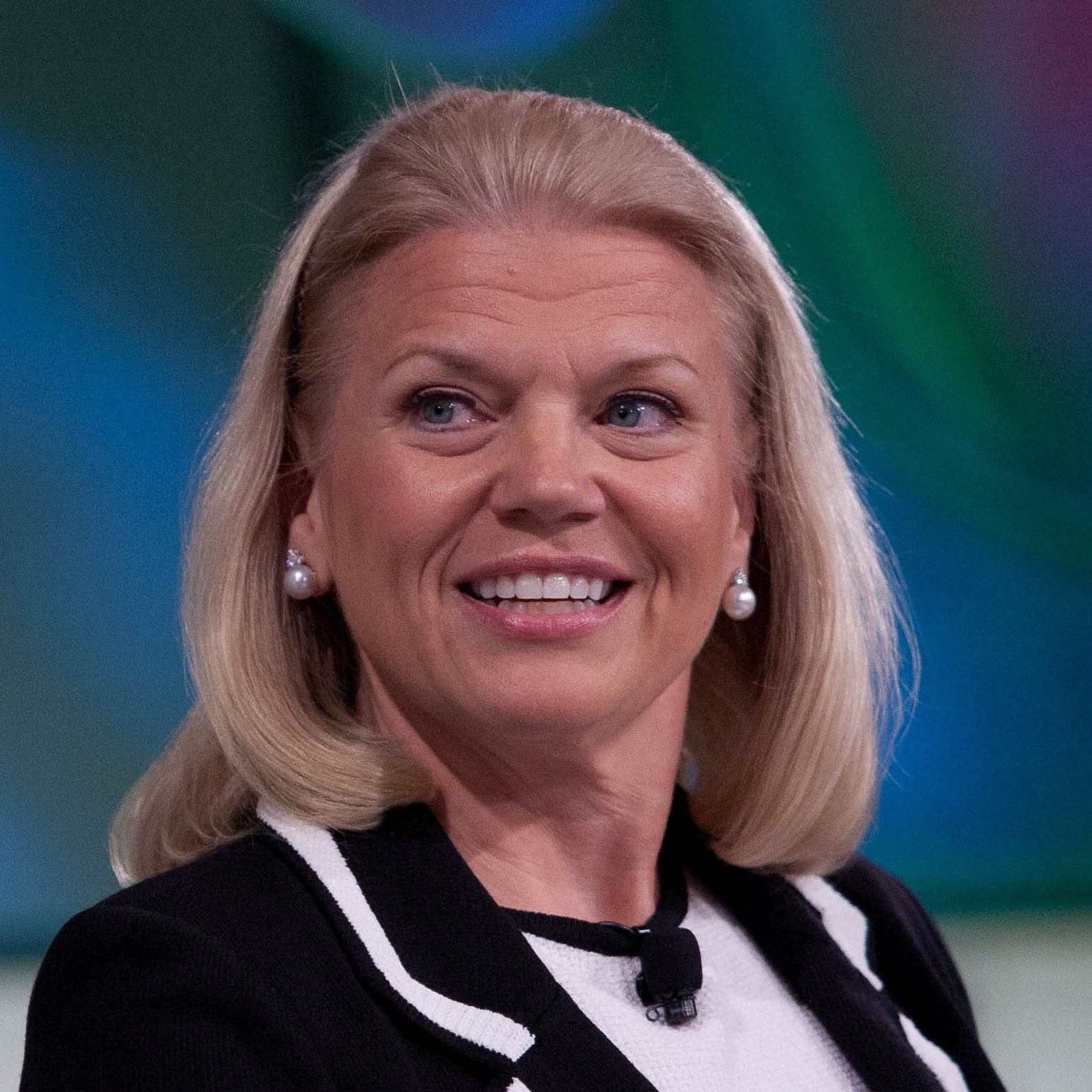
IBM does have several of the hallmarks of a company that has too many divisions and is complicated beyond the necessity for holding a portfolio of lightly related divisions. One observation about IBM is that it is too expensive with a $150 billion market cap to be a target. That argument is based on the assumption that activists would buy the entire company. Peltz and raiders like Carl Icahn do not attack companies that way. IBM does not have to be purchased. The hands of its board only have to be forced to dismantle IBM, based on the company’s terrible stock market performance and the lack of a turnaround under CEO Virginia Rometty.

Investors in IBM, including large institutions, have to be tired of a stock price that has moved relentlessly down. It is off by 17% over the past year, despite a recent rally. The cause of this has been the same for years and is reflected in IBM’s most recent quarterly numbers. Revenue fell 13% to $20.8 billion. Net income fell 16% to $3.5 billion. Revenue at IBM’s four major divisions fell as well.

ALSO READ: After EMC, Which Top Storage Stock Is the Next Big M&A Target?

Mainly what IBM has announced as solutions to its problems is a long list of alliances and technology developments that do not have any exact revenue forecasts to them. The one that IBM has promoted the hardest with the press, investors, potential customers and the public is Watson:

Watson is the first open cognitive computing technology platform and represents a new era in computing where systems understand the world in the way that humans do: through senses, learning, and experience.

IBM claims Watson is in the vanguard of using technology to advance “artificial intelligence” as a way to help enterprises for “harnessing the power of cognitive computing to transform industries, help professionals do their jobs better, and solve important challenges.” Watson may be powerful, but its handlers have not turned that into billions of dollars in revenue.

As a matter of fact, IBM has done nothing of substance to add billions of dollars of revenue to its operating divisions during the past several quarters, although the company would argue that its push into the crowded cloud computing is something. Certainly, IBM has been unable to justify why its Global Technology Services, Global Business Services, Software and Systems Hardware business segments should be under one umbrella — the IBM umbrella.

IBM has the hallmarks of an activist investor target as these investors consider larger and larger companies that could drive larger and larger returns.

ALSO READ: 8 Great Value Stocks With Solid Dividends Under 10 Times Earnings

Photo of Douglas A. McIntyre
About the Author Douglas A. McIntyre →

Douglas A. McIntyre is the co-founder, chief executive officer and editor in chief of 24/7 Wall St. and 24/7 Tempo. He has held these jobs since 2006.

McIntyre has written thousands of articles for 24/7 Wall St. He is an expert on corporate finance, the automotive industry, media companies and international finance. He has edited articles on national demographics, sports, personal income and travel.

His work has been quoted or mentioned in The New York Times, The Wall Street Journal, Los Angeles Times, The Washington Post, NBC News, Time, The New Yorker, HuffPost USA Today, Business Insider, Yahoo, AOL, MarketWatch, The Atlantic, Bloomberg, New York Post, Chicago Tribune, Forbes, The Guardian and many other major publications. McIntyre has been a guest on CNBC, the BBC and television and radio stations across the country.

A magna cum laude graduate of Harvard College, McIntyre also was president of The Harvard Advocate. Founded in 1866, the Advocate is the oldest college publication in the United States.

TheStreet.com, Comps.com and Edgar Online are some of the public companies for which McIntyre served on the board of directors. He was a Vicinity Corporation board member when the company was sold to Microsoft in 2002. He served on the audit committees of some of these companies.

McIntyre has been the CEO of FutureSource, a provider of trading terminals and news to commodities and futures traders. He was president of Switchboard, the online phone directory company. He served as chairman and CEO of On2 Technologies, the video compression company that provided video compression software for Adobe’s Flash. Google bought On2 in 2009.

Our $500K AI Portfolio

See us invest in our favorite AI stock ideas for free

Our Investment Portfolio

Continue Reading

Top Gaining Stocks

CBOE Vol: 1,568,143
PSKY Vol: 12,285,993
STX Vol: 7,378,346
ORCL Vol: 26,317,675
DDOG Vol: 6,247,779

Top Losing Stocks

LKQ
LKQ Vol: 4,367,433
CLX Vol: 13,260,523
SYK Vol: 4,519,455
MHK Vol: 1,859,865
AMGN Vol: 3,818,618