



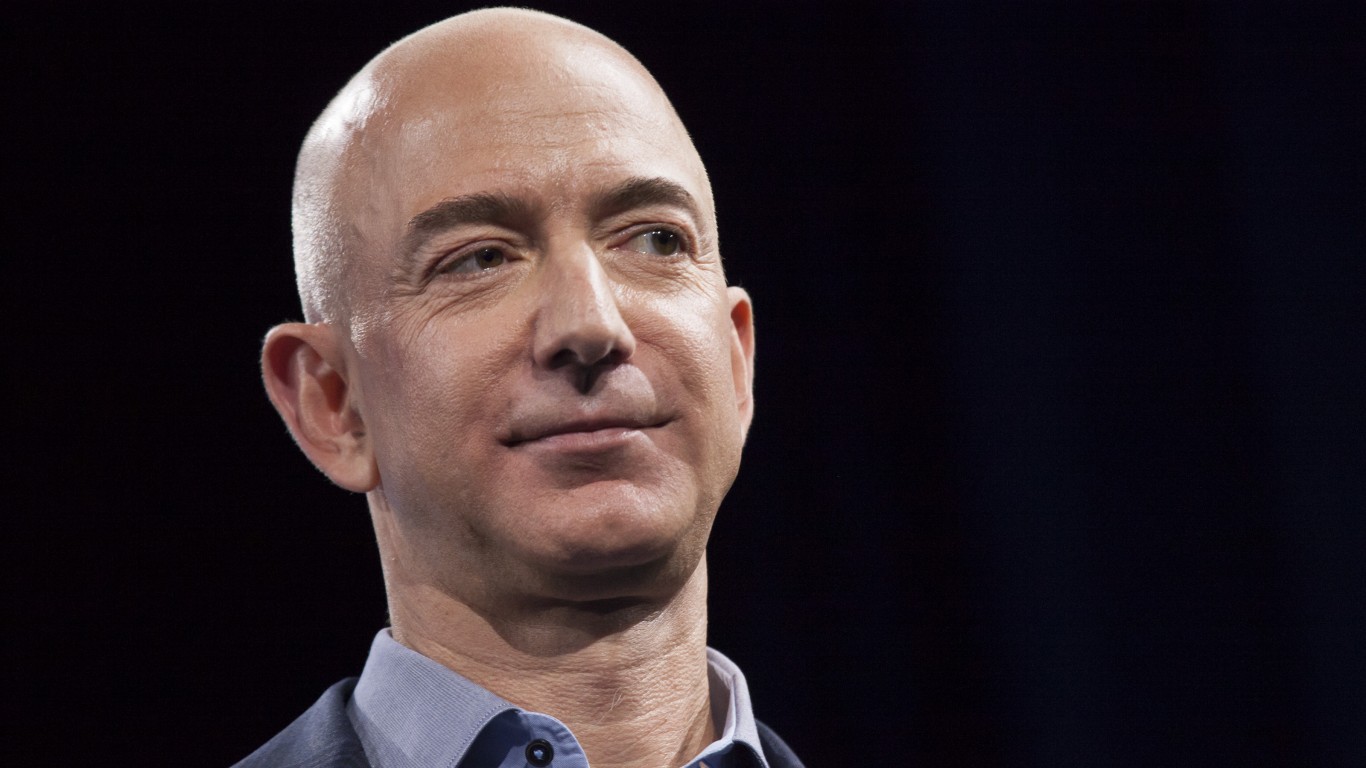
That worry should rise further. CEO Jeff Bezos says he has a long-term plan to make the e-commerce firm a bigger success, as it has been year after year. But the Achilles’ heel of that forecast is it must be based on Amazon spending less money at some point, in addition to the wild success of some of its new initiatives. That both should happen together has become a longer and longer shot.
Amazon’s net sales increased 22% to $16.07 billion in the first quarter, compared with $13.18 billion in first quarter 2012. Operating income decreased 6% to $181 million, compared with $192 million in the same quarter a year ago. Net income decreased 37% to $82 million in the first quarter, or $0.18 per diluted share, compared with $130 million, or $0.28 per diluted share. Some investors were happy that Amazon had an increase in gross margins. But the company eventually will be judged by net income, and it already is by some investors.
The case for ongoing aggressive spending by Amazon is that the company is still in a period of miraculous transformation. It has evolved from a retailer of books, electronics and other products that, when bought, are sent to the customer by truck and plane. Its newer model is to cut the cost of transportation via the sale of products and services that do not require physical delivery. This includes e-books and streamed, premium video. The trouble with this strategy is that the competition in these sectors continues to rise relentlessly. In the consumer video business, giants such as Apple Inc. (NASDAQ: AAPL) and Wal-Mart Stores Inc. (NYSE: WMT) are in the market, as is highly successful niche company Netflix Inc. (NASDAQ: NFLX). Amazon management may think that it can lose money on every transaction in these businesses and make up for that in volume. Even first year business school students know that approach never works.
Amazon’s other big gambit is that it can become the cloud-based e-commerce provider for large numbers of companies. Amazon already has the expertise and hardware to do this. The company announced several new initiatives for Amazon Web Services, but none of them came with announcements of profit success:
- Amazon Web Services (AWS) announced the launch of Amazon Redshift, a fast and powerful, fully managed, petabyte-scale data warehouse service in the cloud for a fraction of the cost of a traditional data warehouse.
- AWS launched AWS OpsWorks, an application management solution for the complete lifecycle of complex applications, including resource provisioning, configuration management, deployment, monitoring, and access control.
- AWS announced Amazon Elastic Transcoder, a highly scalable service for transcoding video files between different digital media formats. Amazon Elastic Transcoder manages all aspects of the transcoding process transparently and automatically, providing scalability and performance by leveraging AWS services.
- AWS announced AWS CloudHSM, a new service enabling customers to increase data security and meet compliance requirements by using dedicated Hardware Security Module (HSM) appliances within the AWS Cloud. The CloudHSM service allows customers to securely generate, store and manage cryptographic keys used for data encryption in a way that keys are accessible only by the customer.
- AWS has lowered prices 31 times since it launched in 2006, including 7 price reductions so far in 2013.
The fact that AWS has lowered prices so many times may be a signal of heightened competition. After all, the cloud computing business has become a battlefield, and large companies including Microsoft Corp. (NASDAQ: MSFT) and Apple Inc. (NASDAQ: AAPL) have joined it.
Amazon founder and CEO Jeff Bezos has not run out of ideas, not by a long shot. However, he has not proven that his latest ones hold the promise of higher net income. That should cause investors a good deal of anxiety.








 Top Gaining Stocks
 Top Losing Stocks