


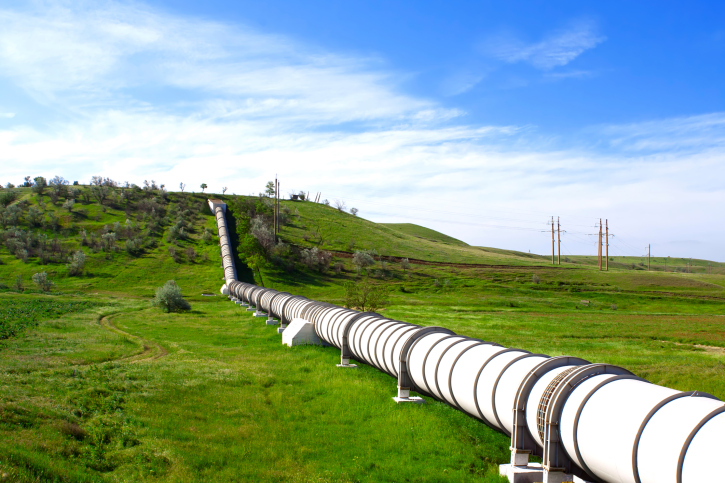
One of the ironies of the current economic situation is that slow economies around the world have pushed the price of oil lower, and consequently with it, the future price of gasoline. The bad news about European gross domestic product (GDP) knocked crude well below $94. News that shale oil will substantially increase global supply in the next five years also added pressure. Low gasoline prices are supposed to help consumer spending, which many economists argue is two-thirds of GDP. If that is so, the consumer’s discretionary income will continue to rise, at least among those who have cars. The national average price of a gallon of regular was only $3.588 yesterday, according to the AAA Fuel Gauge. That compared with $3.727 a year ago. With the exception of Hawaii, Alaska and California, no other state has an average price above $4. The reasons for oil prices to continue to drop grow almost every day.
Baggage Fees and Airline Losses
Losses among U.S. airlines improved in the fourth quarter. That news mostly got buried because of astonishingly high baggage fees. But the focus on those fees misses the main point. Due to mergers and better load and route management, carriers have been helped at the bottom line. Declines in fuel prices also have been essential. The government agency that tracks the carriers said of fourth-quarter airlines losses:
The largest scheduled passenger airlines reported a net loss of $145 million in the fourth quarter of 2012, improved from a loss of $602 million in the fourth quarter of 2011, the U.S. Department of Transportation’s Bureau of Transportation Statistics (BTS) reported today in a release of preliminary data.
Buried much further down in the data:
Total revenue for all passenger airlines in the fourth-quarter of 2012 was $37.6 billion. All U.S. passenger airlines collected a total of $841 million in baggage fees and $610 million from reservation change fees from October through December 2012. Fees are included for calculations of Net Income, Operating Revenue and Operating Profit or Loss.
Total revenue for all passenger airlines for the full year 2012 was $159.5 billion. All U.S. passenger airlines collected a total in 2012 of $3.5 billion in baggage fees and $2.6 billion from reservation change fees.
Better to have the fees than another wave of huge airline losses.
HSBC Job Cuts
The brutal drive toward operating efficiency that many large companies adopted during the recession continues, despite what most economists call a recovery. Cost cuts are not any more evident than at banks, which for the most part, took the brunt of the financial meltdown. HSBC Holdings PLC (NYSE: HBC) was the latest to say it would slash what it cost to run the bank, according to The Wall Street Journal:
HSBC Holdings PLC said Wednesday it will cut around 14,000 more jobs across its global empire as part of an effort to shave up to $3 billion from its cost base and increase shareholder dividends.
In a strategy update, Chief Executive Stuart Gulliver said the bank may struggle to meet its 12%-15% return-on-equity target for full-year 2013 because of the squeeze on revenue from a weakened global economy, but that the target is achievable in the 2014-16 period as the bank makes fresh investments in growing markets and commercial banking.
He said the bank wants to increase dividends to shareholders within a continuing target range of 40%-60% of earnings, and could buy back shares to counteract the dilutive effect from some shareholders collecting their dividends in the form of more shares. HSBC paid out 55.4% of its earnings last year in dividends.






 Top Gaining Stocks
 Top Losing Stocks