Will U.S. Default Risk Drive Money to Foreign Markets?

Photo of Douglas A. McIntyre
By Douglas A. McIntyre Published
This post may contain links from our sponsors and affiliates, and Flywheel Publishing may receive compensation for actions taken through them.

Investors have become increasingly anxious about how badly the U.S. equity and fixed income markets will be battered as the American government marches toward a potential default. Of course, investors may sell off U.S. sovereign paper. They also might exit equities on fear that the stock market will collapse as part of political gridlock. Foreign stocks, particularly those viewed as safe havens, could become immensely attractive over the next several weeks.

Eventually, damage done to the U.S. economy will sweep the world, but there will be a daily rise in the problems created by the effects on global exports to America. Granted, large financial firms that hold U.S. debt could suffer immediately, but the biggest global nonfinancial companies could dodge the revenue and earnings impact for several months.

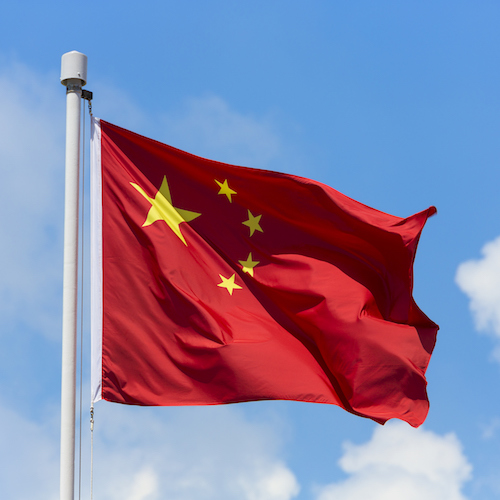
Since the Chinese economy continues to grow at better than 7%, and many of its biggest companies still have a substantial amount of government ownership, they should hold up best. Among those that are the safest investments are oil giants PetroChina Co. Ltd. (NYSE: PTR) and CNOOC Ltd. (NYSE: CEO). Since China’s telecom companies make almost all of their money inside of the People’s Republic, China Mobile Ltd. (NYSE: CHL), China Telecom Corp. Ltd. (NYSE: CHA) and China Unicom Ltd. (NYSE: CHU) should be nearly immune. So should several tech and Internet companies, like Baidu Inc. (NASDAQ: BIDU).

In China, public companies that export to the United States could do badly. This includes particularly Sony Corp. (NYSE: SNE) and Toyota Motor Corp. (NYSE: TM). On the other hand, Tokyo-based Nippon Telegraph and Telephone Corp. (NYSE: NTT) could do well.

Finally, turning to Europe, many banks and large companies that export to the United States will be risky. However, British American Tobacco PLC (NYSE: BTI) should continue to thrive. So should GlaxoSmithKline PLC (NYSE: GSK), as well as Vodafone Group PLC (NASDAQ: VOD) as its pulls out of the U.S. telecom market. In Europe itself, Anheuser-Busch Inbev S.A./N.V. (NYSE BUD) will not suffer immediately. Neither likely will Novo Nordisk A/S (NYSE: NVO).

As investors move out of U.S. equities, at least there are plenty of places to go.

Photo of Douglas A. McIntyre
About the Author Douglas A. McIntyre →

Douglas A. McIntyre is the co-founder, chief executive officer and editor in chief of 24/7 Wall St. and 24/7 Tempo. He has held these jobs since 2006.

McIntyre has written thousands of articles for 24/7 Wall St. He is an expert on corporate finance, the automotive industry, media companies and international finance. He has edited articles on national demographics, sports, personal income and travel.

His work has been quoted or mentioned in The New York Times, The Wall Street Journal, Los Angeles Times, The Washington Post, NBC News, Time, The New Yorker, HuffPost USA Today, Business Insider, Yahoo, AOL, MarketWatch, The Atlantic, Bloomberg, New York Post, Chicago Tribune, Forbes, The Guardian and many other major publications. McIntyre has been a guest on CNBC, the BBC and television and radio stations across the country.

A magna cum laude graduate of Harvard College, McIntyre also was president of The Harvard Advocate. Founded in 1866, the Advocate is the oldest college publication in the United States.

TheStreet.com, Comps.com and Edgar Online are some of the public companies for which McIntyre served on the board of directors. He was a Vicinity Corporation board member when the company was sold to Microsoft in 2002. He served on the audit committees of some of these companies.

McIntyre has been the CEO of FutureSource, a provider of trading terminals and news to commodities and futures traders. He was president of Switchboard, the online phone directory company. He served as chairman and CEO of On2 Technologies, the video compression company that provided video compression software for Adobe’s Flash. Google bought On2 in 2009.

Featured Reads

Our top personal finance-related articles today. Your wallet will thank you later.

Continue Reading

Top Gaining Stocks

CBOE Vol: 1,568,143
PSKY Vol: 12,285,993
STX Vol: 7,378,346
ORCL Vol: 26,317,675
DDOG Vol: 6,247,779

Top Losing Stocks

LKQ
LKQ Vol: 4,367,433
CLX Vol: 13,260,523
SYK Vol: 4,519,455
MHK Vol: 1,859,865
AMGN Vol: 3,818,618