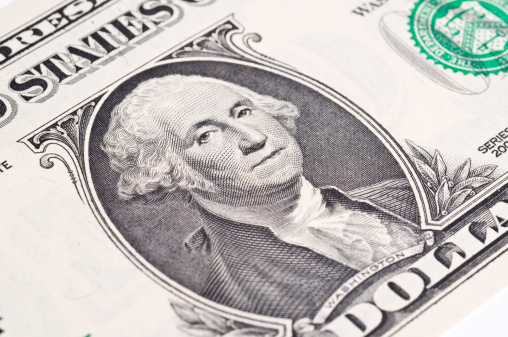
Despite Debt Deal, U.S. Downgrade Risk Remains

Photo of Trey Thoelcke
By Trey Thoelcke Published
This post may contain links from our sponsors and affiliates, and Flywheel Publishing may receive compensation for actions taken through them.

Despite Wednesday night’s deal to raise the debt ceiling and reopen the government, a downgrade in the credit rating of the United States may still be on the table, says a report in the Washington Post. The government has another few months before it reaches a new debt ceiling, but the negative credit watch issued by Fitch Ratings will remain in place.

All three credit ratings agencies — Fitch, Moody’s and Standard & Poor’s — have underscored that the United States remains a safe bet. Even as the debt limit approached, they indicated the risk of a default was low. However, the political dysfunction may have done some subtle, long-term damage. Fitch observed, “The prolonged negotiations over raising the debt ceiling … risks undermining confidence in the role of the U.S. dollar as the preeminent global reserve currency, by casting doubt over the full faith and credit of the U.S.”

Moody’s placed the United States on a negative outlook for a possible downgrade in 2011. A downgrade from Fitch would prompt a broad rise in borrowing costs both for the federal government and for many state and local agencies with credit ratings that could be at risk as well.

As 24/7 recently pointed out, “Any sort of shock to the financial system typically boosts the price of gold.” It is not hard to image that a credit rating downgrade would push things in that direction. At the same time, the Fed is likely to continue its asset purchasing into 2014 with no thought of tapering. And 24/7 still sees the S&P 500 running to a record 2,000.


Photo of Trey Thoelcke
About the Author Trey Thoelcke →

Trey has been an editor and author at 24/7 Wall St. for more than a decade, where he has published thousands of articles analyzing corporate earnings, dividend stocks, short interest, insider buying, private equity, and market trends. His comprehensive coverage spans the full spectrum of financial markets, from blue-chip stalwarts to emerging growth companies.

Beyond 24/7 Wall St., Trey has created and edited financial content for Benzinga and AOL's BloggingStocks, contributing additional hundreds of articles to the investment community. He previously oversaw the 24/7 Climate Insights site, managing editorial operations and content strategy, and currently oversees and creates content for My Investing News.

Trey's editorial expertise extends across multiple publishing environments. He served as production editor at Dearborn Financial Publishing and development editor at Kaplan, where he helped shape financial education materials. Earlier in his career, he worked as a writer-producer at SVE. His freelance editing portfolio includes work for prestigious clients such as Sage Publications, Rand McNally, the Institute for Supply Management, the American Library Association, Eggplant Literary Productions, and Spiegel.

Outside of financial journalism, Trey writes fiction and has been an active member of the writing community for years, overseeing a long-running critique group and moderating workshop sessions at regional conventions. He lives with his family in an old house in the Midwest.

Continue Reading

Top Gaining Stocks

CBOE Vol: 1,568,143
PSKY Vol: 12,285,993
STX Vol: 7,378,346
ORCL Vol: 26,317,675
DDOG Vol: 6,247,779

Top Losing Stocks

LKQ
LKQ Vol: 4,367,433
CLX Vol: 13,260,523
SYK Vol: 4,519,455
MHK Vol: 1,859,865
AMGN Vol: 3,818,618