


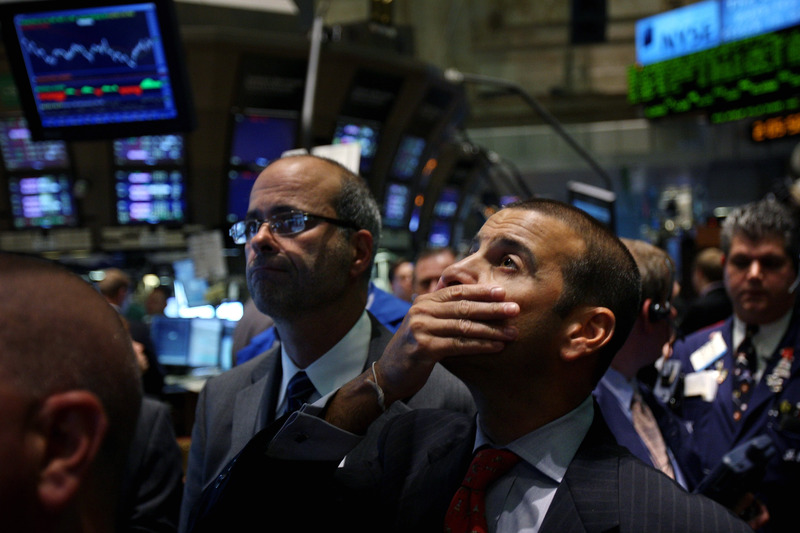
There are several factors that could undermine the market’s phenomenal run. Most are obvious, but experts have chosen to ignore them.
The most important six are these:
1. The battle over the federal budget and debt ceiling has not begun to boil again, but it is only 90 days away. If the previous fight over these issues is any sign, the federal government could be shuttered again, at the cost of 800,000 to a million jobs. The United States is very unlikely to default on its sovereign debt, but that does not mean the fear of such an event will not become intense again. President Obama battered the Republican Party in the most recent budget battle. The Heathcare.gov debacle has weakened him considerably, which means a fight over debt and deficit issues could last for weeks.
2. Holiday spending could be weak — very weak. Although the NRF forecast that holiday sales would rise 2.9% to $602.1 billion in November and December, its most recent report undermines that. Shoppers over the Thanksgiving weekend spent an average of $407.2, compared to $423.55 last year. And the frenzy of shopping over the weekend may have pulled sales from December. If so, holiday spending could drop overall, something that has not happened since the recession. If consumer holiday buying is a precursor of overall consumer spending, GDP will be undermined in both the final quarter of 2013 and likely the first quarter of 2014.
3. Energy prices may not remain low. Much of the drop in the price of oil and gas is based on the assumption that shale drilling will increase U.S. production considerably and that there will be peace in the Middle East. Peace is fragile, at least in that part of the world. The tensions between Israel and Iran continue to increase, particularly over Iran’s nuclear program. And OPEC members need to decide if they will keep supply at present levels or cut it to increase a drop off in revenue from global oil sales. Supply is not the only issue. China’s economy has begun a rebound. Its ravenous appetite for oil cannot be satisfied by what it produces within its own borders.
4. Fourth-quarter earnings may be weaker than expected. Ahead of each quarter, many analysts warn that the next quarter will be weak enough to shake investor confidence. Each quarter, some large American public companies do miss their numbers and often offer tepid forecasts. So far, the market has ignored those lower numbers, perhaps based on a belief that a better economy will shore up results in 2014. The trouble with that reasoning is, among other things, Europe remains a sink hole for global corporations. And consumer activity in the United States already has shown itself to be shaky.
5. Markets have to correct sooner or later, because they always do. This reason seems to be too obvious to be worthwhile. Optimists claim it is not pertinent because the market’s march up will be unabated due to historically low equity valuations, as well as investors who continue to pour into the market to get a chance to make 20%, 30% or 40% in a relatively short period. These investors have forgotten the sickening drop in the DJIA that happened in September 2011, which is, in the timeline of the market, only a moment ago. A market that was at nearly 13,000 in July 2011, dropped to less than 11,000 two months later. And the economic news in that period was, on the whole, no better or worse than now.
6. Investors seem to forget that an unemployment rate around 7% is historically very high. The long-term unemployment problem nags more each month. If Congress does not act, jobless benefits for a million people could stop at the end of 2013. Whatever small purchasing power these people have will disappear from the economy, presenting another challenge to GDP expansion. The economy has been slower than in most periods to replace jobs lost in the recession. That burden cannot be carried by the balance of the American workforce indefinitely.
The market will correct soon, unexpectedly, and it will be ugly.





 Top Gaining Stocks
 Top Losing Stocks