


 Even though 2015 is barely two weeks old, it is off to a pretty weak start. Crude oil prices keep tumbling, and then the Swiss National Bank sent everyone heading for the exits when it pulled its peg to the euro. We could expect that oil companies, other companies with close ties to the oil business, and financials would be the worst performers among the Dow Jones Industrial Average (DJIA) stocks so far. And sure enough, we would be right.
JPMorgan Chase & Co. (NYSE: JPM) has lost just over 10% since the beginning of the year. When the bank reported quarterly results last week, earnings and revenues missed the mark almost entirely due to a massive drop at the bank’s trading desk. CEO Jamie Dimon went on to whine about those nasty regulators who have his bank “under assault” and wondered whether regulation is un-American. The bank’s market cap is $209 billion, and the shares closed on Friday at $55.93, up 1.7%, in a 52-week range of $52.97 to $63.49.
Goldman Sachs Group Inc. (NYSE: GS) is down about 8.5% so far in 2015, and the reasons are much the same as those that are weighing on J.P. Morgan. Weak fixed-income trading hurt Goldman, and the firm also noted “unprecedented levels of new regulation” on its conference call, but said the “result [has] made the system stronger and significantly safer.” Goldman’s market cap is $80.3 billion, and the stock closed down 0.7% on Friday to $177.23, in a 52-week range of $151.65 to $198.06.
ALSO READ: Insiders Continue to Buy Stock as Market Sells Off
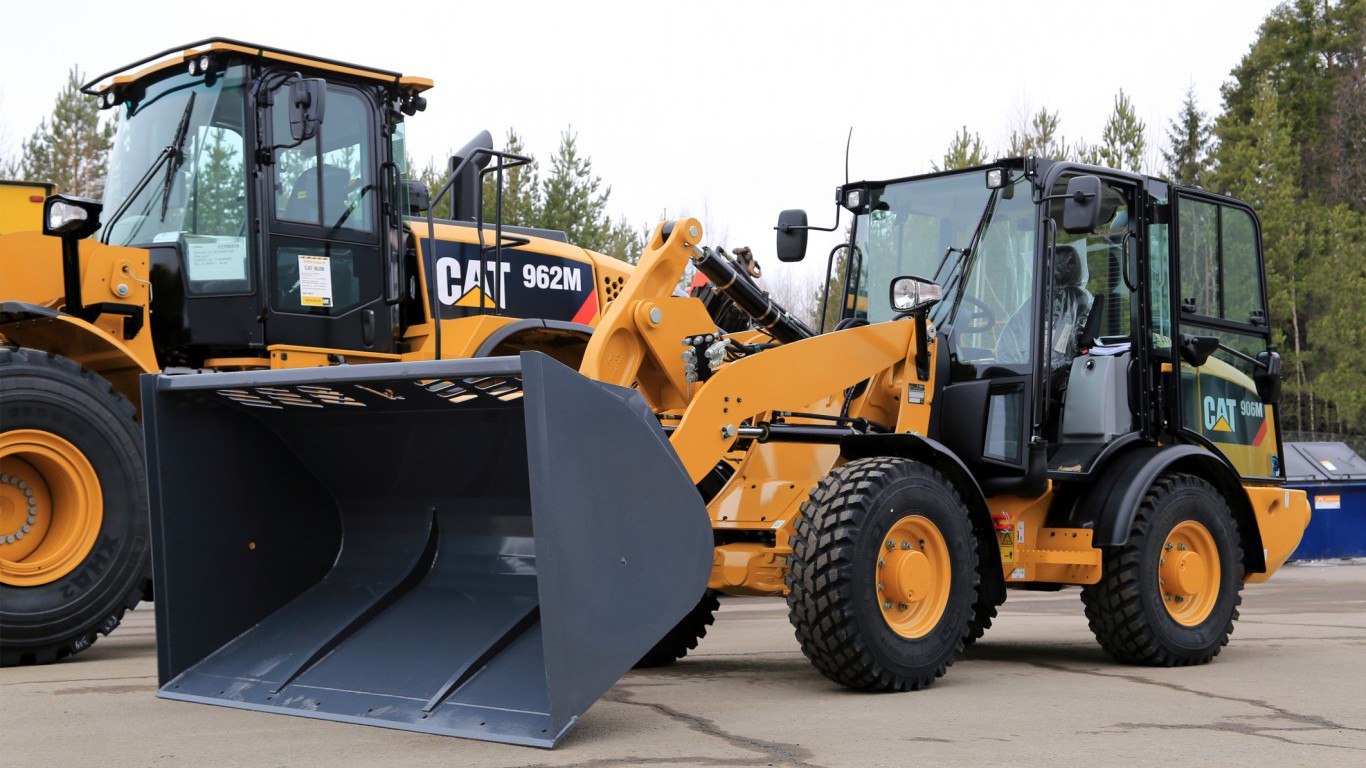
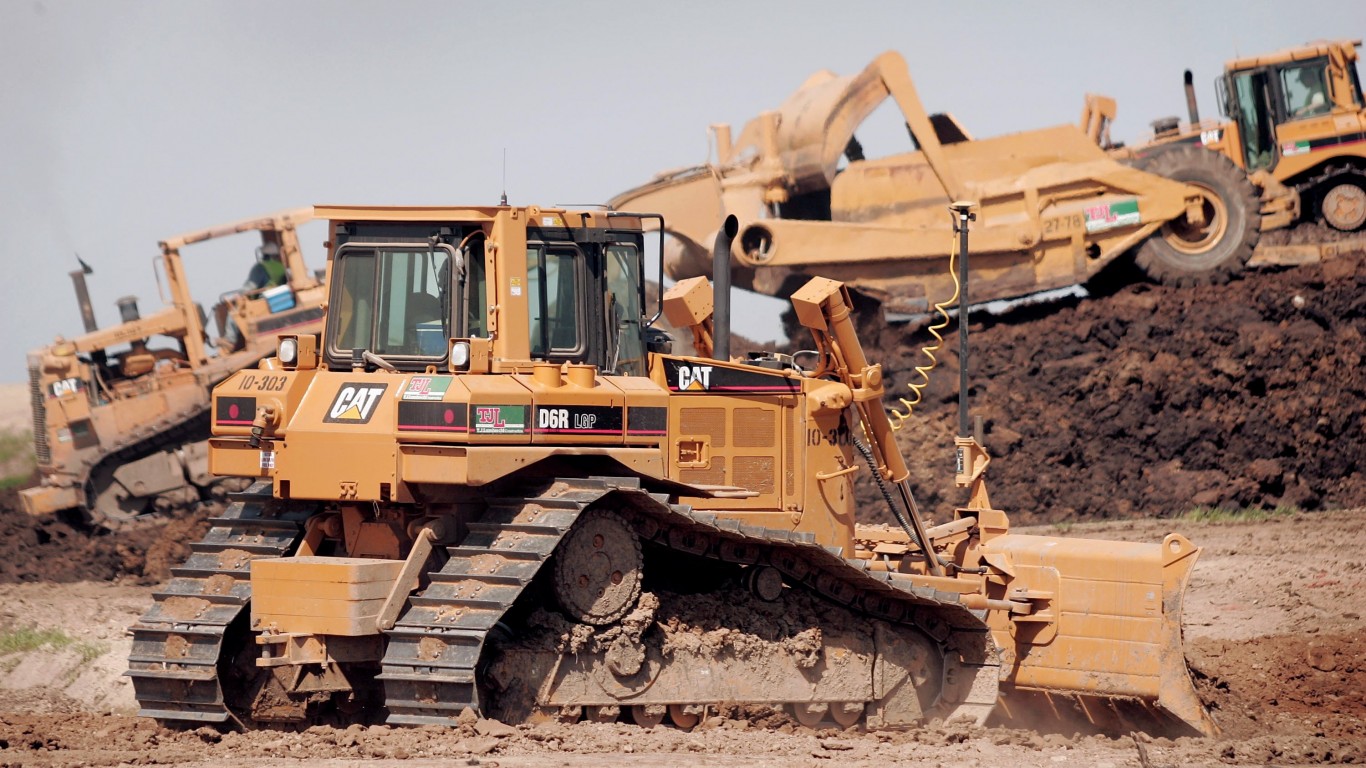
The third-worst Dow performer so far this year is Caterpillar Inc. (NYSE: CAT), which is down about 7.6% since the first of the year. Caterpillar heavy machinery is a staple in the oil patch, and a knock-on effect of the low oil prices is that many governments will not be tooling up new infrastructure projects. Caterpillar is scheduled to report earnings on January 27, and analysts expect earnings per share of $1.53 for the quarter on revenues of $14.46 billion. The good news for Caterpillar is that expectations have been managed lower over several months and there are unlikely to be any big surprises.
American Express Co. (NYSE: AXP) shares have dropped about 7.3% since the beginning of 2015. The action in the stock has tracked the big banks, even though there are at least a couple of reasons to think the stock should be doing better. First is Warren Buffett’s $13 billion stake in the company, a stake he appears to be willing to hold onto for a long time. Second, the company trades at a lower multiple than either of its larger rivals, Visa and MasterCard. The stock closed at $86.04 on Friday, up about 0.2%, in a 52-week range of $78.41 to $96.24.
General Electric Co. (NYSE: GE) stock has lost about 6.7% of its value since January 2. GE supplies a lot of equipment to the oil patch, particularly to the subsea segment, which has been one of the first to slow down as crude prices slide. GE posted revenues of $4.6 billion in its third quarter of 2014 in its oil and gas division, reflecting a year-over-year gain of 7%. Probably no one expects similar performance when the company reports fourth-quarter results next week. The stock closed Friday at $23.59, up fractionally, in a 52-week range of $23.41 to $27.53.
ALSO READ: Why the Dow Will Go to 19,142 in 2015
Chevron Corp. (NYSE: CVX) has dropped 6.3% since the beginning of the year and is the sixth-worst performer among the Dow 30. This should be no surprise given that oil prices are down around 50% over the past six months or so. Chevron’s bad news is not entirely behind it either. The company almost certainly will have to take an impairment charge on the value of its reserves, given the dip in prices, and the lower the value of an oil company’s reserves, the higher its cost of capital. Chevron closed up nearly 2.4% on Friday, at $105.12 in a 52-week range of $100.15 to $135.10.
The DJIA is down 1.75% so far this year, with exactly half the 30 stocks down and the other half up.






 Top Gaining Stocks
 Top Losing Stocks