


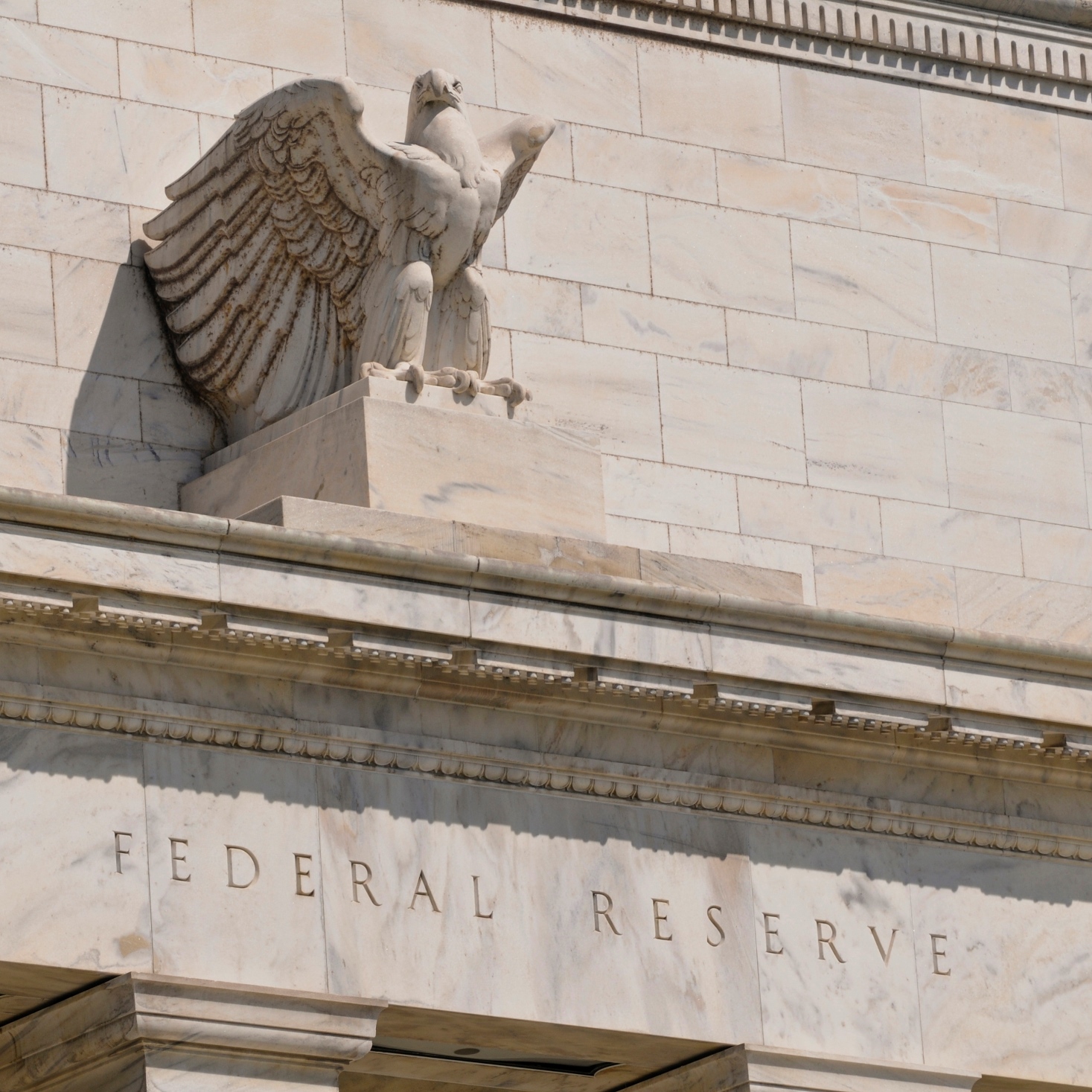
[cnxvideo id=”508883″ placement=”ros”]They pushed it out as far as they could, but the data are way too strong and the time has come for the Federal Reserve to start raising rates again. Unless there is some huge black swan event, the Fed will raise rates this week one-quarter of a percentage point, or 25 basis points. In addition, the Fed is expected to raise rates twice next year and again in 2018. If all four increase are 25 basis points, the federal funds rate should be still under 2% by 2019.
Typically, certain sectors either benefit from rising rates or are not affected much. Usually consumer discretionary, financial and technology are sectors largely immune or are the beneficiaries of rate hikes. We screened the Merrill Lynch research database and found four companies rated Buy that pay dividends that should either welcome the rate increase or not be hurt by it.
Kohl’s
This top retailer has had a nice run and is looking for solid holiday sales. Kohl’s Corp. (NYSE: KSS) operates department stores in the United States that offer private label, exclusive and national brand apparel, footwear, accessories, beauty and home products to children, men and women customers. The company also sells its products online at Kohls.com and through mobile devices.
The company reported very solid third-quarter results, and Merrill Lynch noted in a research report at the time:
Third quarter earnings-per-share of $0.80 was ahead our $0.66 estimate due to better sales and SG&A control. Comps were down 1.7% vs. our -3% view. Lifting our fiscal 2016 earnings-per-share estimate by $0.10 to $4.00, and raising price target to $60 to reflect higher estimates & multiple expansion. Our fiscal 2017 EPS estimate is 9% above street. We think 11x P/E reflects significant doubt in Kohl’s ability to improve results.
Kohl’s shareholders receive a 3.48% dividend. The Wall Street consensus price target for the stock is $52.68. Shares closed above that on Friday at $57.50.
[nativounit]
Intel
This leader in semiconductors is working hard to scale away from dependence on personal computers. Intel Corp. (NASDAQ: INTC) designs, manufactures and sells integrated digital technology platforms worldwide. The company’s platforms are used in various computing applications comprising notebooks, two-in-one systems, desktops, servers, tablets, smartphones, wireless and wired connectivity products, wearables, retail devices and manufacturing devices, as well as for retail, transportation, industrial, buildings, home use and other market segments.
The company also provides communication and connectivity offerings, such as baseband processors, radio frequency transceivers and power management integrated circuits, and tablet, phone and Internet of Things solutions, which include multimode 4G LTE modems, Bluetooth technology and GPS receivers, software solutions and interoperability tests, as well as home gateway and set-top box components.
Intel reported inline third quarter, but data center sales came in way below expectations for the tech giant. A stunning 82.4% of Intel sales come from overseas, the lion’s share of it in Asia, where the chips that it produces are used in personal computers, tablets and other personal electronic devices. Fears of trade issues with China have taken a toll on the stock, and the timing looks good.
Intel investors receive a 2.91% dividend. The $42 Merrill Lynch price target compares with the consensus target of $39.82. The shares closed Friday at $35.76.
Microsoft
This is another top old-school technology stock that gives investors a degree of mega-cap tech safety, and it has a massive $105 billion sitting on the balance sheet. Microsoft Inc. (NASDAQ: MSFT) continues to find an increasing amount of support from portfolio managers, who have added the software giant to their holdings at an increasingly faster pace all of this year and last.
Numerous Wall Street analysts feel that Microsoft has become a clear number two in the public or hyper-scale cloud infrastructure market with Azure, which is the company’s cloud computing platform offering. Some have flagged Azure as a solid rival to Amazon’s AWS service. Analysts also maintain that Microsoft is discounting Azure for large enterprises, such that Azure may be cheaper than AWS for larger users.
The top analysts believe the company continues to make steady progress with its cloud transition and expect Office 365 and Azure to be solid contributors to top and bottom line for the next several years. While not likely to snag the top slot from Amazon, it could add huge incremental revenue for years to come, especially when you factor in the huge revenue potential from the banks, insurance companies and the financial services industry.
The company announced in mid-summer a gigantic all-cash, $196 per share offer for LinkedIn. While some on Wall Street gasped at the huge premium paid, Microsoft continues to expand its product lines and cut its dependence on software sales. While it remains to be seen how the fit will be, the analysts like the overall product synergies the deal brings.
Microsoft investors receive a 2.52% dividend, and the forward valuation remains compelling. Merrill Lynch has a $68 price target, and the consensus target is $64. The stock closed Friday at $61.97.
Wells Fargo
This large cap bank is another stock for investors to look at now for safety, dividends and solid upside potential. Wells Fargo & Co. (NYSE: WFC) is a nationwide, diversified, community-based financial services company with $1.8 trillion in assets. The company provides banking, insurance, investments, mortgage and consumer and commercial finance through 8,700 locations, 12,800 ATMs, the Internet and mobile banking. It also has offices in 36 countries to support customers who conduct business in the global economy. Wells Fargo serves one in three households in the United States.
Wells Fargo has slowly, but surely, become one of the biggest mortgage lending companies in the United States, in addition to its normal banking and brokerage businesses. A continued increase in commercial real estate lending could really boost the bank’s bottom line and overall revenue. The stock also remains a top Warren Buffett holding, and he raised his holdings in the bank to 10% on the stock’s weakness earlier this year.
The company reported inline third quarter results and earnings revisions, which didn’t go over well after the other major banks posted big earnings. Wells Fargo also had a recent public relations headache as it was revealed that employees allegedly opened up client accounts that were not approved. Things got worse recently as its CEO was absolutely eviscerated at a congressional hearing by politicians in an election year, and he has resigned under pressure. While the stock has rallied off the lows, it is still probably the most affordable of all the major money center banks.
Shareholders receive a 2.66% dividend. The Merrill Lynch price target is $55. The consensus price objective is $54.10. Shares closed Friday above both of those targets at $57.14.
[wallst_email_signup]
Given the huge rally since the election, investors may want to take partial positions here and see if we don’t see some selling in the last week of December or in early January.









 Top Gaining Stocks
 Top Losing Stocks