


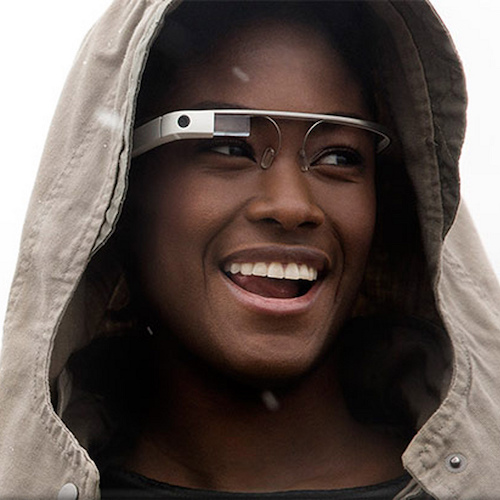
Google, a division of Alphabet (NASDAQ: GOOGL), plans to relaunch its Glass wearable product. Glass was first released in August 2013, but by January 2015 it was withdrawn from the market. Originally targeted at consumers, Google will launch a new version aimed at the corporate market. The original Glass launch was among the most visible tech product failures of recent years.
Jay Kothari, product lead for Glass, wrote in a blog:
Glass, as you might remember, is a very small, lightweight wearable computer with a transparent display that brings information into your line of sight. In a work setting, you can clip it onto glasses or industry frames like safety goggles so you don’t have to switch focus between what you’re doing with your hands and the content you need to see to do your job.
Workers in many fields, like manufacturing, logistics, field services, and healthcare find it useful to consult a wearable device for information and other resources while their hands are busy. That’s why we’ve spent the last two years working closely with a network of more than 30 expert partners to build customized software and business solutions for Glass for people in these fields. We’ve also made improvements to the design and hardware so that it’s lightweight and comfortable for long term wear. We’ve increased the power and battery life too.
Glass was originally plagued by faults and a $1,500 price tag. The lenses had a display that allowed users to read information and initiate phone calls. It also had a high-definition camera and some features that were voice activated.
[nativounit]
The product was subject to several criticisms. The first was that users could violate the privacy of people they observed, since those wearing Google Glass may take photos or shoot video instantaneously, according to the ABA Journal. Some versions of Glass had facial identification features. Several establishments, including a restaurant in Seattle, banned people wearing the devices.
Another concern was that if owners lost the device, others could hack into it and collect information about what they had seen and done. There were also rumors that Glass could cause vision problems.
In addition, there were safety concerns about Glass. Among them was that people could be distracted while driving and using Glass simultaneously. The safety concerns were based on worries similar to those of texting while driving. A distracted driver is more likely to have an accident than one focused strictly on driving.
In October 2013, Cecilia Abadie, a software developer from California, was fined for driving while wearing Google Glass in a case that was eventually dismissed by a court commissioner.
Court Commissioner John Blair threw the case out saying that there was no proof the device was in use at the time Abadie was driving, when she was pulled over by a highway patrol officer.
At least seven states — Delaware, Illinois, Missouri, New Jersey, New York, West Virginia and Wyoming — considered laws prohibiting people from driving while using Google Glass.
In January 2014, a moviegoer in Columbus, Ohio, wearing prescription Google Glass was pulled out of an AMC theater showing the movie “Jack Ryan: Shadow Recruit” and detained for hours by agents from the Immigration and Customs Enforcement’s Homeland Security Investigations unit, which targets piracy.
The man was released, but an AMC representative told entertainment magazine Variety that wearing a device with the “capability to record video” was inappropriate at the movies. Google Glass was eventually banned from movie theaters by the Motion Picture Association of America and the National Association of Theatre Owners in October 2014.
Because Glass was launched with such fanfare and was one of Google’s few hardware products, the failure was considered one of the great debacles by a major U.S. tech company. Its limited release for corporate use allows Google to market Glass for controlled environments. However, it will almost certainly never be a consumer product again.
[wallst_email_signup]







 Top Gaining Stocks
 Top Losing Stocks