New York City Police to Use Google Glass

Photo of Douglas A. McIntyre
By Douglas A. McIntyre Published
This post may contain links from our sponsors and affiliates, and Flywheel Publishing may receive compensation for actions taken through them.

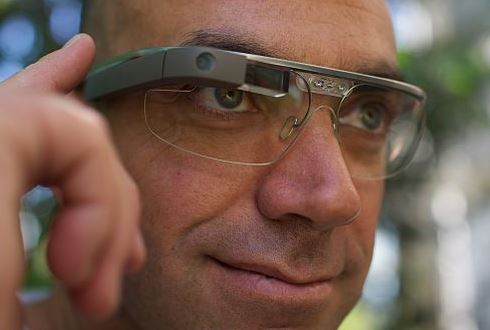
Google Inc.’s (NASDAQ: GOOG) Glass has already introduced a number of innovations and created its share of controversy. According to the New York Post, the latest organization to decide to use the technology tool is the New York City Police Department.

Reporters at the paper wrote:

The NYPD is taking a page out of the RoboCop playbook — outfitting cops with Google Glass so a suspect’s life story can flash right before their eyes, law enforcement sources told The Post. Department bosses bought a few pairs of the futuristic eyewear and are beta testing them with the hopes of using them out in the field.

The tests have just begun, and Glass could turn out to be a failure — at least in the eyes of law enforcement.

Google claims Glass has a wide array of uses. These run from the ability to take pictures, to give directions, to ask questions and get answers through Google search products. Google also claims Glass can translate words and sentences from one language to another.

The product is relatively hard to get, and people must go through a screening process to become what Google calls “explorers”:

The Explorer Program is designed for people who want to get involved early and help shape the future of Glass. We’re expanding little by little, and experimenting with different ways of bringing new Explorers into the program.

One of the primary concerns about Glass involves safety. The product functions have caused concern that they can distract users who are performing another critical task — like driving. Daniel J. Simons, a professor at the University of Illinois, wrote in the New York Times recently:

Google Glass may allow users to do amazing things, but it does not abolish the limits on the human ability to pay attention. Intuitions about attention lead to wrong assumptions about what we’re likely to see; we are especially unaware of how completely our attention can be absorbed by the continual availability of compelling and useful information. Only by understanding the science of attention and the limits of the human mind and brain can we design new interfaces that are both revolutionary and safe.

The New York City Police do not appear to share those concerns, at least for now.

Photo of Douglas A. McIntyre
About the Author Douglas A. McIntyre →

Douglas A. McIntyre is the co-founder, chief executive officer and editor in chief of 24/7 Wall St. and 24/7 Tempo. He has held these jobs since 2006.

McIntyre has written thousands of articles for 24/7 Wall St. He is an expert on corporate finance, the automotive industry, media companies and international finance. He has edited articles on national demographics, sports, personal income and travel.

His work has been quoted or mentioned in The New York Times, The Wall Street Journal, Los Angeles Times, The Washington Post, NBC News, Time, The New Yorker, HuffPost USA Today, Business Insider, Yahoo, AOL, MarketWatch, The Atlantic, Bloomberg, New York Post, Chicago Tribune, Forbes, The Guardian and many other major publications. McIntyre has been a guest on CNBC, the BBC and television and radio stations across the country.

A magna cum laude graduate of Harvard College, McIntyre also was president of The Harvard Advocate. Founded in 1866, the Advocate is the oldest college publication in the United States.

TheStreet.com, Comps.com and Edgar Online are some of the public companies for which McIntyre served on the board of directors. He was a Vicinity Corporation board member when the company was sold to Microsoft in 2002. He served on the audit committees of some of these companies.

McIntyre has been the CEO of FutureSource, a provider of trading terminals and news to commodities and futures traders. He was president of Switchboard, the online phone directory company. He served as chairman and CEO of On2 Technologies, the video compression company that provided video compression software for Adobe’s Flash. Google bought On2 in 2009.

Continue Reading

Top Gaining Stocks

CBOE Vol: 1,568,143
PSKY Vol: 12,285,993
STX Vol: 7,378,346
ORCL Vol: 26,317,675
DDOG Vol: 6,247,779

Top Losing Stocks

LKQ
LKQ Vol: 4,367,433
CLX Vol: 13,260,523
SYK Vol: 4,519,455
MHK Vol: 1,859,865
AMGN Vol: 3,818,618