



By David Callaway, Callaway Climate Insights
U.S. scientists put out their global climate forecast for the rest of the year this morning, and to nobody’s surprise in the Southern United States, or Siberia for that matter, it’s going to be another of the hottest years on record.
In a season where Siberia recorded a temperature of 100°F. and Death Valley in California chalked up 128°F. (the highest since 2017 in Pakistan), it doesn’t take the National Centers for Environmental Information to let us know it’s hot outside. (Read Stephen Rae’s report on Siberia, below).
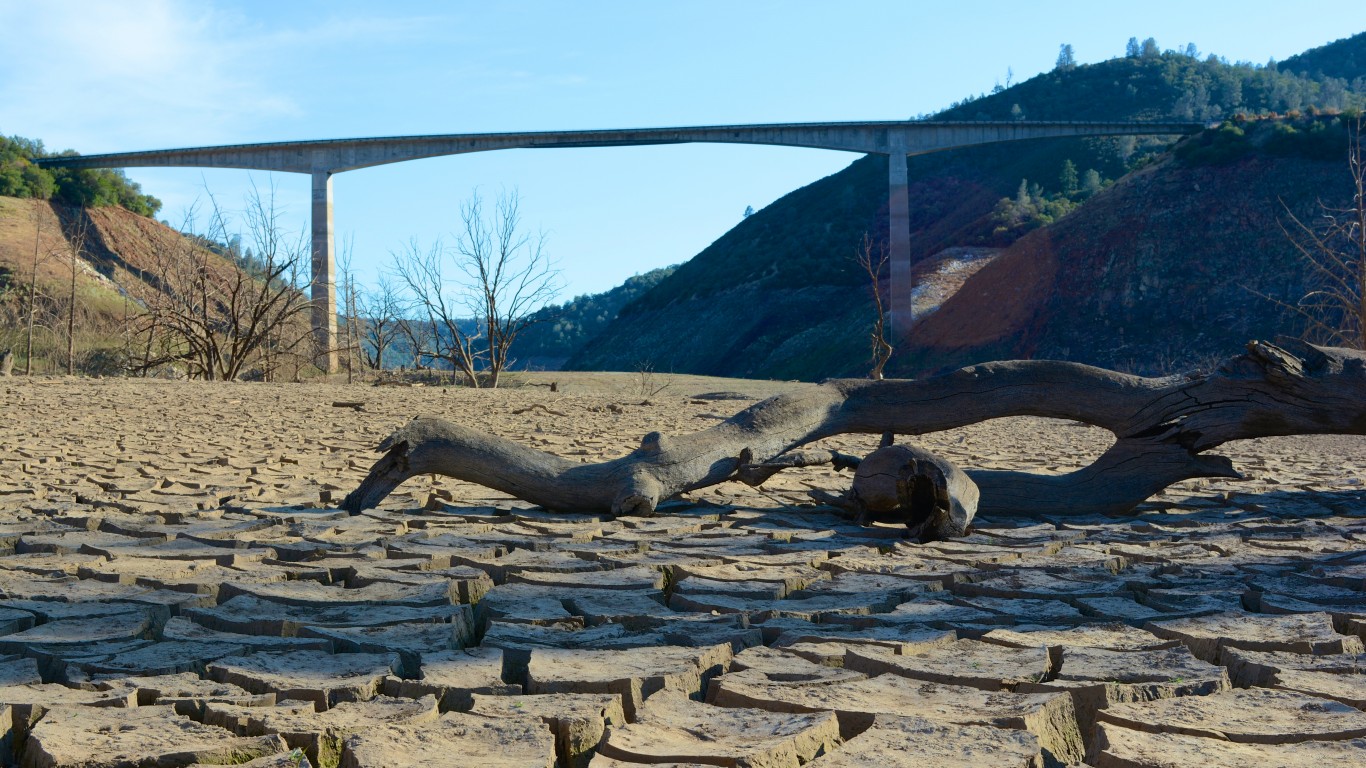
More ominously, drought conditions grew by 4 percentage points to cover more than 27% of the U.S., including parts of the New England. Against this backdrop, the ESG juggernaut gained 6.2% in June, though investor assets pared their record growth rate, according to Henry Shilling’s Sustainable Funds Monitor.
A massive solar merger and a report that offshore wind investment quadrupled in the first half underscored that climate deals — and climate change — won’t stop for Covid-19. The real question is whether the ESG movement will kill itself.
More insights below . . . .
Study on strong ESG performance yields disturbing conclusion
. . . . ESG Mom-and-Pops: Vincent Deluard, head of global macro strategy at investment firm StoneX, thought he’d look into how ESG strategies were proving so successful in the first half of this year. What he found was both surprising and disturbing, writes Mark Hulbert. For all the data that goes into ESG ratings, the information that “dwarfs” everything else is simply how many employees a company has. The smaller the company, the better the rating.
While unintentional, it is also structural, Deluard found. It will also be difficult to rectify, as the benefits of more employment, healthcare, etc. are arguably as important to society as the promises of ESG. But it sure has boosted some stocks.
Of course, in light of the potential environmental disasters that loom from climate change, the social consequences of unemployment may seem a lower priority. But that attitude is dangerous from a political, social and cultural perspective, since it contributes to the perception that environmental sustainability is an elite, upper-class goal.
This perception has become even more exaggerated because of the Covid-19 pandemic. Quarantines and shelter-in-place orders have had relatively little impact on companies with few employees, and on average their stocks have far outperformed the market. In contrast, most companies with lots of employees have suffered in the wake of those shelter-in-place requirements. . . .
ZEUS: The chaos of ESG reporting
. . . . Forget bomb cyclones: Rising confusion in tracking — and naming — troubling weather patterns is nothing compared to the mess in the current world of ESG metrics, writes David Callaway. Against a backdrop in which almost half of investors in a recent survey said a lack of standard metrics is creating barriers to applying social and environmental factors to their portfolios, finding an agreed-upon system is as vital to Wall Street as shoring up the riverbanks of Battery Park.
Two of the biggest ESG ratings bodies agreed this week to work together to help companies better understand how to use their metrics to improve their ESG ratings. But the deal, while welcome, is just a baby step in an industry that needs revolutionary change and needs it now. . . .









 Top Gaining Stocks
 Top Losing Stocks