


By David Callaway, Callaway Climate Insights
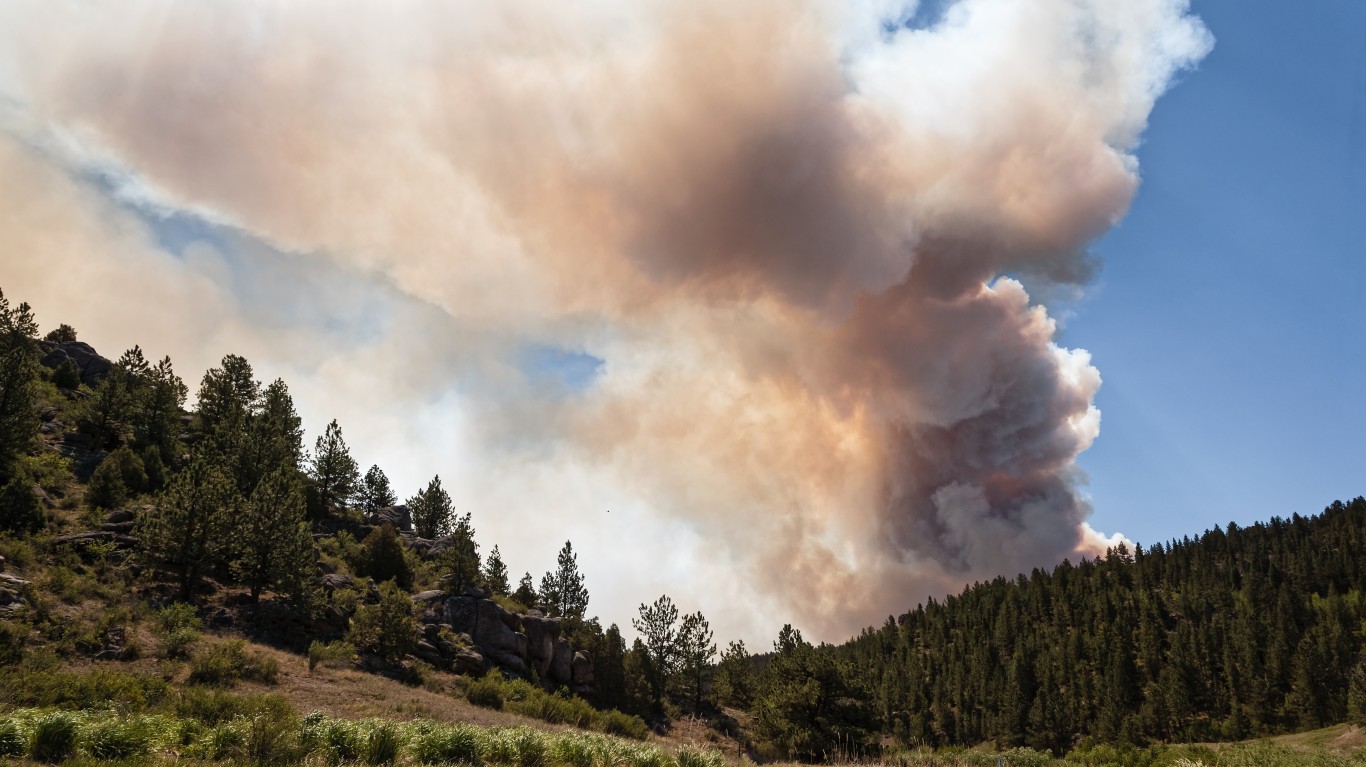
President Trump and Sen. Joe Biden square off Thursday for the final time, with climate change on the agenda as wildfires grow out of control in Colorado, thousands evacuate near Boulder, and Hurricane Epsilon grows with unprecedented speed off of Bermuda. Safe to say neither of the candidates will mention reef credits.
A new financial instrument similar to carbon offsets, reef credits were developed by GreenCollar, an Australian environmental investor active in the carbon market, and are designed to pay farmers for clean water practices that contribute to protecting the Great Barrier Reef. The natural wonder is more than half destroyed by a combination of climate change bleaching and poor water practices.
HSBC, one of the world’s largest banks, which just last week issued a climate pledge, and the government of Queensland, are the first buyers of the credits. The credits are tradable, and put a value on natural capital in a way some climate experts claim must be done to create a market for investing in climate solutions.
Crazier things have been monetized and turned into derivatives, but you have to salute the ambition at a time when politicians and government regulation are moving too slowly. In Australia, America, and everywhere. The Great Barrier Reef is worth about $6.4 billion to the Australian economy, with some 64,000 jobs dependent on it.
Market forces are an undervalued asset in the current fight against climate change. Pro-active governments and effective regulation can help, but banks and investors aren’t waiting around to find out.
More insights below. . . . and a shoutout to Jamie Thingelstad for the terrific photos of the Stone Arch Bridge in Minneapolis and from Jay Cooke State Park in Carlton, Minn., below. An old friend and colleague, Jamie writes the Weekly Thing newsletter from his home in Minneapolis. If you think you have some great photos for use in Callaway Climate Insights, please send them along. . . .
ZEUS: Climate warnings to banks begin to add up
. . . . Financial disasters are sometimes called Black Swans because they are so rare. But according to risk expert Michele Wucker, climate disasters are actually Gray Rhinos — dangerous things we know about but neglect to solve. As a second major financial report in a month was published this week about the climate risk to the world’s largest banks, David Callaway looks back to the Great Financial Crisis a dozen years ago for similarities about how we missed something so obvious in front of us.
A dozen years ago, the risk of highly-leveraged real estate derivatives was out there in plain sight, but as long as they kept rising, nobody wanted to be the first to sell. The unraveling caused the worst financial crisis since The Great Depression, and spread to economies around the world, some of which have not regained their full footing.
Climate change is hiding in plain sight, too. In the fires in Colorado, California, the Arctic and the Amazon. In the hurricanes, and the every-day flooding we see in some U.S. cities. What these reports are flagging is that everybody sort of sees this coming, but once it tips, the financial impact could be far greater than we’re prepared for. . . .
Not all green bonds are the same. Here’s how to tell.
. . . . Green bonds are all the rage this year, but many of them are a triumph of marketing over real climate impact. Two professors in Europe just figured out an easy way to tell if the proceeds from the bond you’re buying will be used for the right reasons. Could it really just be down to the coupon? Mark Hulbert talks with Martin Oehmke from the London School of Economics, and Marcus Opp, from the Stockholm School of Economics, about their conclusions.
Their research couldn’t be more timely, as the market for green bonds is mushrooming. Refinitiv reports that “green bond issuance accelerated during the third quarter, reaching an all-time record of $76.5 billion from 171 issues.” UBS Global Wealth Management is projecting that the “size of the green bond market will likely hit $1 trillion during the first half of 2021.”. . .
In the race against climate change, genetic engineering gains a step
. . . . In the wake of the Nobel Prize in Chemistry last week being awarded to two scientists for their work with genetic scissors, a process for genome editing, entrepreneur physicist Gunnar Wetlesen looks at the prospects for CRISPR applications to help the world adapt to climate change. Cutting greenhouse gases might not be enough. Speeding up how our genomes adapt to the changing environment, while controversial, is being looked at to improve the resilience of plants and livestock. Even to produce trees less susceptible to forest fires.
Scientists are already demonstrating how CRISPR can engineer plants that are heat tolerant, drought tolerant and salt tolerant. Scientists are using CRISPR to engineer rice that produces less methane in cultivation and cattle feed that is easier to digest. They’re also working to make crops fix more carbon directly and fix nitrogen as legumes do to reduce reliance on chemical fertilizers and their impacts. . . .








 Top Gaining Stocks
 Top Losing Stocks