



By David Callaway, Callaway Climate Insights
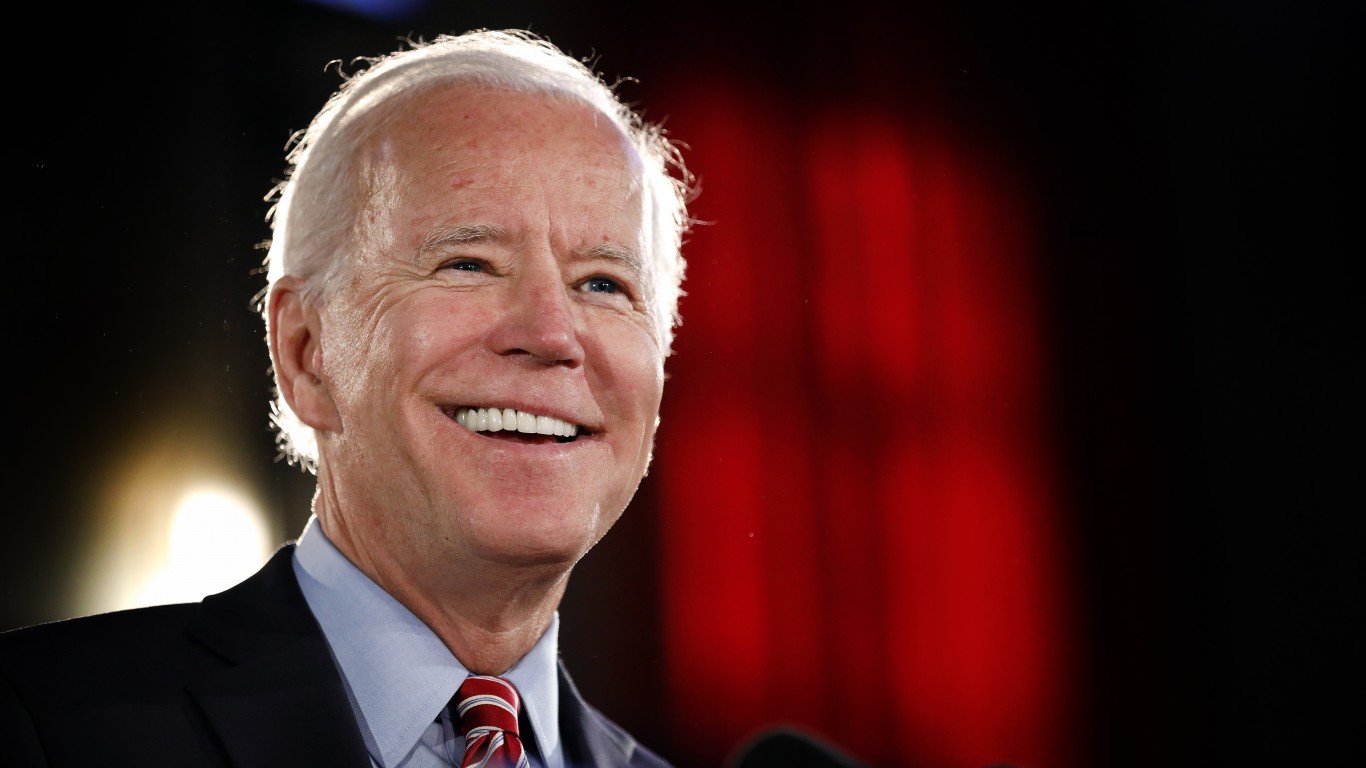
President Biden’s make-goods on four years of climate apathy have come at a dizzying pace this week, with a promised one-year freeze on drilling on federal lands and renewed international commitments hitting the wires as fast as you can say climate emergency.
Behind them will come the inevitable lawsuits and budget meetings that will slow reform down in coming months. But for now it’s exciting. One of the more creative moves was the president’s promise Monday to replace the federal government’s entire 650,000 vehicle fleet with electric cars and trucks. At an estimated cost of $20 billion, we probably can’t expect that overnight. Tesla (TSLA) itself made less than 500,000 electric vehicles last year.
But for investors riding the EV boom, it will be a fun parlor game to guess who gets the federal contracts. Biden has pledged to buy American, so that leaves out NIO Ltd. (NIO) and LI Automotive (LI), two of China’s EV darlings. Fisker (FSR), Rivian, charging company Blink Charging (BLNK), Lordstown Motors (RIDE), Workhorse Group (WKHS), even General Motors (GM) and Ford (F) seem like possible beneficiaries worth betting on.
I saw a piece somewhere recently comparing the soaring valuations of electric vehicle companies to the dot-com boom of the late 1990s. As with hundreds of former Internet superstars who crashed and burned, it predicted there would be an inevitable shakeout, especially since many of these EV companies aren’t even manufacturing yet. Makes sense, but remember the shakeout gave rise to the massive tech companies — and their valuations — we have today.
The companies themselves may be a risk, but the technology seems to be just getting started.
More insights below. . . .
. . . . Call it the return of the BRICs. Not the famous acronym for investing in Brazil, Russia, India and China, but a new initiative by the Biden administration to empower federal disaster officials to use preventative methods to fight climate change instead of just cleaning up when hurricanes and fires strike. The idea is that the Federal Emergency Management Agency (FEMA) will be allowed to allocate a much larger part of its budget — some $3.7 billion, compared to $500 million today — toward a program called Building Resilient Infrastructure and Communities (BRIC). It would allow federal officials to help rebuild things such as sea walls or relocate communities in danger of being flooded. In addition to being another bold step by the Biden administration to bring the federal government to bear on the climate problem right away, the idea is interesting to investors in municipal bond markets, who might see some risk reduced in their holdings. Seaside communities in Florida and the Gulf Coast would be the first places to look, but also cities like New York. At the very least, it might be a better investment than Brazil or Russia. . . .
. . . . The threat to fossil fuel investors from divestment by three big New York pension funds this week cannot be overstated. To date, most pension funds, trapped to some extent in passive index investments in large oil, coal and gas companies, have preferred to pledge they will work with the energy companies to help them transition to a renewable energy world. Canada’s third-largest pension fund, the Ontario Teacher’s Pension Plan, said Tuesday it plans to go net-zero by 2050, but has no intentions of divesting, instead preferring to just change its mix to more clean energy. Renewable energy outperformed fossil fuels in both Europe and the U.S. last year, and the new Biden administration is throwing a lot at it in its first few weeks, portending a big year again for investors. Larry Fink, CEO of BlackRock (BLK), who made such waves last year with his letter on how climate risk is investment risk, doubled down in this year’s letter, all but telling fossil fuel companies that they would be sold if they didn’t demonstrate a commitment to transition. The danger is that once the divestment train gets rolling — first New York and California pensions and soon others — capital can dry up quickly. Maybe too quickly. There is a systemic threat to a large-scale withdrawal of funds to the energy industry that isn’t being accounted for here. Be careful what you ask for. . . .
. . . . Those of us in the San Francisco Bay Area know a thing or two about craft beer, and about some of the pioneers who did it before it was trendy. Anchor Steam Brewing Co., which celebrates its 125th anniversary this week with a slew of new brews, started making beer in the 1890s using steam brewing. Beer making has developed over the years but it still has a massive carbon footprint, with one estimate I saw claiming it would take a typical tree 53 days to absorb all the carbon used to make one six-pack. Anchor Steam is about to complete a new water treatment plant to recycle industrial-use water and reduce overall water usage, and is planning to shift more to cans instead of bottles as part of ongoing sustainability efforts. It makes sense and there’s no time to lose. The last thing we need is beer divestment. . . .
Mexico’s FEMSA finds ESG cred in its business with Coca-Cola
. . . . Investors looking for environmental, social and governance plays on a global basis have set their sites on Mexican conglomerate FEMSA and its Coca-Cola FEMSA (KOF) unit, writes Michael Molinski. A combination of focus on ESG issues such as supporting the Paris accord and making strides in areas of water usage and reducing plastic use have rewarded both entities with a bump in share prices in the past few months — and inclusion on key ESG stock indexes.
Indeed, manufacturing industries and beverage companies are not the first that come to mind when searching for ESG companies. One might ask: Don’t they just make sugar water? And plastic bottles? What’s good about that? More frequent you’re likely to find finance and tech companies high on the list of ESG companies.
Yet Atlanta-based Coca-Cola (KO) is the No. 15 holding on the Xtrackers MSCI USA ESG Leaders Equity ETF (USSG). It has made efforts to reduce its water usage and it has made strides in recycling its plastic bottles in the United States. But Coke FEMSA continues to use predominantly glass bottles instead of plastics, and for the first time in five years, FEMSA received an “A” from MSCI for its ESG policies. . . .













 Top Gaining Stocks
 Top Losing Stocks