



By the Economic Policy Institute
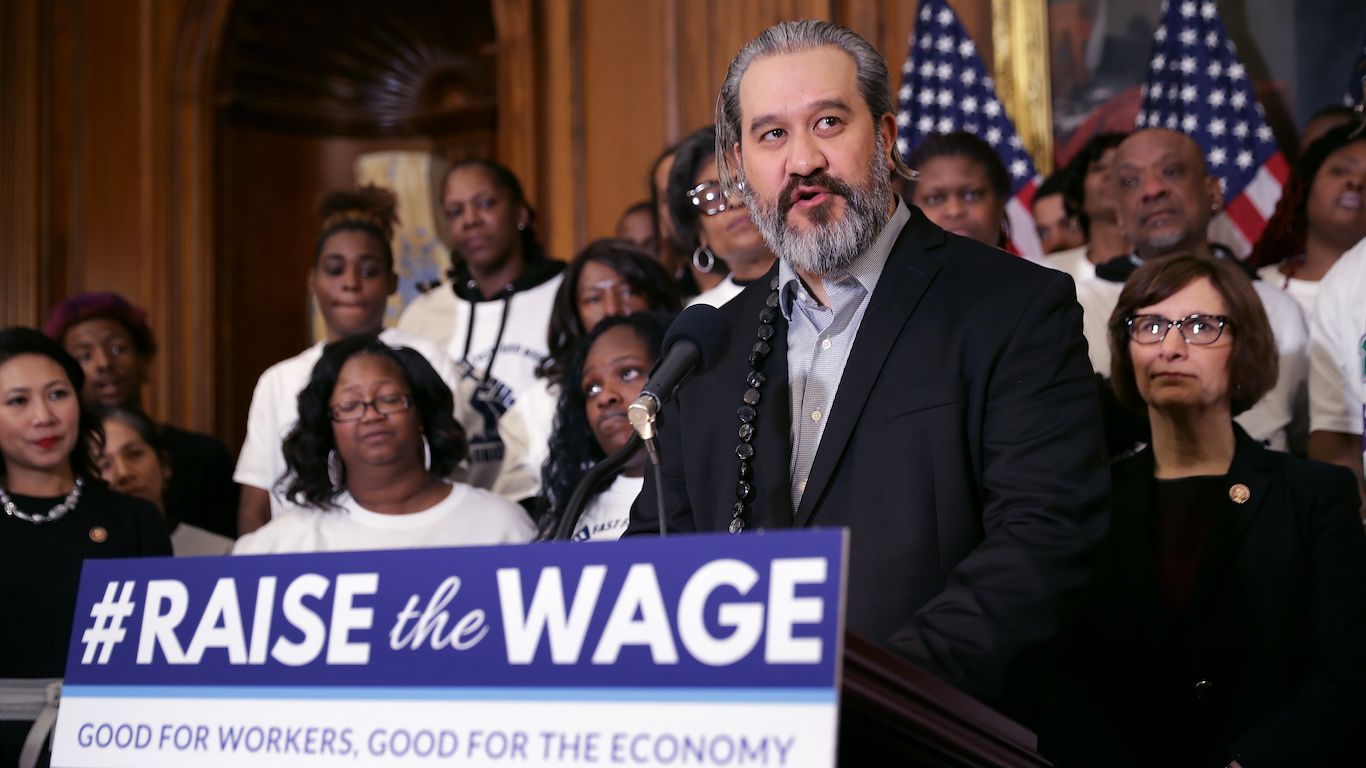
A new report from EPI economist Ben Zipperer, senior analyst David Cooper, and director of research Josh Bivens estimates that by raising the federal minimum wage to $15 by 2025—and eliminating the tipped minimum wage—government expenditures on major public assistance programs would fall by between $13.4 billion and $31.0 billion annually, while tax revenues—particularly the Federal Insurance Contributions Act (FICA) taxes—would rise significantly.
Specifically, they find that passing the Raise the Wage Act of 2021 would have fiscal effects through the following channels:
- Earned income tax credit (EITC) and child tax credit (CTC) expenditures would decline by between $6.5 billion and $20.7 billion annually.
- Expenditures on the Supplemental Nutrition Assistance Program (SNAP) and other major government transfers would fall by between $5.2 billion and $10.3 billion annually.
- Reduced annual expenditures on SNAP alone would range from $3.3 billion to $5.4 billion. The authors also estimate that the $15 federal minimum wage in 2025 would increase annual Federal Insurance Contributions Act (FICA) revenue by between $7.0 billion and $13.9 billion.
Debates have begun about what kind of legislation would be possible to pass under the rules of budget reconciliation—a fast track legislative process that privileges bills with fiscal implications by allowing them to pass with just a simple majority. One requirement that often rules provisions out of the budget reconciliation process is that these provisions must have fiscal impacts that are not just “extraneous.” This report shows clearly that the fiscal effects of a significant increase in the minimum wage are direct and economically significant. Further, the overall findings and the various channels through which higher minimum wages affect revenue and spending have been validated by a number of high-quality studies.
”A significant increase in the minimum wage has really direct and significant fiscal effects, through a number of easily-identifiable channels,” said Cooper. “Higher wages lead to workers qualifying less frequently for public benefits and often receiving less even when they do qualify. They also boost tax revenue.”
As a matter of optimal policymaking, it would be best to pair significant wage increases with fiscal changes that kept workers from losing valuable public benefits. But simply as a matter of fact, it is clear that higher minimum wages reduce public spending.









 Top Gaining Stocks
 Top Losing Stocks