



24/7 Insights
- Dividend stocks historically make of one-third of S&P 500 total returns
- To high a yield should be a red flag worth investigating
- Access 2 legendary, high-yield dividend stocks Wall Street loves
Since 1926, dividends have contributed approximately 32% of the total return for the S&P 500, while capital appreciations have contributed 68%. Therefore, sustainable dividend income and capital appreciation potential are essential for total return expectations.
We love dividend stocks here at Wall St. 24/7, especially quality companies that consistently deliver passive income streams for shareholders. However, investors need to be careful and do some research before buying shares of companies paying big dividends
We screened our 24/7 Wall St. dividend stock universe, looking for companies paying higher dividends that investors should avoid, and found two that investors should think twice about.
Why are we covering this
Large, stable corporations almost never cut dividends as a strategic choice.
It’s not uncommon for investors to be enticed by companies offering exceptionally high dividends, only to find themselves in a precarious situation when those dividends are slashed during challenging times. We’ve identified two stocks with unusually high dividends that could be reduced at some point, and the potential impact of these cuts could be severe.
AT&T
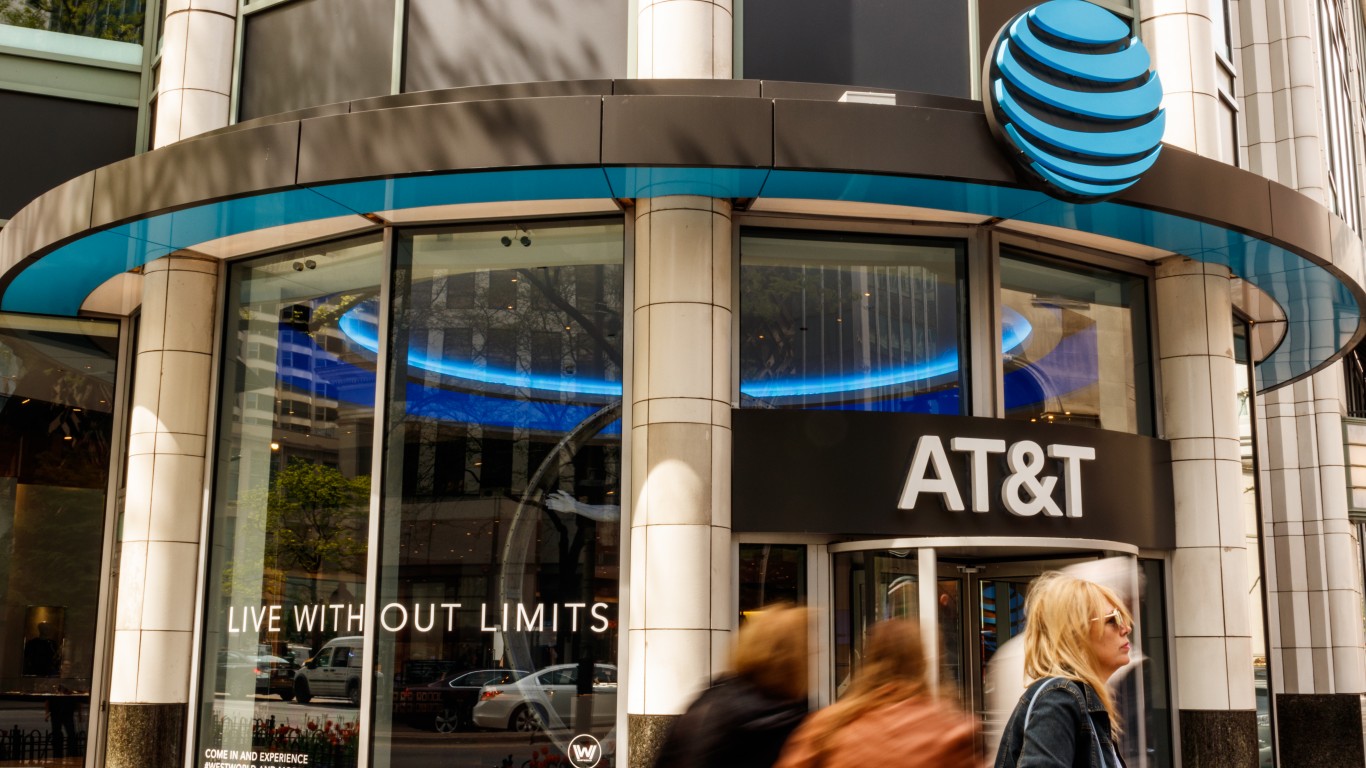
AT&T is the world’s fourth-largest telecommunications company by revenue and the largest wireless carrier in the United States.
AT&T Inc. (NYSE: T | T Price Prediction) was a blue-chip staple that every portfolio manager prominently held in growth and income portfolios for decades. The old “Ma Bell” delivered for years, but that era has come and is long gone. Years of overspending, crushing competition, and multiple consumer choices have changed the telecommunications landscape, and the possibility of AT&T ever returning to past glory is doubtful.
While revenue rose for the company last year, AT&T still has a gigantic debt load of a stunning $155 billion. With interest rates at the highest levels in over 15 years and likely staying at current levels until next year, the debt service could become onerous, and another dividend cut could be in the offing. The company ended 35 years of stock dividend increases when they didn’t raise the dividend in August of last year.
In addition, many across Wall Street feel the company’s executives are horribly overpaid given the company’s issues over the last few years. The CEO was paid a massive $26.5 million in 2023, while the CFO of the company made a rich $12.7 million in 2023. Both higher than the previous year.
It was reported last summer the company had abandoned lead-sheathed cables that may have been contaminated soil and water sources. As of January 2024, the Environmental Protection Agency is investigating both AT&T and Verizon Communications Inc. (NYSE: VZ). Also in January a shareholder lawsuit was filed against AT&T claiming top executives and the board knew of the environmental risks the cables provided.
While the stock has shown some turnaround ability over the last few years, the recent earnings report came in flat to Wall Street expectations, due to declines in Mobility equipment revenues, that were driven mostly by lower sales volumes, and lower Business Wireline revenues. It looks as though growth will remain tepid at best and if cash flows don’t stay high, and if the company’s debt service cost rises substantially, the dividend could be in trouble again.
Icahn Enterprises
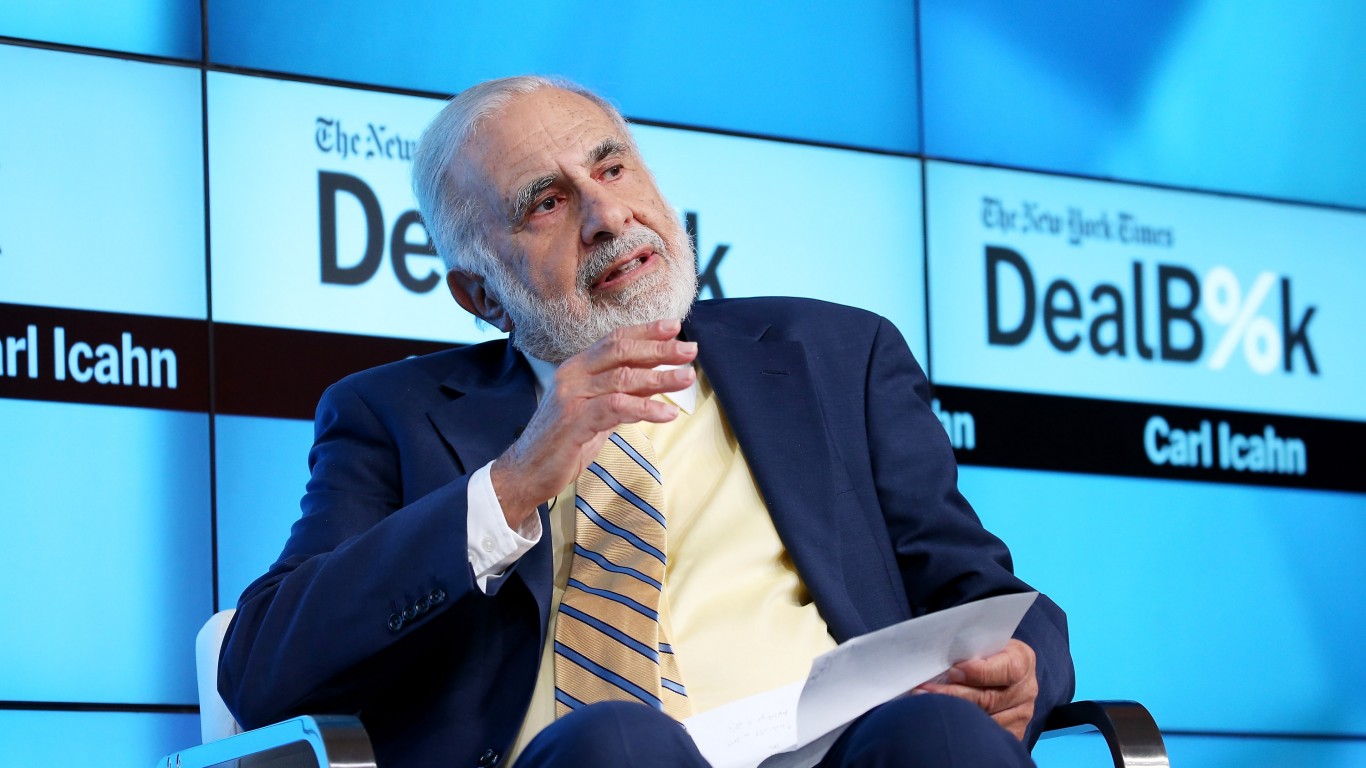
Icahn Enterprises is an American conglomerate headquartered at Milton Tower in Sunny Isles Beach, Florida.
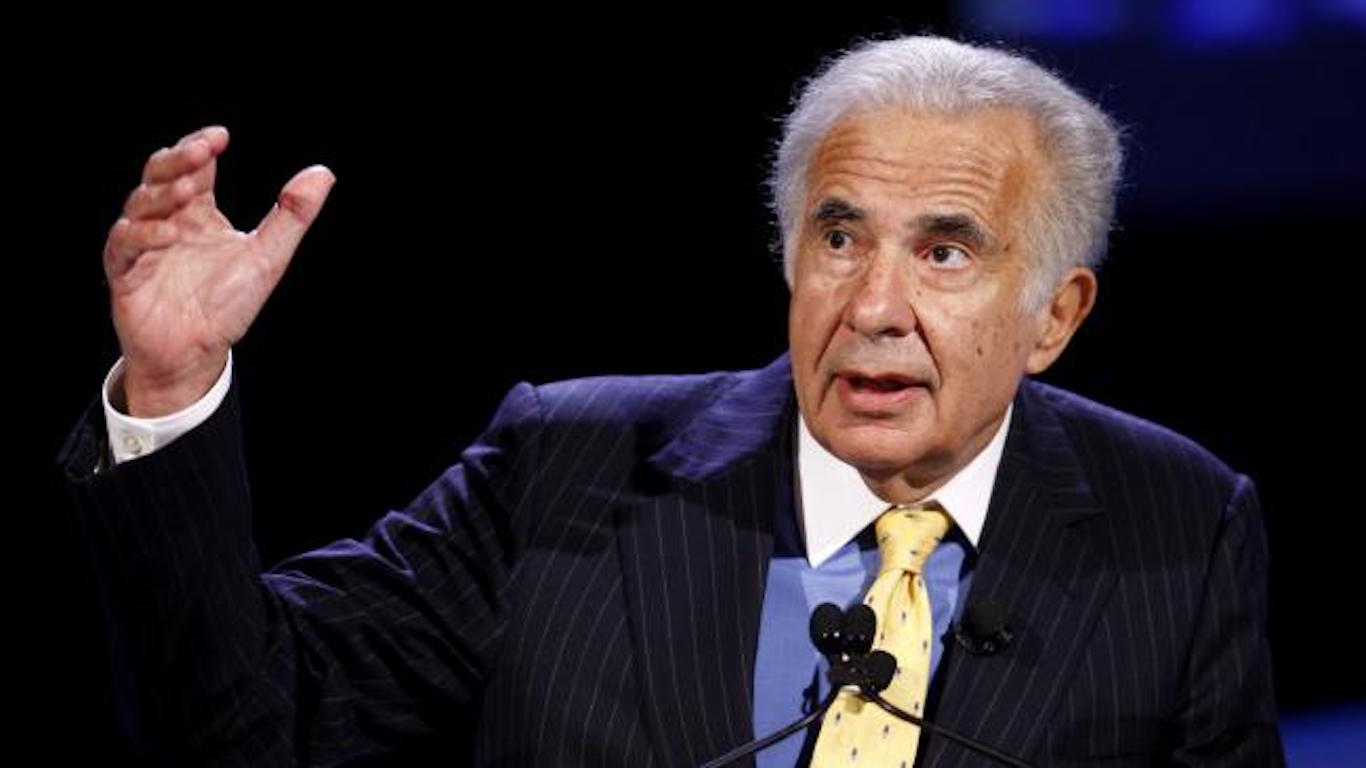
Born in 1936 and worth a reported $5.8 billion, Carl Icahn is considered one of the premier investors of our time. The former corporate raider turned activist investor has been a force on Wall Street for decades. He became renowned for taking prominent positions in companies he felt were undervalued and then seeing those stocks move higher.
So what is Mr. Icahn’s biggest holding now? While he has dozens of stocks in his portfolio, the largest is in his company, Icahn Enetrprises L.P. (NYSE: IEP), in which he owns a reported 58% of the shares which pay a stunning 22.67% dividend.
On the company’s web page, Icahn Enterprises is a diversified holding company engaged in seven primary business segments:
- Investments
- Energy
- Automotive
- Food Packaging
- Real Estate
- Home Fashion
- Pharmaceuticals
Investors’ main question is how the limited partnership could pay such a massive dividend. Essentially, Mr. Icahn is paying himself a massive dividend, as he owns most of the shares, but the reason for the huge dividend may be quite another story.
In May of last year, short-seller Hindenburg Research published a critical research report on the fund, causing its market value to plunge by a stunning $6 billion. Accusing the fund of having a “Ponzi-like” structure to pay dividends to investors, the stock fell from $50 to $30 in a matter of days and then below $20 in a few weeks.
While the shares rallied back to mid-$30’s late last summer, likely due to short-covering by companies like Hindenburg, they nosedived again in the fall and have traded below the $20 level since October except for a brief pop in February back to $21. The Hindenburg report knocked the shares down 35% to the lowest level in over a decade.
Given the fact that the stock looks like dead money, and has been for almost a year, investors should likely steer clear.









 Top Gaining Stocks
 Top Losing Stocks