


Each month, the American workforce sees a chunk of their earnings withheld for Social Security. With an average salary in the U.S. hovering just below $64,000, most people wind up paying 6.2% of their monthly wages toward Social Security, which employers pay tool, while the self-employed owe a heftier 12.4% toward their retirement savings.
Despite appearances, there’s a cap on the amount of taxable earnings for Social Security. As of 2024, this threshold is $168,600, representing an $8,400 jump vs. 2023 levels. Any earnings above this amount aren’t subject to the Social Security tax. In a best-case scenario, this model might serve as an incentive for people to earn more money. But on the flip side, it also means high-income households aren’t on the hook for quite as much as low-income households who need as much of their take-home pay as possible.
Preventing Poverty
The Social Security program delivers benefits to 15% of the U.S. population, and it has helped to keep many households from living below the poverty line. Without it, 66% of seniors would likely find themselves living in poverty, according to the Peter G. Peterson Foundation (PGPF). But the system also has its flaws, including the hefty tax that targets corporate America’s lowest earners.
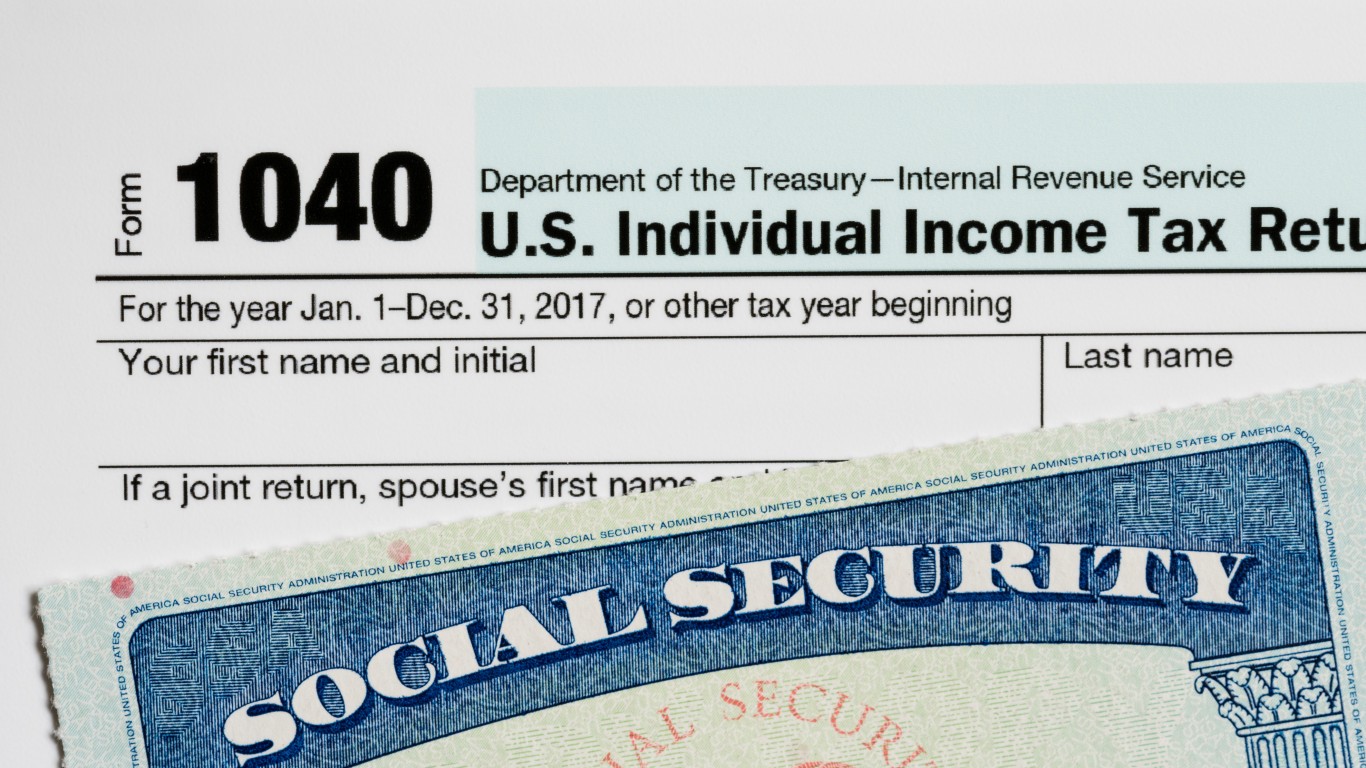
Middle Class Burden
The Social Security taxable earnings cap was first implemented back in 1937, at which time it was limited to the first $3,000 of someone’s pay. In today’s dollars, that would resemble close to $65,500, indicating that the cap has grown disproportionately. In reality, a mere 6% of the workforce generates earnings that qualify them for the tax cap of nearly $170,000.
The message the Social Security Administration is sending is that lower-income households are on the hook for higher income tax than the wealthy.
For instance, as the PGPF illustrates, an individual earning $67,000 in annual income would contribute roughly $4,150 toward Social Security taxes, funds that would be deducted from their pay. Meanwhile, an individual earning approximately three times that amount at just over $200,000 would direct less than $10,5000 of their income toward the same tax, or 2.5 times more than the lower earner, giving them a break.
‘Donut Hole’ Proposal
Lawmakers have proposed various ideas to overhaul the Social Security tax dynamics, the most recent one of which is the Social Security 2100 Act. This proposal, which has earned the nickname as a “donut hole,” is designed to place more of the tax burden on higher-earning individuals.
The way it would do this is by only taxing earnings over the $400,000 threshold and below the earnings cap, thereby creating a gap that would theoretically shrink over time commensurate with the rising Social Security taxable earnings cap.














 Top Gaining Stocks
 Top Losing Stocks