



If you can’t beat the market just buy the market. What this nugget of investing wisdom suggests is for you to compare your portfolio returns against those of the stock market index, typically the S&P 500. If you can’t outperform the benchmark index over time, you’re better off just buying the index itself.
And for large swaths of investors, it is the best option to choose. It is quick, easy, and takes no time at all. Just purchase an exchange-traded fund (ETF) that mimics the S&P 500 and be done with it. You get access to 500 of the largest, most successful companies on the market diversified across industries and geographies.
Even better, over the past seven decades, the S&P 500 has generated average annual returns of around 10.5% a year. That means if you could go back in time and put $10,000 in the popular index and then just let it sit there and did nothing else, it would be worth over $3.5 million today. Even starting on Jan. 1, 2000, you would have more than tripled your money.
Many paths to profit
Of course, there are other ways to “buy the market,” too. The Dow Jones Industrial Average is the oldest, most venerable market index and is a high-profile mirror on the health of the economy. It even has similar returns to the S&P 500. There are also a number of ETFs that track the Dow.
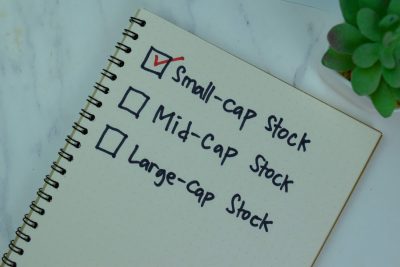
Yet just focusing on the biggest stocks ignores mid- and small-cap stocks, which are the growth engines of the economy. While the Russell 2000 index has underperformed in recent years as the Federal Reserve began hiking interest rates at an unprecedented rate, we are entering a new rate-easing cycle, suggesting these smaller dynamos are about to begin a new growth phase.
That’s why for a well-rounded portfolio focused on capturing the full spectrum of opportunity in the market, investors might want to buy-and-hold a set it-and-forget it set of ETFs that includes the
First Trust Dow 30 Equal Weight ETF (NYSEARCA:EDOW) and Vanguard Russell 2000 Index ETF (NYSEARCA:VTWO | VTWO Price Prediction).
24/7 Wall St. Insights:
- While many investors compare their performance to the S&P 500 index, its performance in recent years has been solely the byproduct of just a handful of Magnificent Seven stocks.
- Investors would do well to buy ETFs that track the Dow Jones Industrial Average and the Russell 2000 index to obtain greater diversification across company size, industry, and geographies.
- If you’re looking for some stocks with huge potential, make sure to grab a free copy of our brand-new “The Next NVIDIA” report. It features a software stock we’re confident has 10X potential.
First Trust Dow 30 Equal Weight ETF (EDOW)

The S&P 500 has become concentrated at the top with just a handful of stocks accounting for most of the index’s returns
The benefit of buying a Dow-oriented ETF over one following the S&P 500 is that in recent years just a handful of stocks have powered the index to new record highs. It has largely been the so-called Magnificent Seven group of companies, most notably Nvidia (NASDAQ:NVDA) that accounts for the gains made by the index.
Even though the Dow consists of just 30 stocks, The First Trust Dow 30 Equal Weight ETF doesn’t allow any one stock (or handful of stocks) to dominate the portfolio. As its name implies, all the components are equal weighted. At every rebalancing, all the holdings are reset to account for just 3.3% of the total.
That’s smart investing. It reaps the gains made by the winners and allows the losers the chance to generate the excess returns going forward. It is similar dollar-cost averaging where you buy more cheap stocks and less expensive ones. It’s not quite the same in the ETF, but you get the picture.
With annual operating expenses at 0.50%, the EDOW ETF is on par with most similar ETFs in the space. It also pays a dividend that is currently yielding 1.8% annually. Created only in 2017, the ETF tracks the blue-chip stocks on the long-running Dow. Although they are equal-weighted, it is a better proxy for “the market” than indices relying upon just a handful of stock for their performance.
Vanguard Russell 2000 Index ETF (VTWO)

Small-cap stocks may be poised for a rally as the Federal Reserve cuts interest rates and inflation eases
The Russell 2000 index was created 1984 and is widely regarded as the best index for capturing their performance.
That performance has admittedly been underwhelming over the past few years. The Russell 2000 generated total returns of just 2% since 2021 compared to 35% by the S&P 500 and the Dow’s 28%.
Much of the blame can be laid at the feet of the Federal Reserve. Small businesses don’t have the same access to the financial resources their larger brethren possess. Their cost of borrowing has skyrocketed dramatically as the central bank hiked interest rates 11 times in one year.
Now that the Fed cut rates by a half percentage point, further rate cuts are expected. Coupled with inflation slowing, the small-cap growth engine may be unlocked. In just the past year, the Russell 2000 began nipping at the heels of the S&P. It returned 35% versus the 40% gain by its peer.
According to Principal Asset Management’s George Maris, “We’ve seen this strength in small caps — a significant rotation not seen in decades.” It is priming the Vanguard Russell 2000 Index ETF for a period of excess returns for investors.
And the Vanguard family of funds is also known for their low-costs. The ETF has a 0.10% expense ratio. It also pays a dividend that is yielding 1.3% annually.














 Top Gaining Stocks
 Top Losing Stocks