



We have covered Jim Cramer for almost 20 years here at 24/7 Wall St., and like all opinionated Wall Street stock pickers, he has had more than his fair share of home runs and some swings and misses. One thing is for sure: His opinions, either good, bad, or indifferent, do not go unheard, as he has maintained one of the most prominent bully pulpits in the financial industry for years.
With a career that started at Goldman Sachs, from the formation of his hedge fund, Cramer Berkowitz, to his founding of The Street, which he wrote for from 1996 to 2021, to his popular Mad Money show, Jim Cramer has something in his pocket that many on Wall Street lack—access to almost everybody, regardless of their Wall Street status.
On Monday, Cramer extolled the virtues of owning what he coined “cult stocks” for 2025. He claimed that these are the stocks where fundamentals like those used by Wall Street analysts can prevent investors from buying companies that, ultimately, turn out to be successful.
The stocks he cited were:
- Tesla Inc. (NASDAQ: TSLA | TSLA Price Prediction)
- Netflix Inc. (NASDAQ: NFLX)
- Palantir Technologies Inc. (NASDAQ: PLTR)
There is no arguing that all three have been on fire this year, but in the case of Tesla and Netflix, the storyline for both of these companies goes back for years and, in some cases, decades. In fact, a generation of young investors likely need to learn that the entertainment behemoth that Netflix has become was founded by Marc Randolph and Reed Hastings on August 29, 1997, in Scotts Valley, California.
Netflix once mailed DVDs to homes
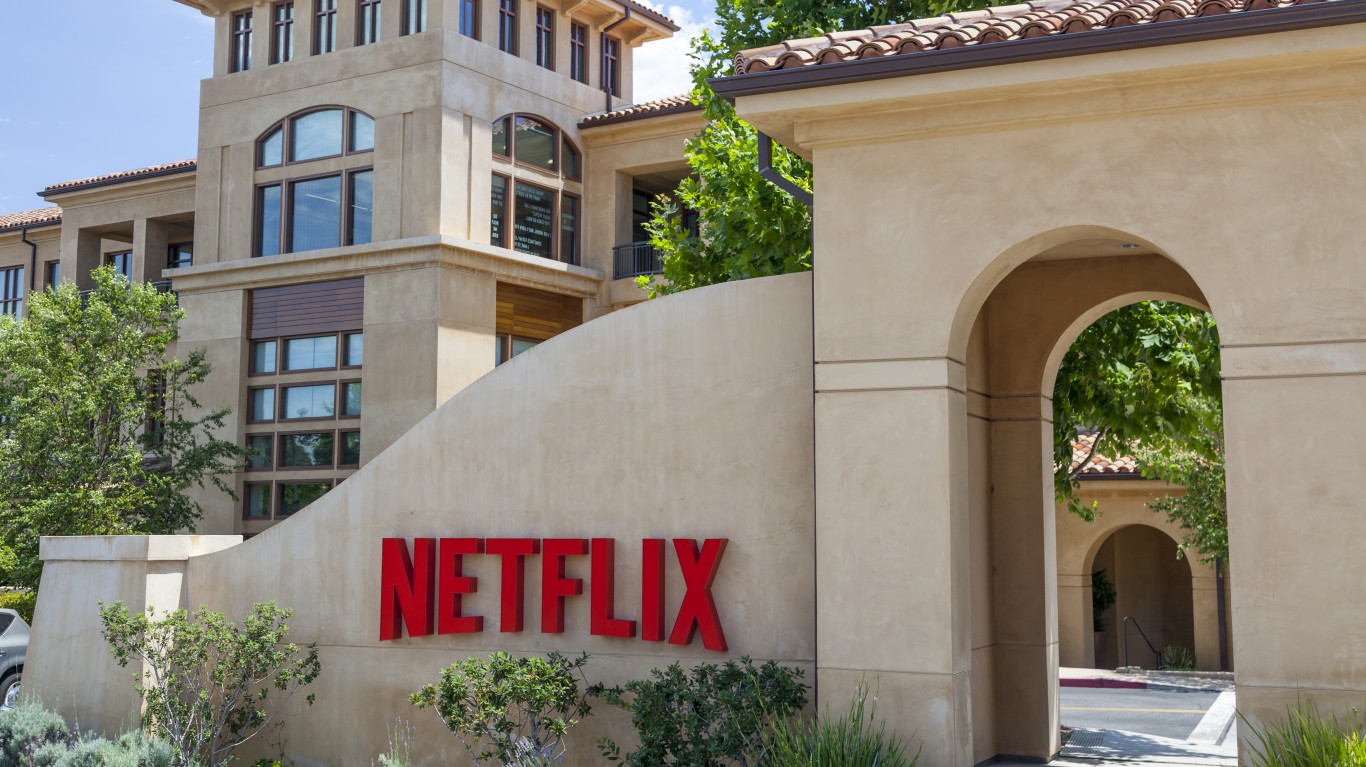
In 1997, the company mailed DVDs to customers, costing $4 per rental plus shipping. This was an attempt to break into the market that Blockbuster had owned for years. They started a streaming service for customers in January 2007. Seventeen years ago, the “Watch Now” service was only expected to be useful for those with broadband internet connections, which were uncommon then. The stock went public in May of 2002 at $15 per share. Some of today’s Gen Z investors were still in grade school then.
All three stocks trade at massive multiples

The issue we see for investors looking for the next set of “cult stocks” is that it can take years for start-up companies with a good idea to flourish into companies the size of Tesla and Netflix. It has been only four years since Palantir went public via a direct public offering at $10 per share, and it didn’t take off until the artificial intelligence frenzy reached a fever pitch. While the company is expected to report a profit this year and post even more in 2025, it trades at a stunning 379 times trailing earnings. Netflix trades at 52 times trailing earnings, and Tesla at a whopping 126 times earnings.
Cramer’s message is what reminds us of the dot-com bubble

In the published remarks on “cult stocks,” we wondered if this could be the harbinger of a collapse in 2025. Note that Nvidia Corp. (NASDAQ: NVDA) has traded down 12% to correction territory on the strength of Broadcom Inc.’s (NASDAQ: AVGO) massive earnings blowout. Cramer noted this:
There’s a lesson here and it is a brutal one. Sometimes, conventional methods of valuation are completely worthless, and you need to embrace the dynamics of cult stocks. The trick is to recognize when we’re in one of those moments. In 2025, let’s strive to find the stocks of companies that do defy orthodoxy
Investors and Wall Street giants fully embraced the dynamics of dot.com stocks in the late 1990s, and the dot-com stock correction/crash in March 2000 took 13 years to recover fully. In addition, the dot-com bubble was the second-largest market crash in modern history, with the S&P 500 dropping 49% from its peak. While things have changed significantly in the last 25 years, you must always be careful when Wall Street pundits claim that “It’s different this time.”
Jim Cramer’s Brilliant Tips for Americans Approaching Retirement












 Top Gaining Stocks
 Top Losing Stocks