


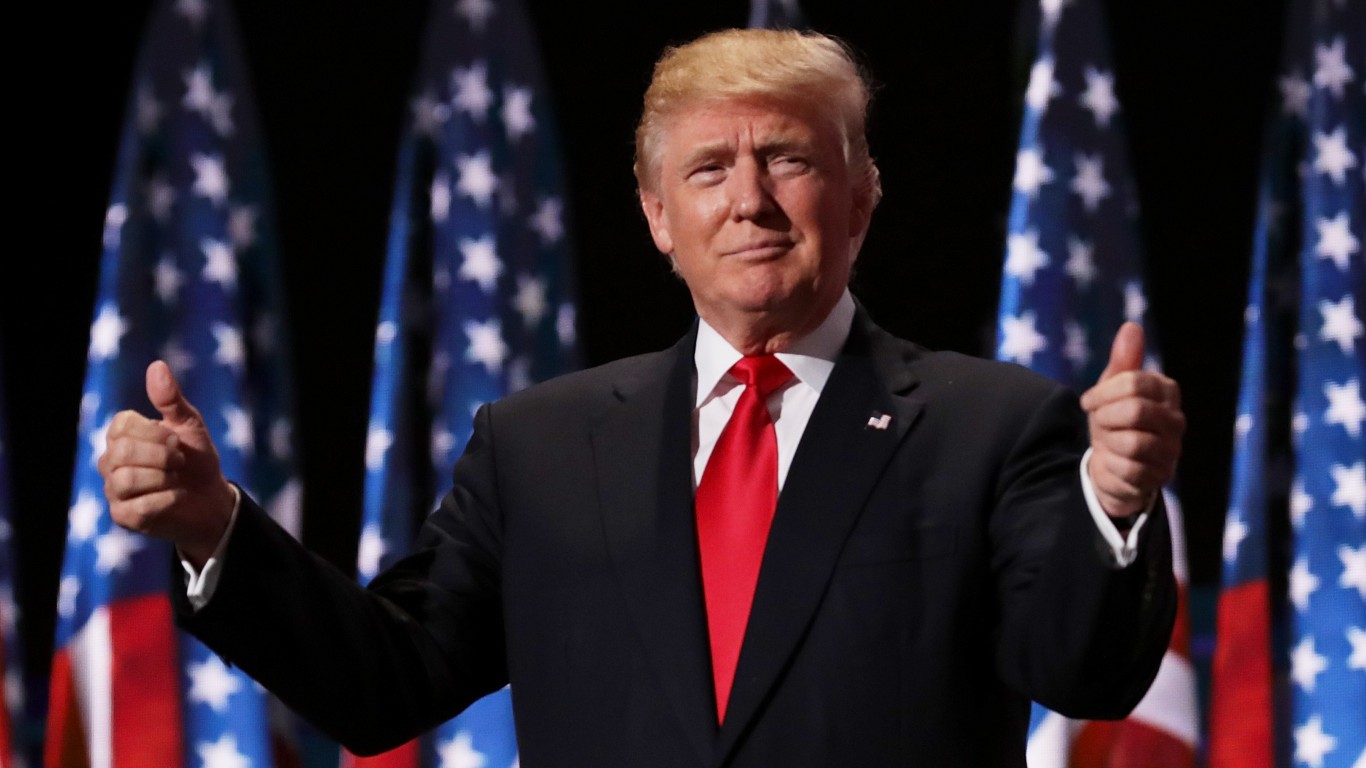
President Trump delivered a stemwinder of a speech to a joint session of Congress last night. At more than 90 minutes, it was the longest since records of such addresses began being kept.
While it recounted much of what he’s achieved so far in his first 44 days in office, Trump also unveiled a bold plan to bolster U.S. shipbuilding, announcing the creation of a White House Office of Shipbuilding and offering tax incentives to encourage domestic production.
This move aims to revitalize an industry critical for national security and economic growth, especially as Trump’s tariffs — both those already imposed on Canada, Mexico, and China, as well as those he’s threatened on the European Union — heighten the need for self-sufficiency in maritime capabilities.
The U.S. shipbuilding sector has struggled, with U.S.-flagged ships accounting for only 0.1% of global tonnage, down from 5% in 1980. This makes Trump’s initiative a potential game-changer. By incentivizing domestic production, it could create jobs, strengthen naval readiness, and reduce reliance on foreign shipyards, aligning with Trump’s “America First” agenda.
However, roadblocks loom. For example, the Jones Act requires U.S.-built ships for domestic trade, which drives up costs. U.S. ships cost four to five times more than foreign ones and tax incentives might not fully offset this. As a result, the U.S. builds on average just five ships a year. Labor shortages and regulatory hurdles could also slow progress.
For investors, this signals opportunity. Shipbuilding stocks could soar as government support fuels growth, making them a hot prospect in a trade-war-torn market. It’s a narrow market with only a few players, several of which are privately-owned.
The following two shipbuilder stocks could be big winners under Trump’s plan.
Huntington Ingalls Industries (HII)

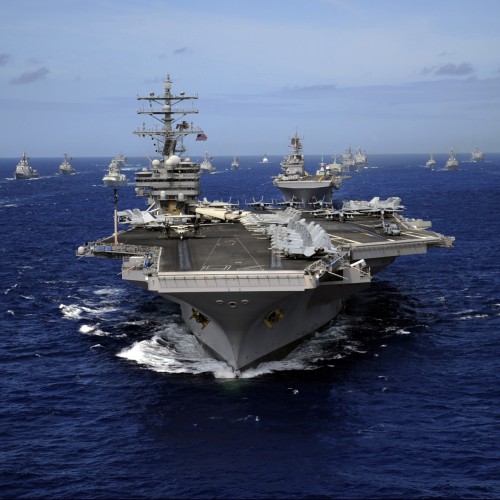
Huntington Ingalls Industries is the largest maker of aircraft carriers
The first shipbuilding stock to buy to capitalize on Trump’s initiative is Huntington Ingalls Industries (NYSE:HII | HII Price Prediction). It is the largest U.S. military shipbuilder, constructing naval vessels like aircraft carriers, submarines, and destroyers.
As the sole builder of U.S. Navy aircraft carriers and a major player in Virginia-class submarines, Huntington could see increased orders if the Navy expands its fleet to counter global trade war tensions. Tax incentives could also lower the shipbuilder’s production costs, potentially boosting its operating margins, which fell to 5.8% in 2024 from 6.8% in the year-ago period.
Huntington Ingalls generated $11.5 billion in revenue last year, ending 2024 with a backlog of $48.7 billion and positioning it to capitalize on new contracts. Its stock jumped 10% the day after Trump’s address, but even at $190 per share, HII stock goes for just 13 times trailing earnings, 11 times next year’s estimates, and for a fraction of its sales. With a dividend yielding 2% annually, Huntington Ingalls Industries is also attractive for income investors.
There are challenges, though. HII aims to hire 3,000 workers annually amid a labor shortage and supply chain delays could hinder growth. Still, Trump’s focus on domestic shipbuilding could propel HII’s revenue and stock price higher, making it a prime beneficiary of this policy shift.
General Dynamics (GD)
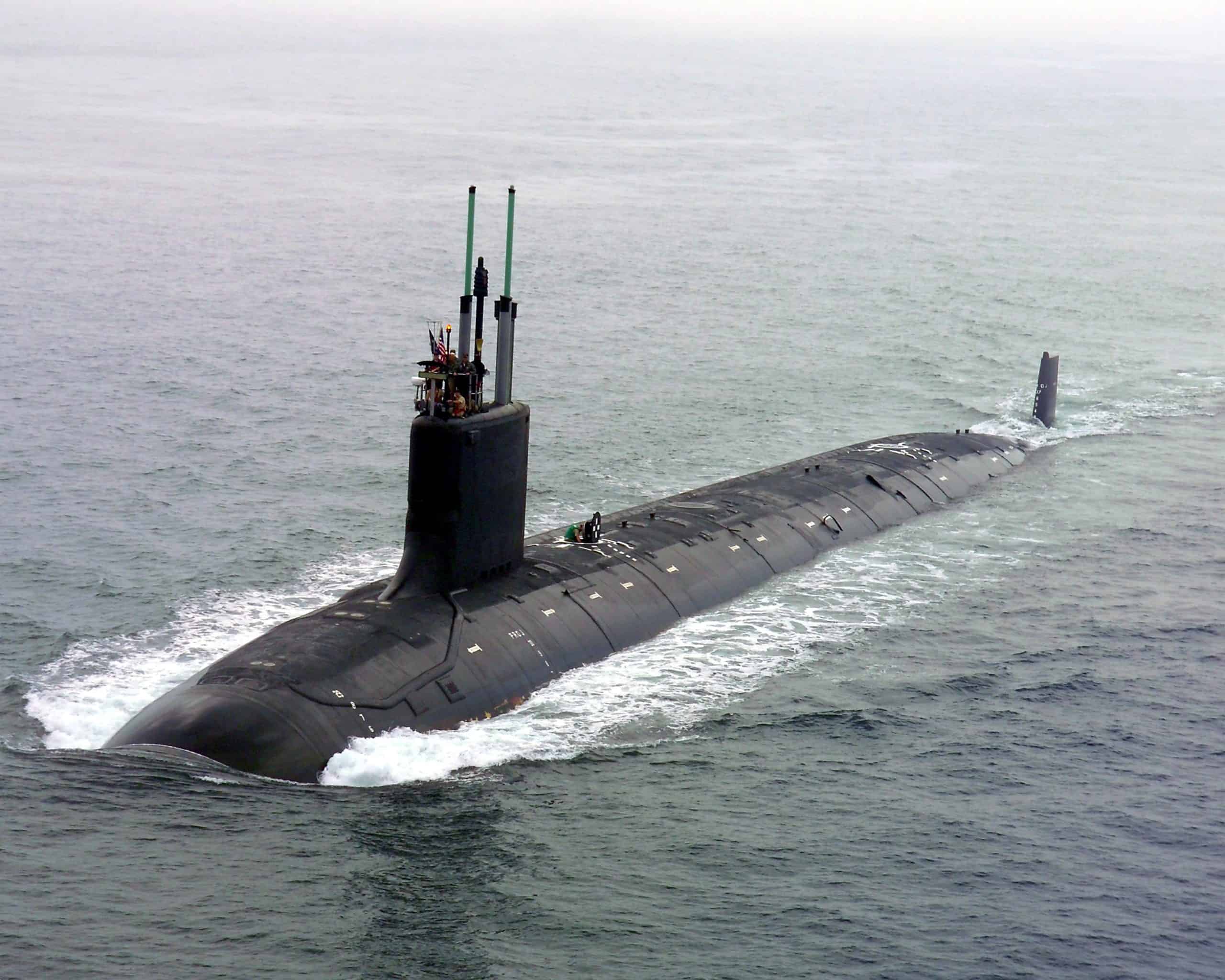
General Dynamics Virginia-class submarines are just one part of an extensive portfolio of marine operations
Although defense contractor General Dynamics (NYSE:GD) is better known for its M1 Abrams Main Battle Tank and F-16 Fighting Falcon jets, it also owns several shipbuilding divisions, Electric Boat, Bath Iron Works, and NASSCO. It could benefit handsomely from Trump’s shipbuilding plan.
Electric Boat, based in Groton, Connecticut, leads the construction of Virginia-class and Columbia-class submarines, while Bath Iron Works in Maine builds Arleigh Burke-class destroyers. NASSCO specializes in Navy auxiliary and support ships and it is currently building the Expeditionary Sea Base, a floating forward-staging base for Marines and special operations forces. Amid the global trade war, Trump’s plan could spur an increase in Navy orders for General Dynamics.
Its marine systems segment generated $14.3 billion in revenue last year, up 15% year-over-year, and 30% of GD’s total. With a $39.8 billion backlog, the company is primed for growth.
GD stock trades at $258 per share, down 2% in 2025 and 5% over the past year. Shares trade at 19 times earnings and 15 times estimates, while going for less than twice sales. The stock didn’t rise as much following Trump’s address as Huntington Ingalls did, possibly because of its more diversified income stream. Its Gulfstream business jet business and Jet Aviation services network account for nearly a quarter of total revenue.
Trump paying more attention to shipbuilding, though, could make General Dynamics a good, long-term winner.










 Top Gaining Stocks
 Top Losing Stocks