Microsoft Stock Down Seven Weeks In A Row

Photo of Douglas A. McIntyre
By Douglas A. McIntyre Published
This post may contain links from our sponsors and affiliates, and Flywheel Publishing may receive compensation for actions taken through them.
Microsoft Stock Down Seven Weeks In A Row

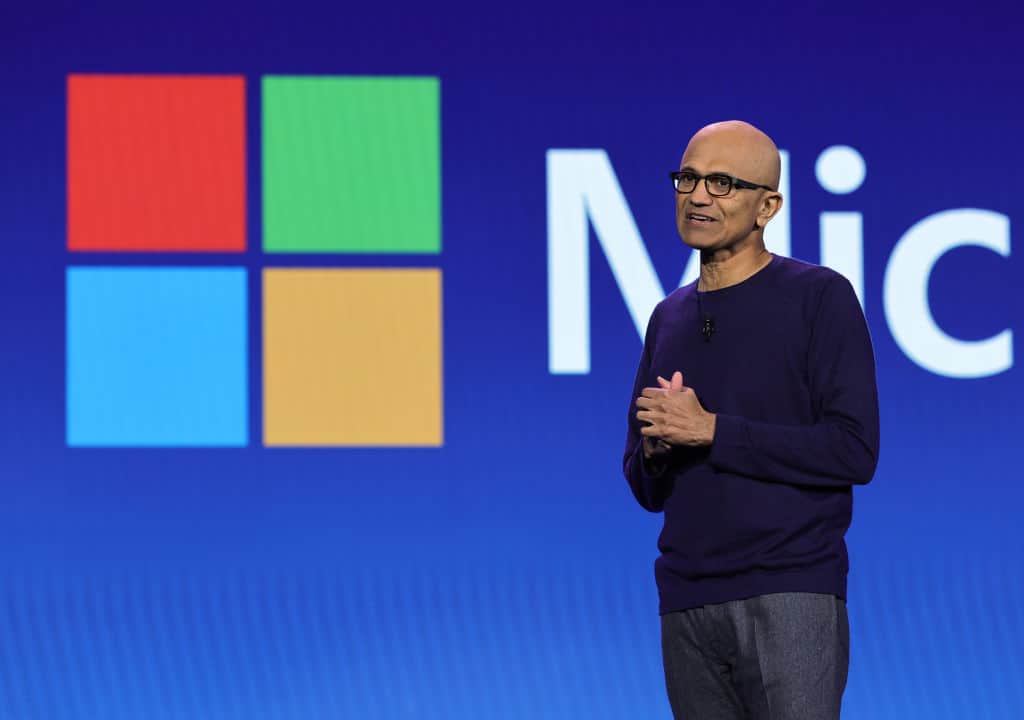
© 2024 Getty Images / Getty Images News via Getty Images

According to an analysis of Microsoft’s (NASDAQ: MSFT | MSFT Price Prediction) shares, a small Friday rally kept the stock from falling for the eighth week. According to Bloomberg, the 2008 market collapse, which was part of the Great Recession, was the last time there was an eight-week drop. The reprieve hardly mattered. To some extent, investors believe Microsoft is in trouble because of a massive bet on AI.

At first glance, the Microsoft drop is not a horrible one. It is down about 7% this year, comparable to the Nasdaq. Rivals Amazon (NASDAQ: AMZN) and Alphabet (NASDAQ: GOOG) are down slightly more for the period. However, each has wildly successful core businesses, an advantage over time. In the case of Alphabet, it is search giant Google. In the case of Amazon, it is its e-commerce juggernaut.

Microsoft was rewarded for its early considerable investment in the AI space. Last year, it invested $14 billion in AI leader OpenAI, which was supposed to be a cornerstone of a close association. The two now compete with one another. Microsoft objects to the business model of OpenAI’s critical ChatGPT flagship product.

Microsoft’s primary challenge is whether its AI business can best compete with major rivals Alphabet, Amazon, and Meta (NASDAQ: META). Each has said publicly it will invest tens of billions of dollars to grow its AI business. Among other applications, Microsoft plans to use AI to make its Azure cloud business more attractive to customers. However, cloud leader Amazon has started to do the same.

Among the largest concerns about commercial AI products is whether customers will pay for them. The AI sector has not been able to show that its products can generate great deals of revenue. Among the concerns is that many AI applications are free. And, as China’s DeepSeek has shown, critical software can be open source, making access to its core code base available to anyone.

Another hurdle Microsoft and AI rivals must overcome is the tremendous need for energy to operate AI service farms. Electricity generation capacity in the US is not set up today to provide that demand.

Microsoft’s lead in the AI industry is looking like it has disappeared.

Photo of Douglas A. McIntyre
About the Author Douglas A. McIntyre →

Douglas A. McIntyre is the co-founder, chief executive officer and editor in chief of 24/7 Wall St. and 24/7 Tempo. He has held these jobs since 2006.

McIntyre has written thousands of articles for 24/7 Wall St. He is an expert on corporate finance, the automotive industry, media companies and international finance. He has edited articles on national demographics, sports, personal income and travel.

His work has been quoted or mentioned in The New York Times, The Wall Street Journal, Los Angeles Times, The Washington Post, NBC News, Time, The New Yorker, HuffPost USA Today, Business Insider, Yahoo, AOL, MarketWatch, The Atlantic, Bloomberg, New York Post, Chicago Tribune, Forbes, The Guardian and many other major publications. McIntyre has been a guest on CNBC, the BBC and television and radio stations across the country.

A magna cum laude graduate of Harvard College, McIntyre also was president of The Harvard Advocate. Founded in 1866, the Advocate is the oldest college publication in the United States.

TheStreet.com, Comps.com and Edgar Online are some of the public companies for which McIntyre served on the board of directors. He was a Vicinity Corporation board member when the company was sold to Microsoft in 2002. He served on the audit committees of some of these companies.

McIntyre has been the CEO of FutureSource, a provider of trading terminals and news to commodities and futures traders. He was president of Switchboard, the online phone directory company. He served as chairman and CEO of On2 Technologies, the video compression company that provided video compression software for Adobe’s Flash. Google bought On2 in 2009.

Featured Reads

Our top personal finance-related articles today. Your wallet will thank you later.

Continue Reading

Top Gaining Stocks

CBOE Vol: 1,568,143
PSKY Vol: 12,285,993
STX Vol: 7,378,346
ORCL Vol: 26,317,675
DDOG Vol: 6,247,779

Top Losing Stocks

LKQ
LKQ Vol: 4,367,433
CLX Vol: 13,260,523
SYK Vol: 4,519,455
MHK Vol: 1,859,865
AMGN Vol: 3,818,618