


A Groundbreaking and Controversial Arrangement
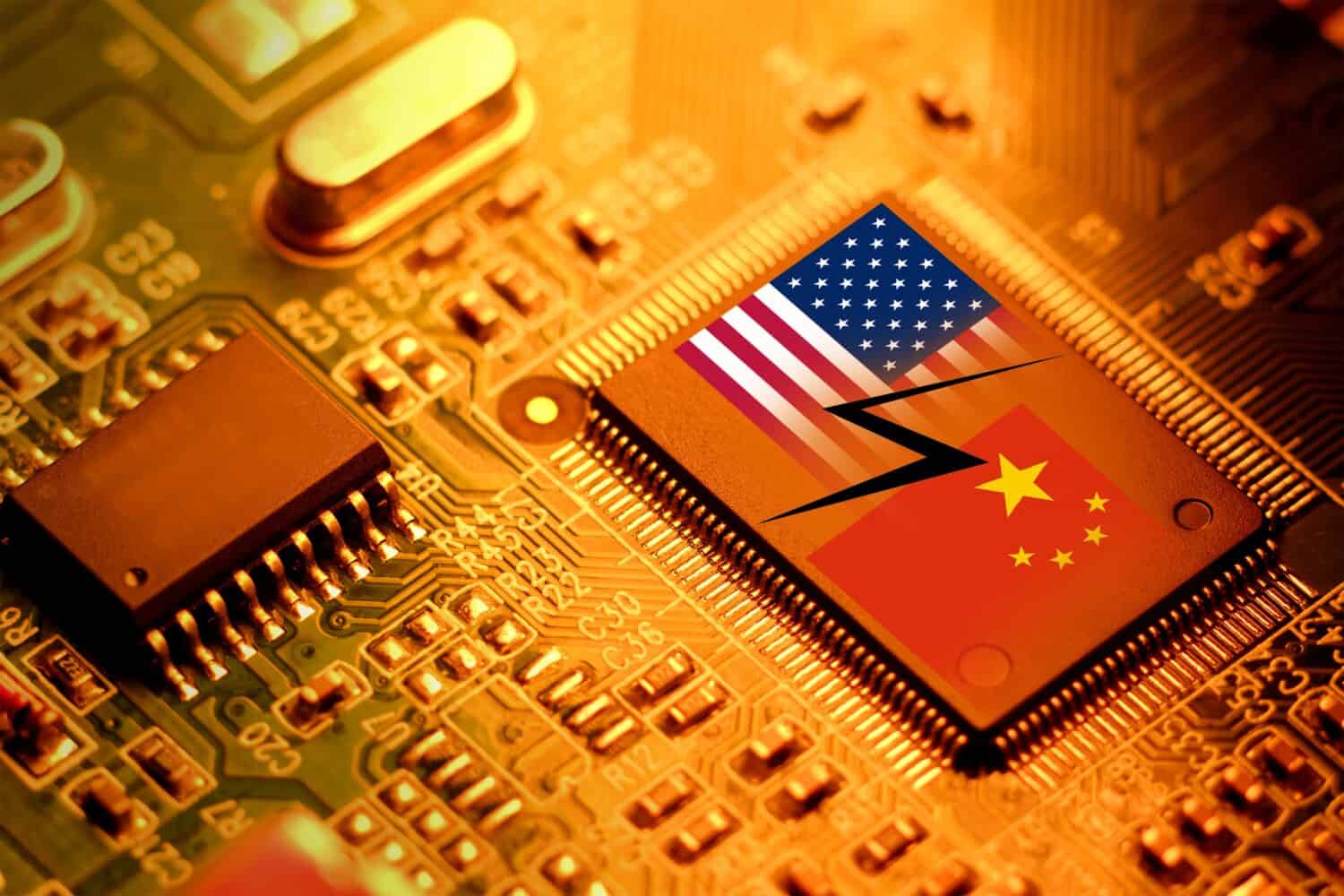
Nvidia (NASDAQ:NVDA | NVDA Price Prediction) and Advanced Micro Devices (NASDAQ:AMD), two of the world’s leading semiconductor companies, have agreed to an extraordinary deal with the Trump administration, committing to pay 15% of their China chip sales revenue to the U.S. government to secure export licenses.
This arrangement, reported by the Financial Times, marks an historic first, as no U.S. company has previously agreed to share revenue to obtain such permissions.
The deal, finalized after Nvidia CEO Jensen Huang’s meeting with President Donald Trump earlier this month, allows Nvidia to sell its H20 chips and AMD its MI308 chips in China, a market previously restricted due to U.S. export controls.
While this opens a lucrative revenue stream, the agreement raises serious concerns about government overreach, resembling a pay-to-play scheme or even extortion.
The Mechanics of the Deal
Under the terms, Nvidia will send to the government 15% of its H20 chip sales revenue in China, while AMD will do the same for its MI308 chips. The U.S. Commerce Department began issuing these export licenses on August 8, just days after Huang’s meeting with Trump.
The arrangement is unprecedented, as export control experts note that U.S. companies have never been required to pay a portion of their revenues for such licenses. The Trump administration has not yet clarified how it will use these funds, adding to the opacity of the deal.
For Nvidia, the stakes are high: analysts estimate the company could have generated $23 billion from selling 1.5 million H20 chips in China by the end of 2025, but might be able to recover $4.5 billion to $5.5 billion by resuming sales. This makes the 15% levy a significant but potentially worthwhile cost for market access.
A Tax on Revenue, Not Profit
This deal effectively imposes a revenue-based tax, a concept the Trump administration previously criticized when opposing digital services taxes abroad. Unlike profit-based taxes, which account for a company’s costs, a revenue tax cuts directly into sales, potentially squeezing margins.
However, both Nvidia and AMD appear willing to absorb this cost to tap into China’s massive market. For AMD, which did not include China in its Q3 2025 revenue guidance, this could be a game-changer, potentially boosting its top and bottom lines significantly.
To offset the 15% levy, both companies may raise chip prices in China, passing the cost to consumers and preserving profitability. This strategic pricing could mitigate the financial impact while capitalizing on China’s demand for advanced semiconductors.
Government Intrusion into the Private Sector
The agreement signals a broader trend of increasing government involvement in private enterprise. Coupled with the U.S. government’s recent stake in MP Materials (NYSE:MP), a rare earths producer, this move suggests a shift toward state-influenced capitalism, a model more associated with nations like China than the U.S.
Critics argue this deal smacks of coercion, with the government leveraging export controls to extract revenue from private companies. Security experts, including former Trump advisor Matt Pottinger, have raised alarms, warning that chips like the H20 could bolster China’s AI capabilities, posing a national security risk.
This tension — between economic gain and security concerns — underscores the deal’s complexity and the ethical questions it raises.
Strategic Implications and Market Impact
For Nvidia and AMD, the deal unlocks a critical market previously curtailed by U.S. sanctions. Nvidia’s H20 chip, designed to comply with earlier export restrictions, faced a ban in April, only for Trump to reverse course after his July meeting with Huang.
This policy shift highlights the administration’s pragmatic approach to trade, prioritizing revenue and influence over strict containment of China’s tech growth. For AMD, the opportunity to sell in China could transform its financial outlook, especially if it adjusts pricing to account for the 15% fee.
However, the deal’s optics — likened to “mafia-style” tactics by some online commentators — could damage public trust in both the companies and the government.








 Top Gaining Stocks
 Top Losing Stocks