


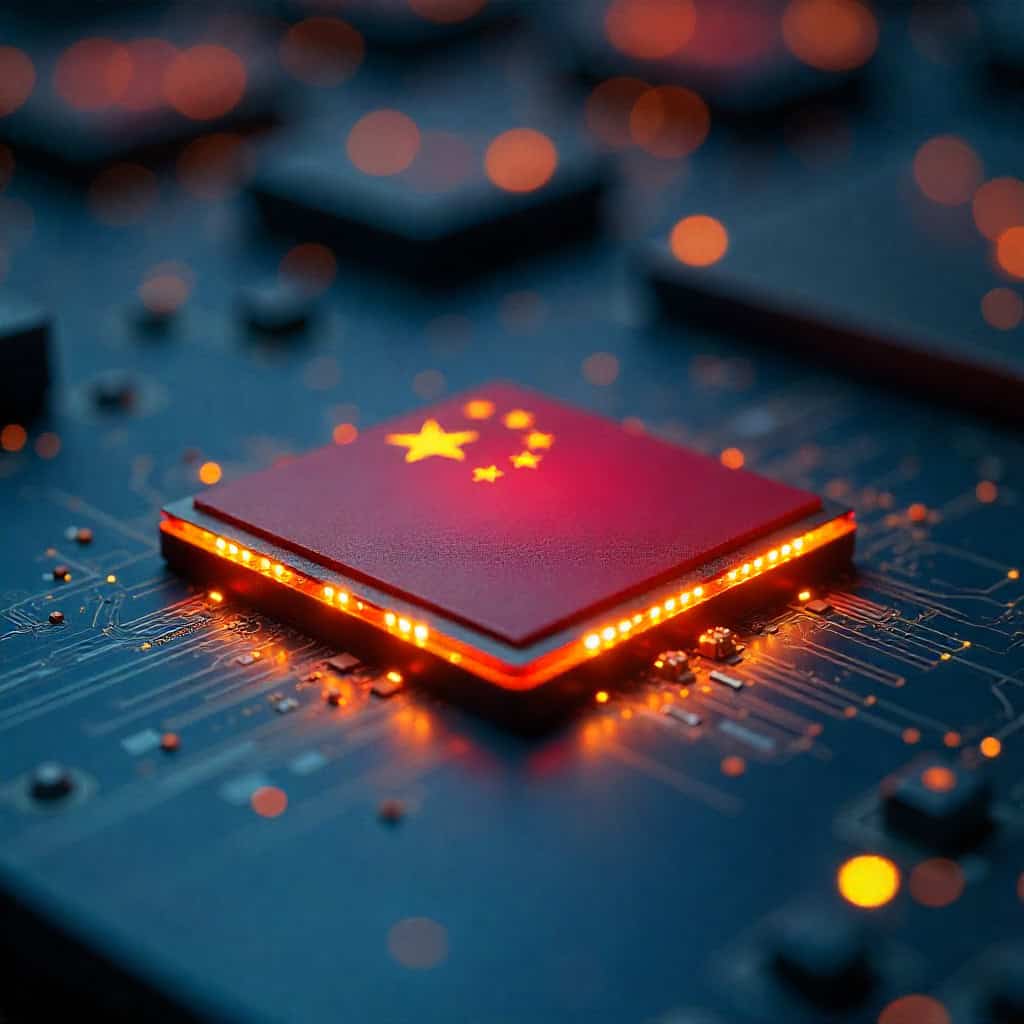
A Fragile Foothold in China
Nvidia (NASDAQ:NVDA | NVDA Price Prediction) and Advanced Micro Devices (NASDAQ:AMD) recently secured U.S. approval to resume sales of their lower-end AI chips, the H20 and MI308, respectively, to China, marking a significant step in navigating U.S. export restrictions.
These deals, brokered by the Trump administration, came with an unprecedented condition: both companies agreed to pay the U.S. government 15% of their China-related AI chip revenue — a move described as a monetization of trade policy.
The agreements opened the door to potentially billions in revenue, with estimates suggesting Nvidia’s H20 sales alone could allow the AI chipmaker to recover $4.5 billion to $5.5 billion in sales by the end of the year, while AMD’s MI308 could bolster its growing AI portfolio.
China, a critical market contributing over $17.1 billion to Nvidia’s revenue last year, represented a massive opportunity for both firms to recoup losses from prior export bans. However, recent developments from Beijing have cast doubt on whether these hopes will be realized.
Beijing’s Push for Domestic Chips
Since the beginning of the trade war, Chinese authorities have intensified efforts to reduce reliance on foreign semiconductors, issuing notices to a range of companies discouraging the use of Nvidia’s H20 chips, particularly for government or national security-related work.
These directives, reported by Bloomberg, emphasize domestic alternatives, aligning with China’s broader strategy to bolster its homegrown tech industry. State media has amplified concerns about the security and reliability of Nvidia’s chips, with some notices posing pointed questions to firms about their preference for H20s over local options and potential vulnerabilities.
This move echoes previous restrictions on foreign tech, such as bans on Tesla (NASDAQ:TSLA) vehicles, Apple (NASDAQ:AAPL) iPhones, and Micron Technology (NYSE:MU) chips in sensitive applications, signaling a consistent pattern of prioritizing national security and self-sufficiency.
AMD in the Crosshairs?
While Beijing’s notices specifically target Nvidia’s H20 chips, AMD is not explicitly mentioned. However, industry observers expect similar pressure could extend to AMD’s MI308 chips, given the broader push against foreign AI accelerators.
Both companies face a challenging landscape where Chinese customers, under government guidance, may pivot to domestic suppliers like Huawei. This shift threatens to undermine the carefully negotiated U.S. export licenses, which were seen as a lifeline for Nvidia and AMD to maintain their foothold in China’s $50 billion AI chip market.
The lack of clarity on whether AMD’s chips are directly targeted adds uncertainty but the precedent suggests Beijing’s directives could broaden, impacting AMD’s ambitions to scale its open-platform AI solutions in China.
Navigating a Geopolitical Minefield
The U.S.-China tech rivalry further complicates the situation. Nvidia’s CEO, Jensen Huang, has publicly criticized U.S. export controls as ineffective, arguing that restrictions on H20 sales have led to a $5.5 billion write-off and pushed Chinese firms toward competitors like Huawei.
Meanwhile, the U.S. government’s 15% revenue-sharing deal has drawn scrutiny as an unusual and potentially destabilizing policy. It also calls into question a potential company-specific deal for Intel (NASDAQ:INTC).
For both Nvidia and AMD, the interplay of U.S. restrictions and China’s countermeasures creates a precarious balancing act. Chinese firms, eager to secure AI capabilities before further restrictions, have placed aggressive orders. However, Beijing’s guidance could redirect these investments to local players, leaving Nvidia and AMD struggling to capitalize on their reopened market access.
Key Takeaway
Beijing’s push to sideline Nvidia’s H20 chips and potentially AMD’s MI308 threatens to derail plans for both companies to recover billions in lost China revenue. The ability to recover as much as $5.5 billion for Nvidia and AMD’s hopes of scaling its AI presence are now at risk as China prioritizes domestic suppliers.
This development not only undermines the U.S.-approved trade deals but also highlights the fragility of operating in a market caught in geopolitical crossfire. If Chinese firms pivot to local alternatives, Nvidia and AMD may face significant setbacks, forcing them to rethink strategies in a critical growth market.







 Top Gaining Stocks
 Top Losing Stocks