


In a milestone that underscores the enduring power of Big Tech, Alphabet (NASDAQ:GOOG | GOOG Price Prediction)(NASDAQ:GOOGL) crossed the $3 trillion valuation threshold for the first time on Monday. The stock surged 4.5% to close above $251 per share, pushing its market capitalization to over $3 trillion. This places Alphabet in an even more elite group of stocks — Apple (NASDAQ:AAPL), Microsoft (NASDAQ:MSFT), and Nvidia (NASDAQ:NVDA) — that are all valued above $3 trillion.
Two key developments fueled the jump. First, Alphabet announced a $6.8 billion investment over two years in U.K. artificial intelligence (AI) infrastructure and scientific research. This includes expanding a data center in Waltham Cross and supporting its London-based DeepMind AI lab. The move highlights Alphabet’s commitment to global AI leadership amid geopolitical tensions.
Second, Citigroup analysts upgraded their outlook, raising their price target to $280 from $225 per share, citing greater regulatory clarity following antitrust rulings that will allow for faster product rollouts. This bullish note amplified optimism around Alphabet’s AI strategy.
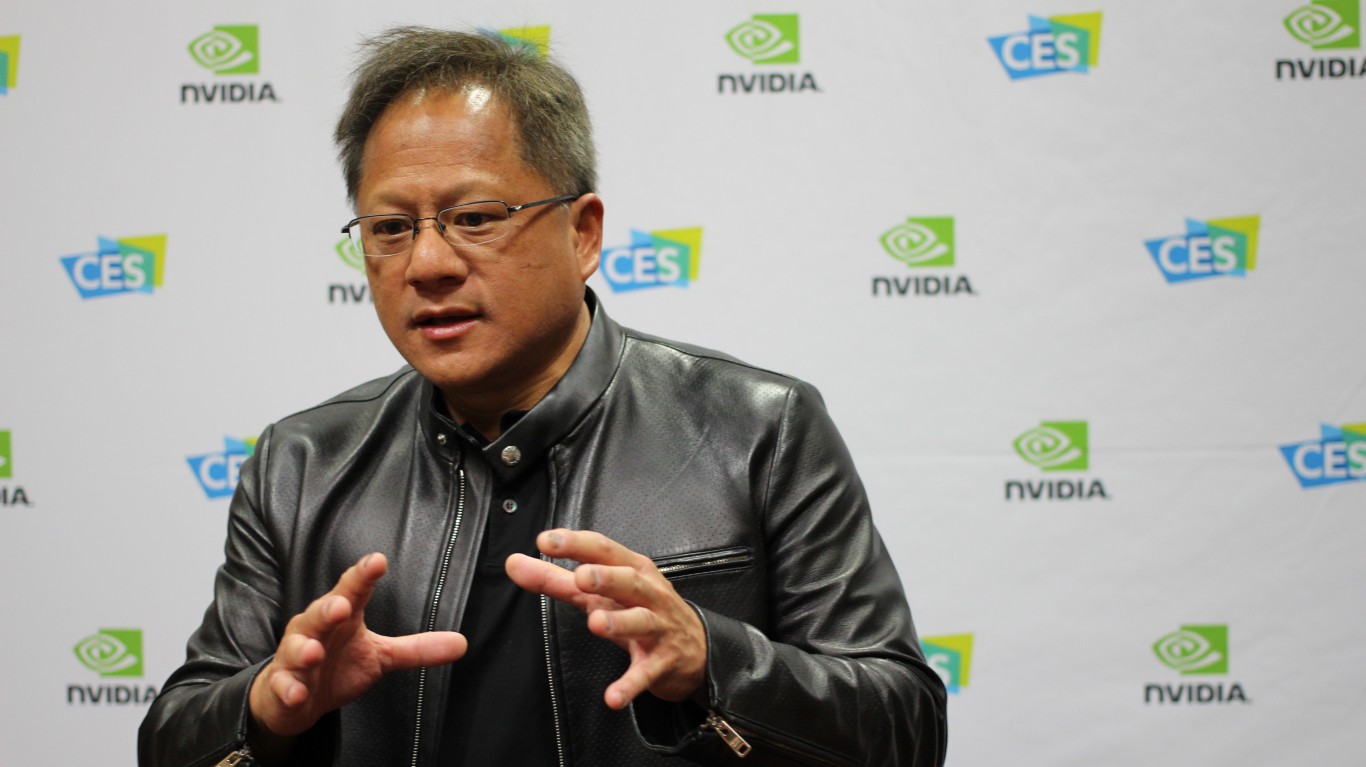
Now that Alphabet has joined this rarified group of stocks, can it challenge Nvidia — now worth over $4.2 trillion — for the title of the world’s most valuable stock?
Gemini AI as Alphabet’s Growth Engine
Citi’s upgrade isn’t just about regulatory tailwinds — it’s deeply rooted in Alphabet’s potential to weave its Gemini AI model across its vast product ecosystem. Analysts envision Gemini powering enhancements in Search, YouTube, Gmail, Google Maps, Android, Chrome, and even Duet AI for enterprises.
This integration could boost user engagement and ad revenues by delivering more personalized, efficient experiences. For example, AI-driven search results that anticipate needs or YouTube recommendations that evolve in real-time, are tools that could reaccelerate growth in Alphabet’s core advertising business, which still accounts for over 75% of revenue.
This strategy echoes Microsoft’s triumphant rollout of Copilot, its AI assistant integrated into Office, Azure, and Bing. Copilot has driven a 20% surge in cloud subscriptions and helped Microsoft eclipse $3 trillion in valuation. If Alphabet executes similarly, Gemini could catalyze explosive growth.
Citi projects this could add billions in incremental revenue by 2027, as AI upgrades improve ad targeting and click-through rates. With over 2 billion monthly active users across its platforms, the scale is immense. Early signs are promising, too. Gemini’s multimodal capabilities — handling text, images, and video — have already scored higher than rivals in benchmarks, positioning Alphabet to capture more of the $1 trillion global AI market.
Cracks in Nvidia’s AI Chip Throne
Despite Nvidia’s dominance in AI hardware, its stock has faced headwinds in 2025, even as sales soar. The company reported a staggering 56% year-over-year data center revenue growth to $41.1 billion in Q2, yet shares dipped after earnings due to a slight miss on expectations, partly from $4 billion in lost China sales amid U.S. export curbs.
Broader challenges include intensifying competition: Broadcom‘s (NASDAQ:AVGO) custom XPUs, for instance, snagged a $10 billion order, potentially eroding Nvidia’s 85% market share, while Huawei‘s domestic chips lure Chinese giants, albeit at government urging. Citi cut its Nvidia price target, citing slower GPU demand growth and tariff uncertainties.
These struggles have widened the valuation gap — Nvidia trades at 31x forward earnings versus Alphabet’s more reasonable 25x — but also created opportunities. If Nvidia’s growth moderates to 40% to 50% annually from triple digits, its premium could compress, allowing Alphabet to close in.
Alphabet’s software focus offers stickier, higher-margin revenue compared to Nvidia’s hardware cycles, potentially narrowing the divide as AI adoption matures.
Key Takeaways
Alphabet’s growth thesis hinges on AI, but there are risks. The company is ramping up capital expenditures to $85 billion in 2025 — up from $75 billion initially — primarily for AI servers and data centers. This aggressive spend is devouring nearly all of its free cash flow (FCF), projected at around $90 billion annually, leaving scant room for dividends, buybacks, or acquisitions.
The second quarter saw capex hit $44 billion in the first half alone, eroding FCF margins and raising sustainability questions. If AI ROI lags due to competition from OpenAI or regulatory hurdles, Alphabet could face margin compression, echoing past hyperscaler pitfalls.
Can Alphabet hit $4 trillion? Yes, but not imminently. At current trajectories, with 15% to 20% annual earnings growth from AI and ads, it could reach the mark by late 2027 or early 2028. Yet this assumes successful Gemini monetization and cloud market share gains to 15% (from 13%). Nvidia’s vulnerabilities accelerate the path, but execution is key as Alphabet must still balance capex with profitability to sustain the rally.










 Top Gaining Stocks
 Top Losing Stocks