


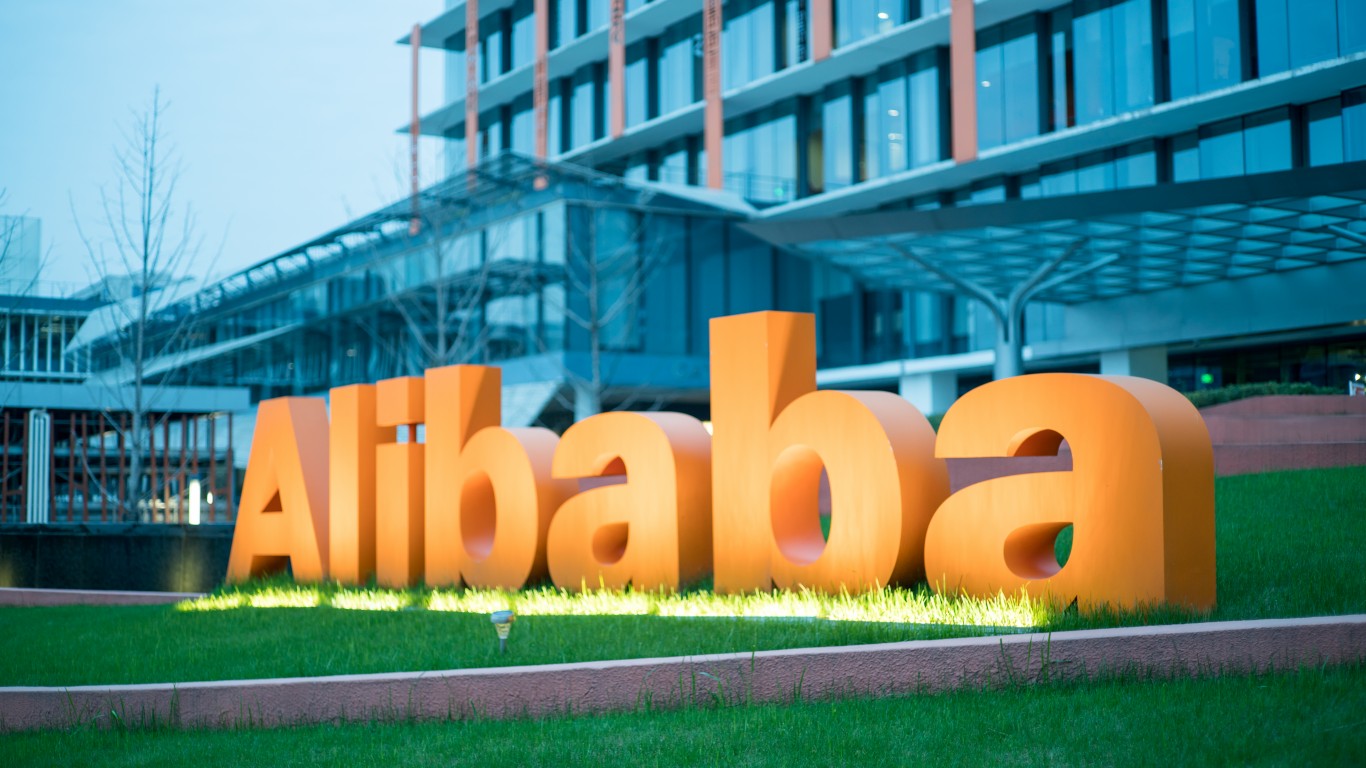
Alibaba Group (NYSE:BABA | BABA Price Prediction) shares are exploding higher this morning, surging 8.5% in morning trading to over $177 per share, marking a continuation of a stunning turnaround for the Chinese e-commerce behemoth.
The catalyst for the premarket gains was remarks CEO Eddie Wu made at Alibaba’s flagship Cloud Summit, saying the company will surpass the $53 billion artificial intelligence (AI) infrastructure capital expenditure plan announced in February. It intends to “add more” to fuel next-gen innovations.
But the real fireworks came from statement Alibaba Cloud is weaving Nvidia‘s (NASDAQ:NVDA) full suite of physical AI development tools — robotics, autonomous driving, and embodied AI — directly into its platform. This integration promises developers seamless access to synthetic data generation, model training, and simulation environments, all powered by Nvidia’s cutting-edge stack.
This move defies Beijing’s recent push for Chinese firms to prioritize domestic suppliers amid escalating U.S.-China trade tensions. Just last week, rumors swirled that regulators had ordered Alibaba and peers like ByteDance to scrap Nvidia chip orders and tests, citing national security concerns. Yet, Alibaba is charging ahead, betting big on global collaboration to leapfrog competitors.
The announcement not only underscores Alibaba’s defiance but also signals a pivot toward “physical AI,” blending digital smarts with real-world applications. For investors, it’s a shot of adrenaline after years of regulatory headwinds, hinting at Alibaba’s resurgence as an AI powerhouse.
Stock Rockets to Four-Year Peak Amid AI Buzz
The market’s reaction was immediate. Alibaba’s U.S.-listed American Depositary Shares (ADS) catapulted higher, touching levels not seen since 2021 and capping a multi-year slump. Hong Kong-traded shares mirrored the frenzy, leaping 10% to a similar four-year zenith.
This isn’t mere hype; it’s validation of Alibaba’s strategic pivot. After a bruising 2021 antitrust crackdown that slashed its market cap by over 70%, the stock has nearly doubled in 2025, but today’s confirmation of an Nvidia tie-up turbocharged sentiment.
Analysts at Barclays and JPMorgan hiked BABA stock price targets, citing the deal’s potential to juice cloud revenue, which already accounts for 10% of Alibaba’s top line but grew 8% last quarter amid AI demand.
The surge also reflects broader investor thirst for AI plays beyond the Magnificent Seven. Alibaba’s bet on “embodied intelligence” — AI that interacts with the physical world — positions it as a diversified wager on the sector’s next frontier. Trading volume spiked premarket, with options activity suggesting bets on sustained upside.
AI Investments, Nvidia Magic, and Business Boost
At the heart of the excitement lies Alibaba’s aggressive AI blueprint. The original $53 billion commitment targeted data centers, compute power, and model development to rival OpenAI and Baidu (NASDAQ:BIDU). Now, Wu vows to supersize it, funneling extra billions into global expansion: new data centers in Southeast Asia, Europe, and the U.S., plus a trillion-parameter Qwen3-Max language model that rivals GPT-4 in benchmarks. This isn’t pocket change, either. It’s a war chest to capture the $1 trillion AI market by 2030, according to McKinsey.
That’s where Nvidia’s physical AI toolkit comes in, a game-changer for Alibaba Cloud. Previously siloed for chip-level acceleration, Nvidia’s stack now will let developers preprocess vast datasets, train reinforcement learning models for robots, and simulate hyper-real environments — all via Alibaba’s one-stop platform. For Alibaba, this means monetizing cloud services faster as early adopters like automotive firms are already testing for self-driving tech.
Analysts say cloud revenue could double by 2027, offsetting e-commerce slowdowns from economic jitters. It fortifies Alibaba’s moat against Huawei‘s Ascend chips, blending domestic compliance with a global edge.
Yet, execution risks loom. Training trillion-parameter models demands energy guzzlers, and integration glitches could delay rollouts. Still, this Nvidia collaboration could unlock $10 billion in annual synergies, according to analysts, transforming Alibaba from digital retailer to AI ecosystem orchestrator.
Key Takeaway
Alibaba’s phoenix-like rise from a multi-year regulatory purgatory paints a compelling investment canvas. At a forward P/E of 16, it’s dirt cheap compared to Nvidia’s 28x, offering AI exposure with a dividend yielding 0.6% as a bonus. The Nvidia pact suggests BABA has momentum behind it, potentially reigniting the “China tech renaissance” narrative.
Still, geopolitical crosswinds haven’t vanished. While the rumor of Beijing killing Nvidia orders is now apparently debunked, it underscores Alibaba’s vulnerability. The government still wants companies to prioritize local suppliers.
Even so, BABA stock looks like a buy at these levels. It is undervalued, is investing heavily in AI, and has a strong financial foundation. Beijing could clamp down again, but BABA has proved to be a worthy innovator with the ability to weather storms.










 Top Gaining Stocks
 Top Losing Stocks